Acne Skin Care
Should You Apply Sunscreen to Acne-Prone Skin? How to Choose Products to Reduce Heaviness and Stinging
Rather than relying solely on 'non-comedogenic' labels, we determine a sustainable UV protection plan by considering post-application heaviness and stinging, makeup and cleansing methods, and the ratio of active acne to marks. Specifically, we analyze different scenarios on one page: increased heaviness and tiny bumps in the afternoon, a skin barrier that stings immediately, and the need to maintain protection for marks even after new inflammation has decreased.
Giving up on sunscreen because of acne can make red and brown marks remain visible for longer. Since not all sunscreens cause acne, pore Concerns about clogged pores, or a burning sensation immediately after application skin barrier, or the need to continue sun protection despite existing marks; choose a product based on these scenarios.
| Discomfort After Application | Immediate Cause | First Change to Make |
|---|---|---|
| Feeling stuffy in the afternoon and increase in tiny bumps | Product texture, layered products, friction | Use non-comedogenic products and reduce the number of skincare steps |
| Stinging and burning sensation immediately after application | Sensitive skin barrier and ingredient irritation | Switch to a simpler product with fewer fragrances |
| Redness and tightness every time I cleanse | Excessive double cleansing | Cleanse gently and only as much as needed |
| Marks appear to be getting darker | Post-inflammatory pigment changes and light exposure | Maintain protection and focus on reducing new inflammation first |
Sunscreen is not a product that removes acne, but it reduces the conditions that make marks darken
Sunscreen does not treat active acne itself. However, the redness that remains after acne subsides brown markscan be affected by light and repeated irritation; therefore, UV protection is a fundamental pillar of managing marks alongside the treatment of new inflammation.
Completely skipping sunscreen because the skin feels greasy may feel light for a moment, but marks may persist longer, and skin sensitized by other treatment ingredients may feel more uncomfortable in the light. The goal is not to apply a lot, but to find a product and amount that you can tolerate daily.
If you are concerned about tiny bumps (closed comedones), look at the overlapping steps in the morning rather than a single product
If you layer moisturizer, primer, sunscreen, and foundation thickly and then wear a mask for a long time, it may not be a problem with one specific product, but rather the combination of occlusion, friction, and total amount used. First, simplify your morning routine and select products for acne-prone skin or those labeled as non-comedonescomedogenic.
If the entire applied area stings and small bumps appear all at once from the day you start a new sunscreen, it may be an irritant reaction rather than actual comedones. On the other hand, if Closed comedonesthe number of bumps increases in specific areas over several weeks and some become red, you should adjust the product texture, contact, and cleansing method together. Your next choice will be much clearer if you first determine whether you are experiencing stuffiness and an increase in tiny bumps as the afternoon progresses, whether you experience burning immediately upon application making protection difficult, or whether active inflammation has decreased but you cannot give up protection due to red marks. If afternoon stuffiness and tiny bumps are the main issue, check if it is a pattern where the skin barrier and comedones are unstable together rather than just forcing the greasiness down. If active inflammation has decreased but you must continue protection due to red marks, it is more appropriate to maintain it in a low-irritation manner rather than stopping protection entirely.
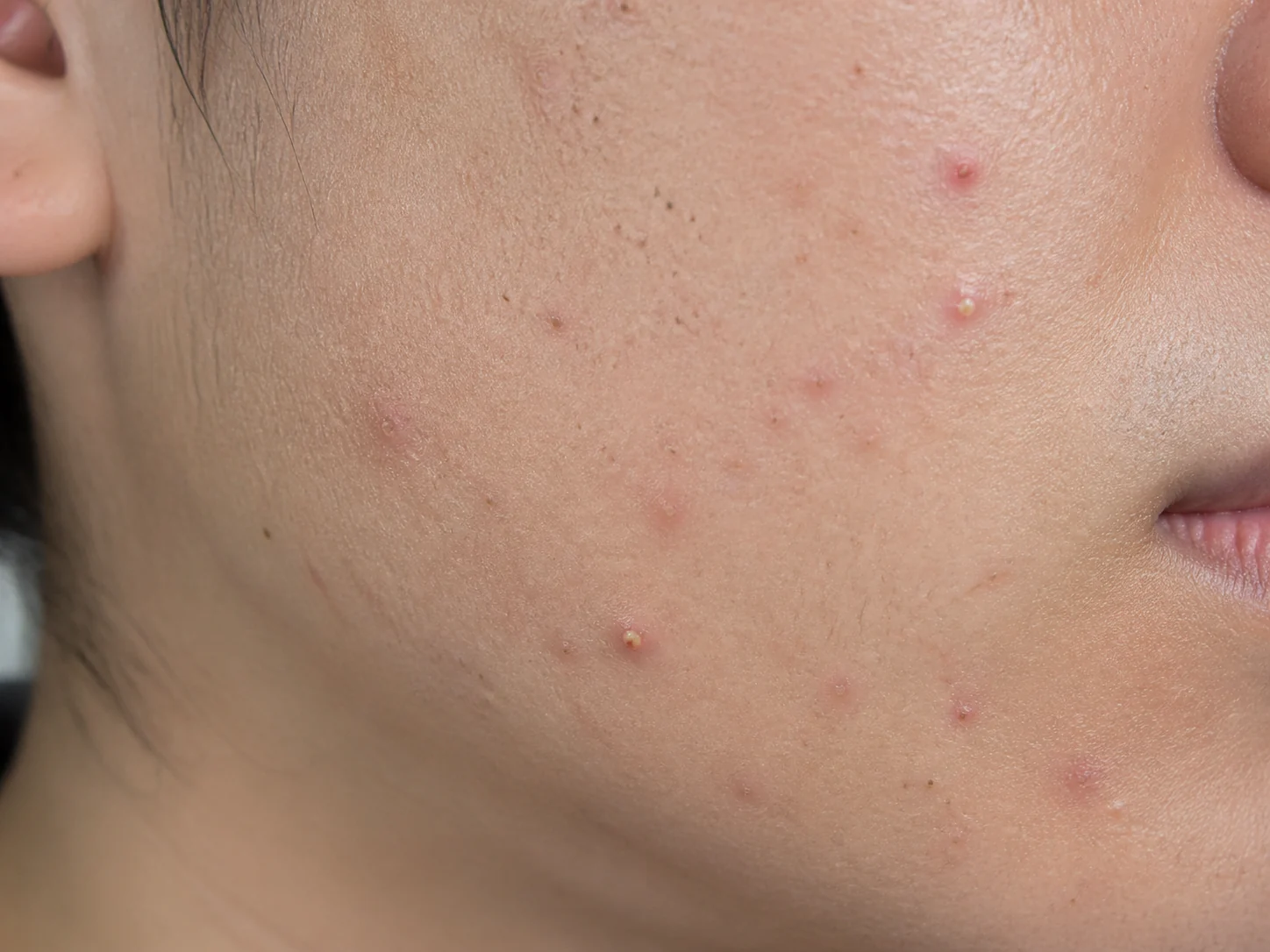
Since comedones, papules, and pustules can appear together on one face, we examine the deepest acne and the rate at which new ones form together.
For skin that stings immediately upon application, change the ingredients and barrier care rather than giving up on protection
When the skin barrier becomes sensitive due to acne medication and exfoliation, even a sunscreen you usually use may cause a burning sensation. The American Academy of Dermatology suggests choosing products with low fragrance and those centered on zinc oxide and titanium dioxide for sensitive skin or skin that stings upon application.
That said, there is no need to insist on thick and stiff products just because they are labeled as physical sunscreens. In reality, a product that spreads thinly, has less friction with makeup, and does not sting throughout the day is more sustainable. If you feel burning immediately after applying sunscreen, move toward barrier recovery and low-irritation products first; if stuffiness and comedones increase only in the afternoon, reduce the number of steps and the texture again; and if new acne has decreased but marks remain for a long time, maintain protection while lowering irritation and the burden of cleansing. If it also stings when applying acne medication, you should check if your skin is currently in a state where it cannot tolerate topical treatment, rather than viewing it as a failure of a single sunscreen.
Evening cleansing should remove sunscreen without stripping away the skin barrier
While thorough cleansing is necessary on days when you use waterproof products or heavy makeup, using oil and foam cleansersscrubbingconsecutively until the skin feels "squeaky clean" can increase redness and inner-skin tightness. Finish with either a single cleanse or a gentle two-step process depending on the product's longevity and the amount of makeup used.
If your skin feels tight for a long time after washing and your acne medication stings the next day, Sebumit may not be a problem of incomplete removal, but rather that the cleansing process is too harsh. Instead of switching to a stronger cleanser, switch to a lightweight sunscreen and reduce the time and frequency of rubbing to allow skin treatment to continue.
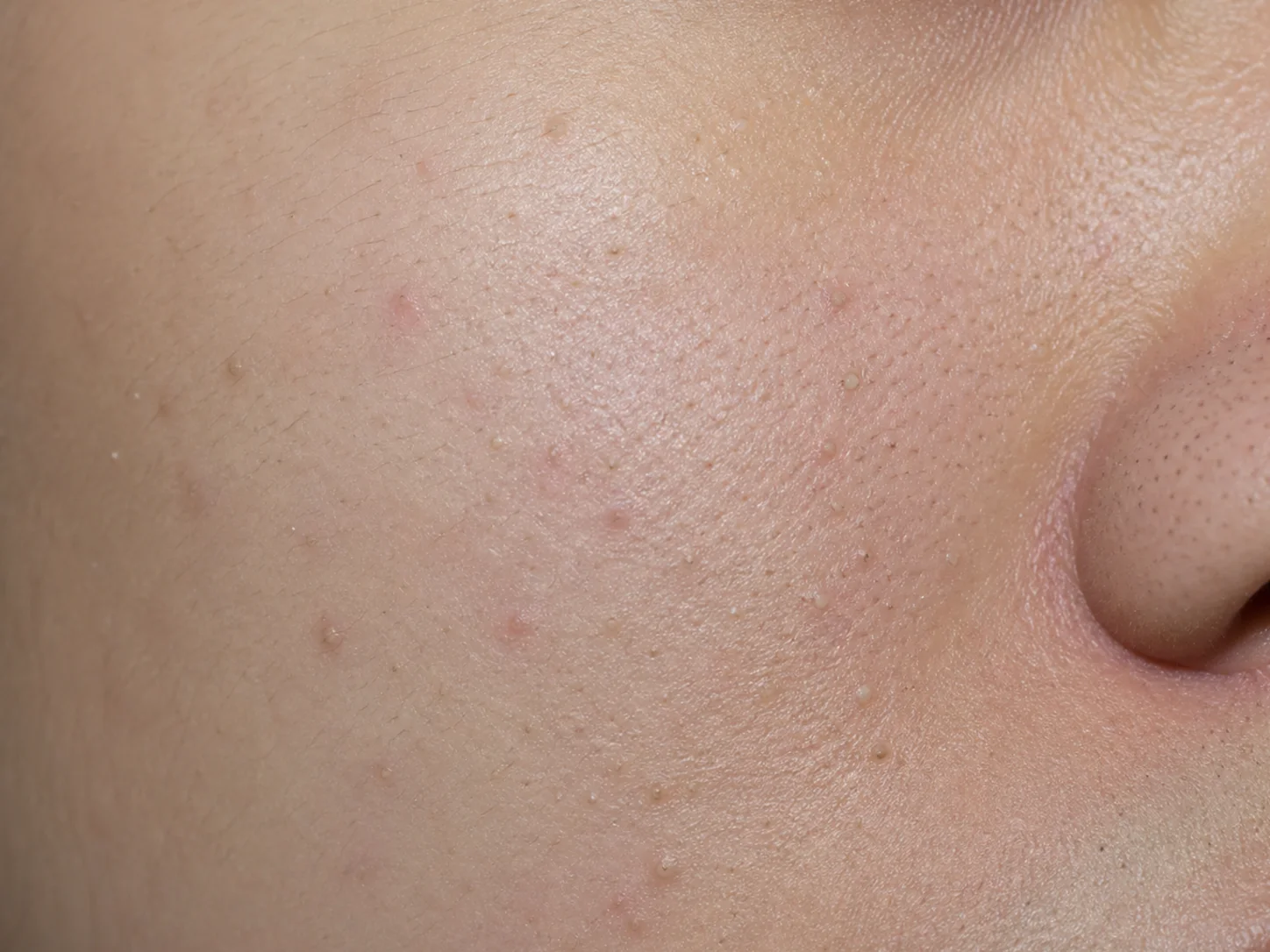
Even if there is almost no redness, small bumps may appear continuous depending on the direction of the light. Rather than pushing hard, we check for changes following stimulation.
Korean medicine treatment addresses recurring acne that cannot be attributed solely to sunscreen
If deep inflammation along the jawline occurs before every menstruation even after simplifying products and reducing contact, or if facial heat and sebum increase following all-nighters or digestive discomfort, simply changing sunscreen will not solve the problem. Treatment must separate surface irritation from the body's recurring internal conditions.
Baekrokdam adjusts the focus of herbal medicine prescriptions based on whether red, suppurating inflammation and oiliness are central, or whether dryness and stinging, to the point of being unable to tolerate treatment products, are central. Acupuncture is used in parallel to regulate the axis where tension, sleep, digestion, and inflammation fluctuate together without overstimulating the face, ensuring that necessary skin care is not compromised.
A good sunscreen is not one that makes the skin perfectly matte
If a small amount of oil remains in the afternoon but new comedones do not increase and there is no stinging, and if it is removed in the evening without excessive cleansing, it may be a good fit for your current skin. Conversely, even if the feel is refreshing, if the entire face becomes red and dead skin cells increase, you should re-examine the product's texture and ingredients.
UV protection does not replace acne treatment. The actual goal is to create a combination where new inflammation decreases, existing marks gradually fade, and you do not have to pause skin treatment due to the process of applying and removing products.
Acne-prone skin also requires UV protection. Adjust non-comedogenic labels, stinging, morning product layering, and evening cleansing burden together; deep inflammation that recurs despite changing products is handled separately through herbal medicine, acupuncture, and skin treatments.
Evidence and Update Information
This content was organized by Korean medicine doctor Choi Yeon-seung based on the materials below and was updated on 2026-09-01.
- American Academy of Dermatology: Choosing the right sunscreenSelection principles considering non-comedogenic labels and ingredients for acne-prone and sensitive skin, and dark marks following inflammation
- American Academy of Dermatology: Acne skin care tipsPrinciples for cleansing, moisturizing, and product selection for acne-prone skin
- Post-inflammatory hyperpigmentation treatment outcomes: systematic reviewTreatment results for post-inflammatory hyperpigmentation and evidence for management including photoprotection