Recurrence after extraction
When closed comedones recur after extraction
We compare whether skin-colored or white comedones are recurring, whether there is widespread stinging and roughness, or whether small red papules are clustering around the mouth or itchy rashes of similar size are spreading.
Extraction Not all bumps felt after extraction are new closed comedones. New closedcomedonesWe must first determine whether it is irritation that has roughened the skin, or a rash resembling acne such as perioral dermatitis or folliculitis, as the subsequent treatment will differ.
| Recurrence Pattern | What to observe on the skin | Associated Changes |
|---|---|---|
| Redness and stinging immediately after extraction | Irritation and skin barrier recovery | Cleansing, exfoliation, and cosmetic use |
| Closed comedones in the same area after a few days | Area where closed comedones form | Masks, hair products, and oiliness |
| Red inflammation following closed comedones | Speed at which comedones turn into papules or pustules | Sleep, stress, and menstrual cycle timing |
| High sebum levels but inner skin tightness | Coexistence of oiliness with dryness and stinging | Tightness after cleansing and afternoon sebum |
| Cluster of small red papules around the mouth | Lip boundary, presence of comedones, and stinging | Timing of facial ointment or cosmetic use |
| Spread of similar-sized rashes and itching | Presence of comedones, itching, and distribution along hair follicles | Changes after sweating, humidity, or friction |
Extraction is a treatment to clear current comedones
Closed comedonesis Sebumand skin cells block the pore opening, creating closed comedones. Properly performed extraction can quickly smooth the surface by removing already blocked contents, but it does not change the process by which subsequent dead skin cells and sebum accumulate in the pores.
If the skin becomes smooth immediately after extraction but the same area feels bumpy again after a few days or weeks, it is not that the extraction was useless, but rather that the rate of new comedone formation is fast. In this case, what is needed is not continuously increasing the frequency of extractions, but pore treatment to reduce blockage and care to ensure the skin can tolerate that treatment.
Not all returning bumps are new closed comedones
On skin that is red and stinging after extraction, scrubbingoverlapping peeling or acne-fighting ingredients can cause dead skin to lift and the surface to become rough. Although it may feel like closed comedones to the fingertips, it is not a comedone inside the pore but irritated skin barrierand may be a case of subtle inflammation.
True closed comedones remain as relatively consistent flesh-colored or white bumps, and over time, some may turn red papulein color. On the other hand, if the area where the product was applied suddenly feels burning and becomes rough, you should reduce irritation and focus on recovering the skin condition first rather than trying to extract more.
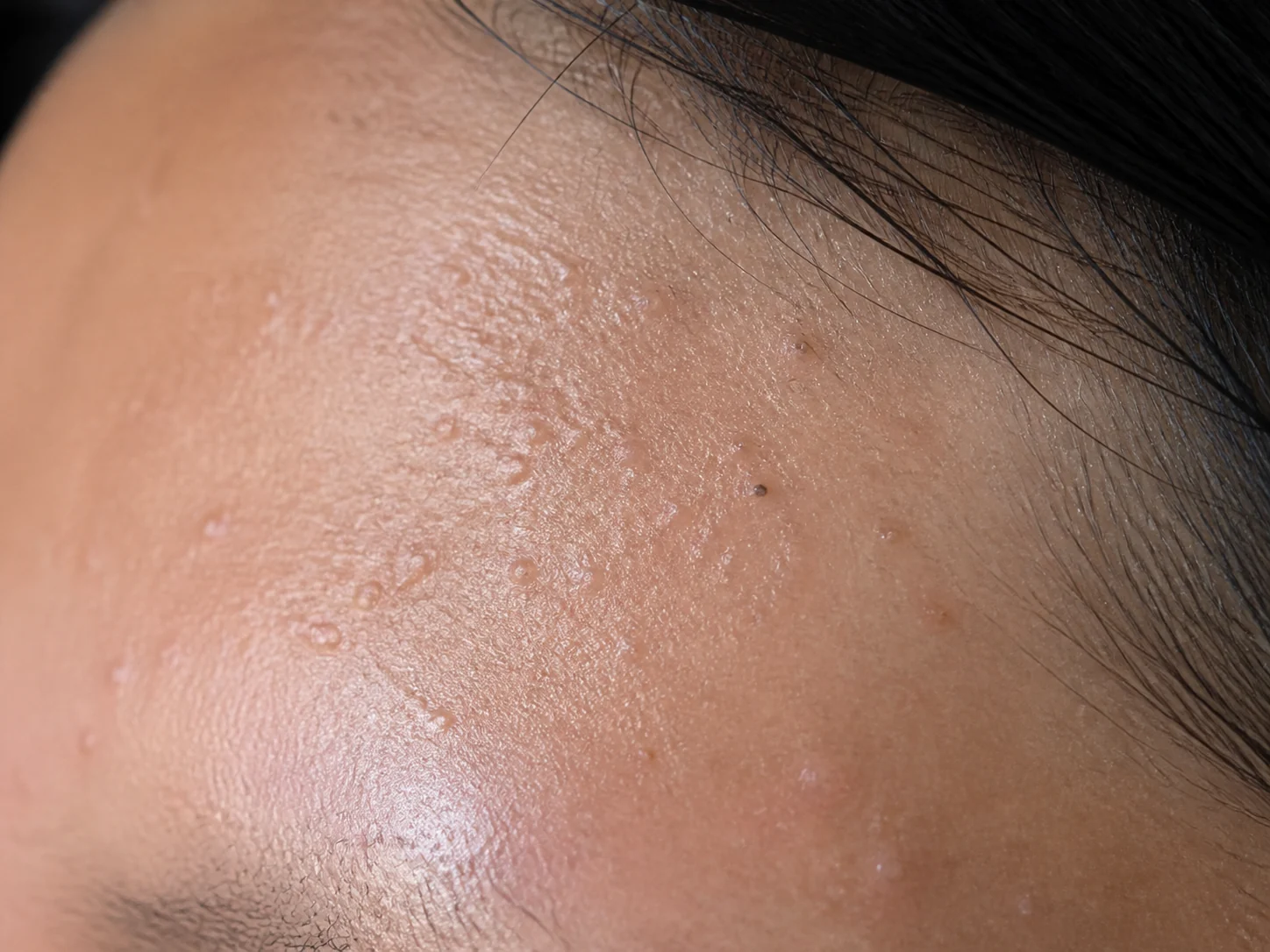
If small flesh-colored bumps are more prominent than red inflammation, check if it is comedonal acne before adding strong irritation.
Rashes that gather around the mouth or are itchy require differentiation before extraction
If small red papules gather around the mouth or beside the nose, avoiding the immediate edge of the lips, and stinging or dryness is more prominent than comedones, Perioral Dermatitis check for other conditions. Please also let us know during your medical evaluation when you started using facial ointments or new cosmetics.
red papules of similar size or pustulesif they appear all at once and there is significant itching, or if they increase after sweating, humidity, or friction, Hair follicleyou must differentiate the type of inflammation. Since bacterial or Malassezia folliculitis may require different treatments, do not extract them or apply acne ingredients based only on photos.
Treatment to reduce comedones must proceed at an intensity the skin can tolerate
Treatment for comedones involves topical medications that reduce pore clogging and procedures tailored to the skin's condition. These take time to show effects; if you impulsively add various exfoliating ingredients all at once, the resulting stinging may lead you to stop the necessary treatment.
When cleansing, focus on washing away waste without irritation rather than trying to completely eliminate sebum, and use non-comedogenic moisturizers to reduce tightness. It is better to observe for a certain period whether the current prescription reduces comedones and if the skin can tolerate it, rather than frequently switching to new products.
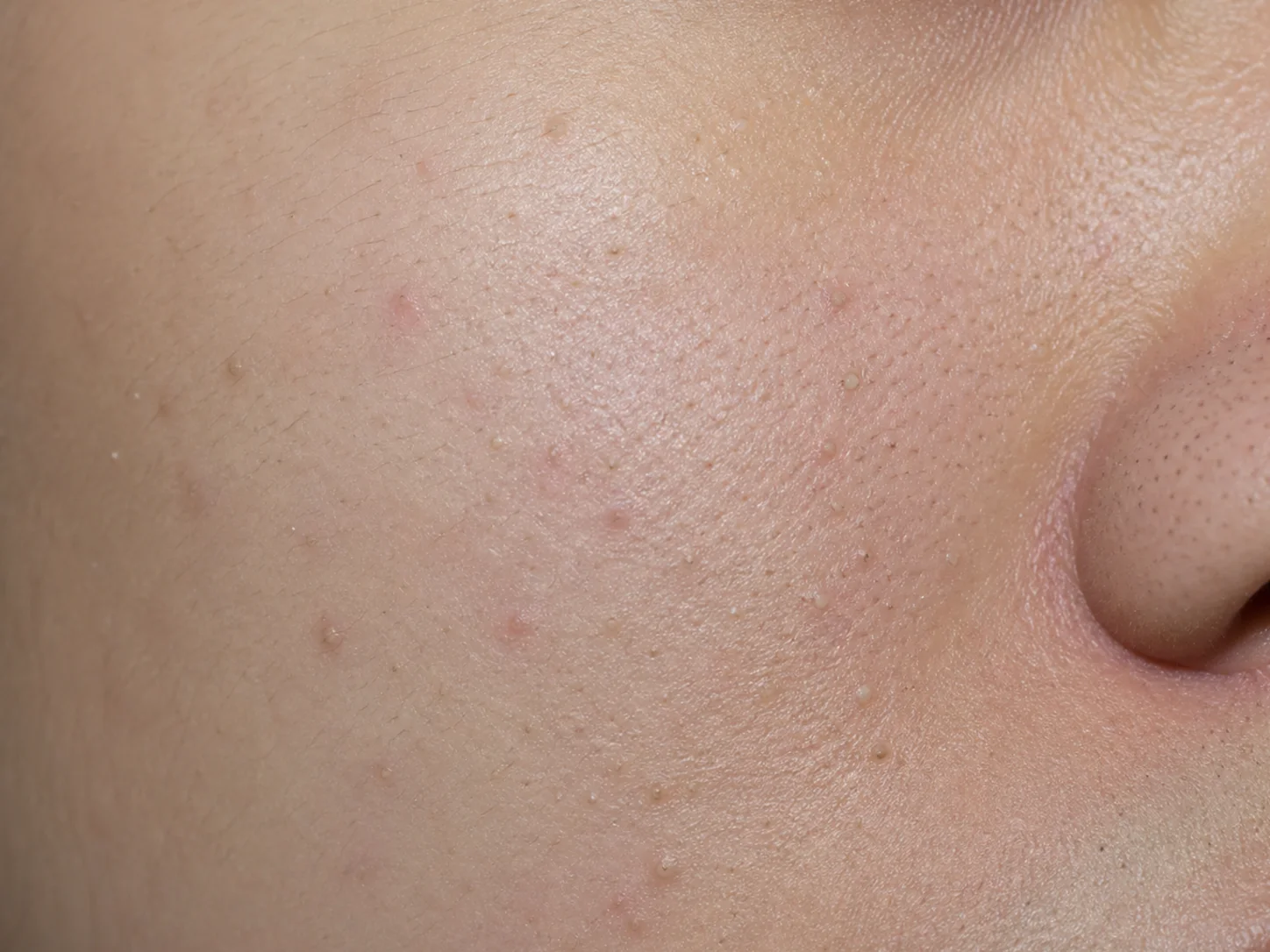
Even if there is almost no redness, small bumps may appear continuous depending on the direction of the light. Rather than pushing hard, we check for changes following stimulation.
Korean medicine treatment also regulates the body's rhythm that causes recurring tiny bumps
For those whose sebum and facial heat increase before menstruation or after staying up all night, causing comedones to turn into red inflammation, or those whose chin and cheeks become rough when experiencing indigestion or constipation, skin care alone may not sufficiently reduce these recurring cycles.
Herbal medicine treatment at Baekrokdam does not view all tiny bumps as the same type of 'heat'. During periods when the skin is red, oily, and quickly turns into inflammation, we lower the patterns of concentrated heat and dampness; when dryness and delayed recovery after irritation are prominent, we reinforce the foundation so the skin can tolerate treatment. Acupuncture is also combined not to repeatedly target the acne on the face, but to regulate the axis where digestion, sleep, tension, and skin inflammation fluctuate together.
In daily life, start by reducing contact that blocks or constantly presses on the pores
If there are clear recurring areas, such as the forehead where hair oil and wax touch, the jawline where masks and straps press for long periods, or areas where oily cosmetics are layered, first minimize that contact. Do not leave sweat on the skin for too long, but there is no need to use strong cleansers every time you wash.
Touching your face daily to find new tiny bumps and extracting them at home increases the risk of inflammation and scarring. The goal of lifestyle management is not to reduce sebum to 0, but to reduce irritation that increases pore clogging and create conditions where treatment can work consistently.
Improvement is measured by the rate of new comedones, not by a single day of smoothness
Smoothness immediately after extraction is the effect of the procedure; a decrease in the formation of new closed comedones and a reduction in the number of those turning into red inflammation is the result of repetitive treatment. The skin has actually changed when the interval between necessary extractions lengthens and the density of bumps in the same area decreases.
During your medical evaluation, it is sufficient to mention the approximate time of your last extraction, when you started feeling bumps again, the primary areas they appear, and whether you experience stinging or dryness, even if you do not count them daily. We will then adjust the next steps by analyzing how the Korean medicine treatment and topical treatment each responded.
If flesh-colored or white comedones refill, observe the rate of new comedones; if the skin feels widely stinging and rough, reduce irritation first. If small red papules without comedones gather around the mouth or if itchy rashes of similar size spread, do not extract further and check for other conditions such as perioral dermatitis or folliculitis during a medical evaluation.
Evidence and Update Information
This content was organized by Korean medicine doctor Choi Yeon-seung based on the materials below and was updated on 2026-09-03.