The Structure of Recurrence
When acne returns after stopping medication, what does Korean herbal medicine look at differently?
Calming current inflammation and regulating the flow of heat, sebum, digestion, sleep, and menstruation, which make it easy for new acne to form, are two different questions.
While taking medication, inflammation and SebumIf acne decreased but new breakouts appear in the same locations after stopping treatment, rather than repeating a failed treatment, it is time to analyze the stage of the acne and Recurrencethe bodily conditions that push it to the surface.
| Recurring Scenario | What to observe on the skin | What to observe in the body |
|---|---|---|
| After stopping sebum-regulating medication | Whether tiny bumps (closed comedones) appear first or red inflammation appears first | Dryness, feeling of heat in the upper body, constipation, fatigue |
| After antibiotics or topical medications | Recurrence of redness or pustular acne in the same locations | Changes in digestion, bowel movements, and sleep |
| Jawline breakouts before menstruation | Hard, painful acne and scarring | Cycle, menstrual cramps, coldness in the lower abdomen |
| After staying up all night or experiencing stress | Number of new acne breakouts and facial heat sensation | Falling asleep, pulsating sensations, appetite and digestion |
If acne returns after stopping medication, we first examine the nature of the returning acne
After sebum and red inflammation have decreased well, but treatment is stopped, Closed comedonesthe remaining conditions for recurrence differ depending on whether sebum fills up again first, or whether deep, painful acne first appears along the jawline. There is no need to undo the effect of the previous treatment in reducing inflammation.
Baekrokdam does not simply ask when you stopped the medication. By observing which acne improved during treatment, which returned first, and how skin dryness and heat sensation have changed, we divide the next Korean herbal medicine treatment into parts to maintain and parts to address anew.
We distinguish whether inflammation remains despite reduced sebum, or whether pores clog again after dryness
Some people experience a reduction in oiliness after sebum-control treatment, but as the skin becomes stinging and flaky, Closed comedonessebum fills up again. Conversely, some may have less oily skin, but red and painful inflammation continues to appear in the same areas, such as the jawline and cheeks.
In the first case, rather than treatment that dries the skin more aggressively, skin barrierit is necessary to supplement the recovery of bodily fluids; in the second case, the remaining heat and inflammation must be lowered first. Even within the single word 'recurrence,' the focus of the Korean herbal medicine varies depending on the path the skin took to return.
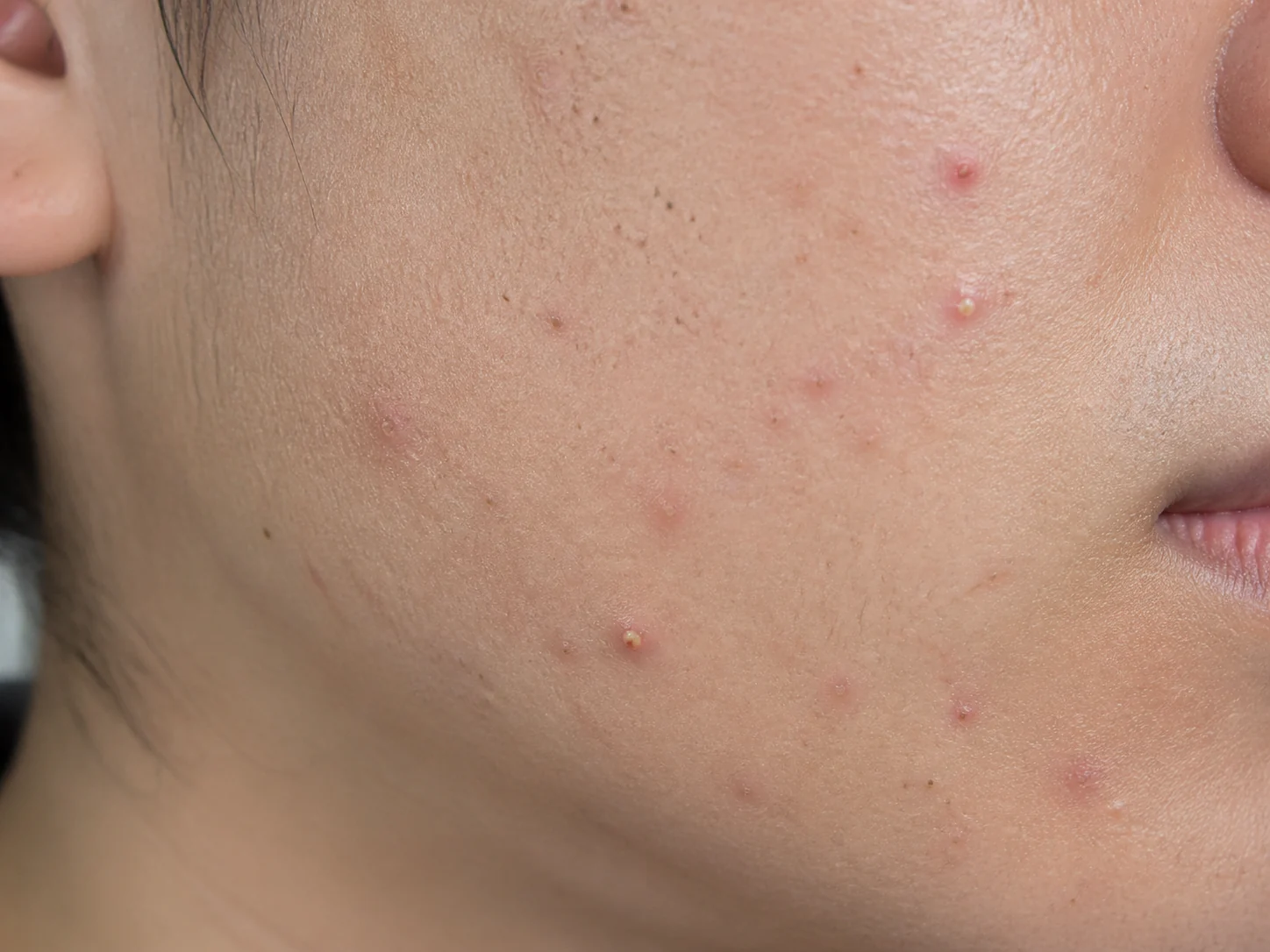
Since comedones, papules, and pustules can appear together on one face, we examine the deepest acne and the rate at which new ones form together.
Korean herbal medicine treatment addresses the axes of sleep, digestion, and menstruation that recur alongside skin issues
We check if inflammation flares up when late-night meals after overtime work coincide with a sensation of heat rising to the upper body, or if deep acnealso appears as constipation and menstrual cramps worsen before menstruation, or after digestion is impaired and the face becomes oily pustular acneWe observe whether this increases.
If there are small red pimples and a strong sensation of heat rising to the upper body, we increase the proportion of heat-clearing treatment; if oily, yellow, suppurating acne recurs, damp-heatwe increase the proportion of treating those conditions. If the skin is dry but heat remains at night, we focus on nourishing yin; if deep acne along the jawline is prominent before menstruation, we consider both regulating menstruation and treating blood stasis.
Dermatological treatment and Korean medicine treatment divide the roles of managing current inflammation and the conditions for recurrence
Dermatological treatments necessary to reduce deep inflammation and the risk of scarring can be continued. Rather than replacing medication, Korean medicine treatment focuses on the bodily conditions that cause pores to repeatedly clog and inflammation to grow, as well as managing dryness and delayed recovery following treatment.
Acupuncture treatment is used in parallel to help relieve tension and local circulation around the jaw and neck, and to ensure the skin has time to recover after inflammation subsides. Extractionand strong peelingare determined according to the skin stage after active inflammation has stabilized.
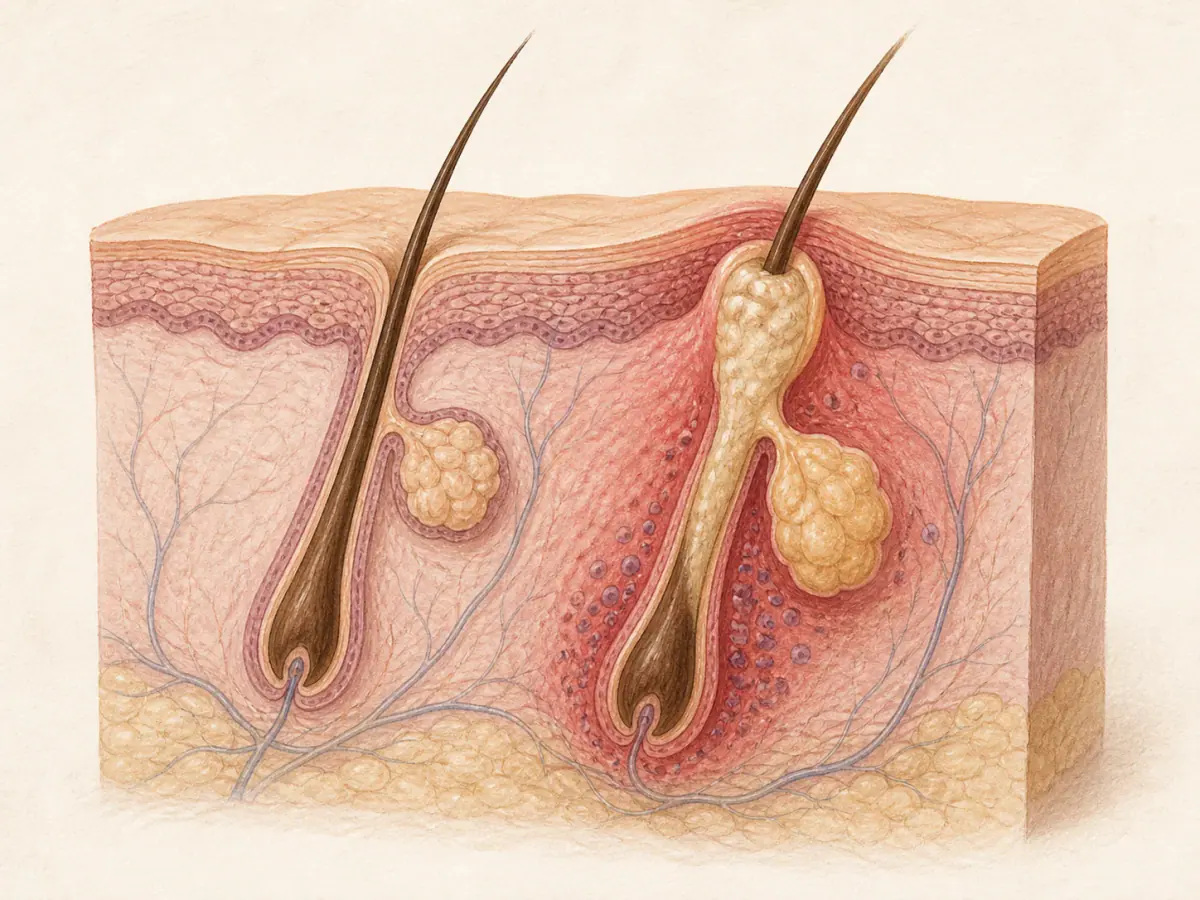
As sebum and dead skin cells accumulate at the entrance of the hair follicle and inflammation deepens, the appearance of the acne and the risk of scarring may change.
The criterion for improvement is not having clear skin today, but having the next acne breakout occur later
In the early stages of treatment, you may first notice a decrease in deep, painful acne and a longer interval between new suppurating pimples. Next, the speed at which closed comedones (tiny bumps) form, the duration of red marks, and the stinging and dryness after cleansing should decrease in turn.
Baekrokdam does not fix the initial prescription. As inflammation subsides, we adjust the treatment to the next stage, such as reducing the weight of heat-clearing and reinforcing the skin barrier and the recovery of sleep and digestion, with the goal of achieving skin that does not significantly regress even after stopping the medicine. The criterion for the maintenance stage is whether the scale of recurrence decreases even when work stress or menstrual cycles are unstable. Treatment for marks continues according to the skin's recovery speed after new inflammation has stabilized.
Recurrence after acne medication is not a failure of previous treatment. By examining the returning acne along with skin dryness, heat sensation, sleep, digestion, and menstruation, we can set the next goal for herbal medicine and acupuncture treatment to change the recurrence interval and skin recovery. We continue treatment while maintaining the aspects that have improved.
Evidence and Update Information
This content was organized by Korean medicine doctor Choi Yeon-seung based on the materials below and was updated on 2026-08-26.