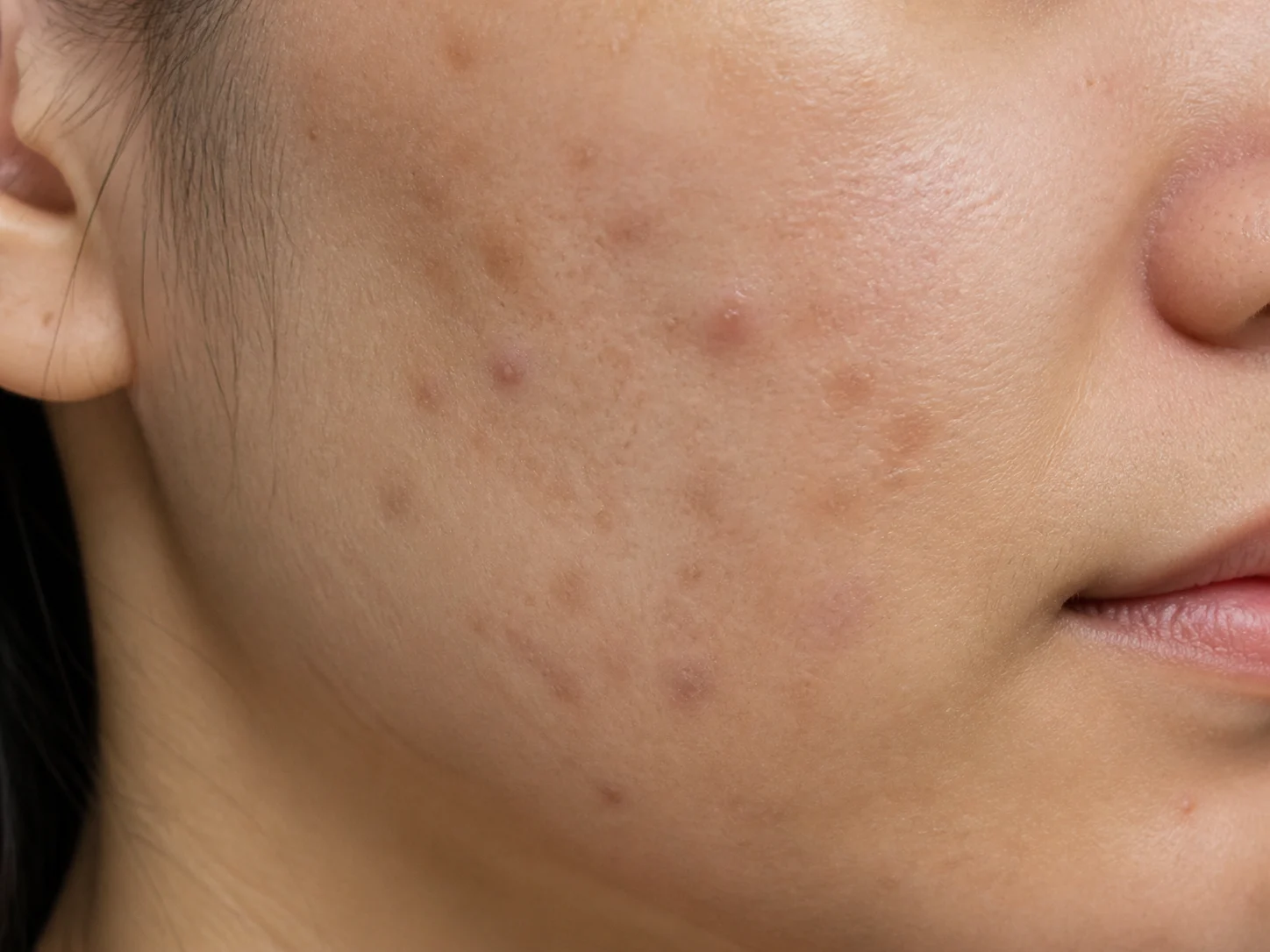
Post-acne hyperpigmentation: Read in the order of your curiosity
Before concluding based on a single red spot
Post-acne hyperpigmentation: Depth of symptoms and remaining marks
Post-acne hyperpigmentation is a change where melanin increases in the area where inflammation has passed, leaving flat brown or grayish-brown spots. It differs from structural scars in that the skin surface is not pitted or raised, and it is distinct from Post-inflammatory erythemapink or red-centered erythema. If UV exposure, friction, extraction, and new inflammation recur, the marks may become darker and last longer.
Distinguishing remaining marks
Categorizing brown, red, and pitted surfaces
| Change | Closest Description | Points to Check |
|---|---|---|
| Flat brown or grayish-brown spots | Post-inflammatory hyperpigmentation | Records of UV exposure, extraction, and new inflammation |
| Flat pink or red spots | Post-inflammatory erythema | Distinguish from general facial flushing |
| Appears sunken depending on the light | Atrophic scars | Evaluate surface depth and boundaries |
| Swelling, pain, or presence of pus | Active acne | Treatment of new acne takes priority |
When to seek medical evaluation first
Changes that should not be dismissed as simple pigmentation
For acne that changes rapidly, other causes must be identified.
- If colored spots grow rapidly or if the shape and color change irregularly
- If repeated bleeding, scabbing, or ulcers occur
- If pain, heat sensation, or pus spreads rapidly
Distinguishing between pigmentation management and the role of recurrent inflammation
Criteria for observing the inflammatory process that creates new marks, rather than claiming to erase pigmentation with herbal medicine
Herbal medicine treatment does not promise to directly remove melanin pigmentation that has already formed. If new inflammation continues to appear on the chin or cheeks, and if this correlates with worsening sleep, menstruation, digestion, or heat sensations, we focus on the conditions of recurrent inflammation to prevent more marks from forming. pattern identificationIt will be done.
Criteria for evaluating color and surface separately
First, distinguish whether the area is flat and brown or if there are indentations or protrusions.
Reducing the causes of new marks
We observe the progression where extraction, friction, and UV exposure overlap with new inflammation.
Criteria for identifying aggravating factors in daily life using a timeline
We only reflect changes that move in tandem with acne among menstruation, sleep, bowel movements, and upper body heat.
Treatment GoalWe create a skin condition where the speed of new inflammation and marks forming is reduced, and existing pigment management can continue without irritation.
Consult using 7-day photos of post-acne hyperpigmentation and records of new acne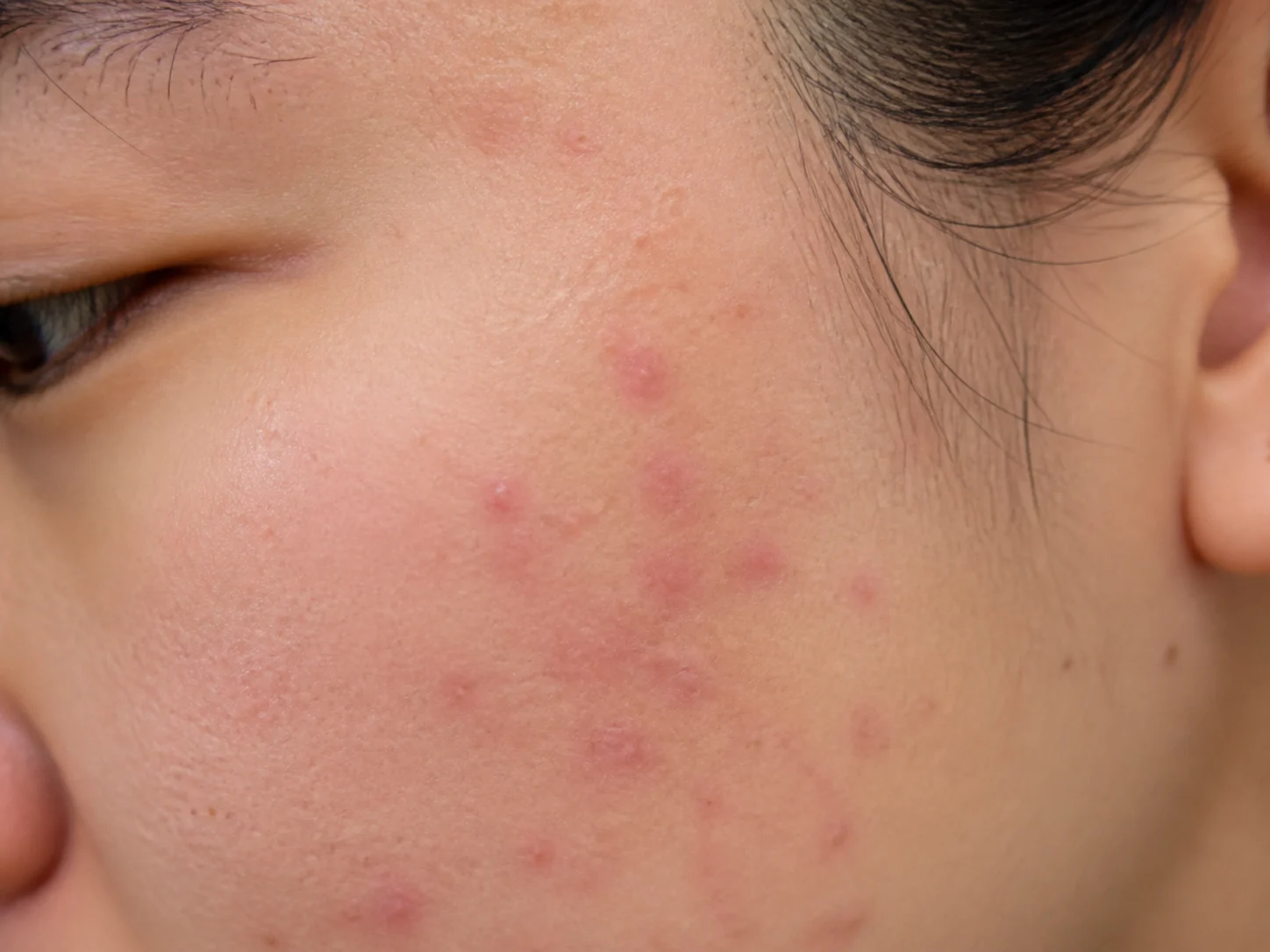
Redness that remains flat at the site of acne, without being raised or painful, must be distinguished from new inflammation, rosacea, and pitted scars.
Educational reproduction images and simplified diagrams of the process do not represent actual patient photos or treatment results.If you have had these experiences
For those whose breakouts have decreased but brown spots remain in layers
Herbal medicine treatment does not promise to directly remove melanin pigment that has already formed. If new inflammation continues to appear on the chin and cheeks and overlaps with sleep, menstruation, digestion, and heat sensations, we perform pattern identification (Byeonjeung) on the conditions of recurrent inflammation to prevent more marks from increasing.
For those whose flat brown marks are not easily covered by makeup
brown markswhen new acne continues to form along with them
For those who find it difficult to distinguish between red marks, brown marks, and pitted scars
When inflammation along the jawline repeatedly overlaps with menstruation and sleep
For those whose marks darken after extraction or sun exposure
When dryness and inflammation increase after irritating skin treatments
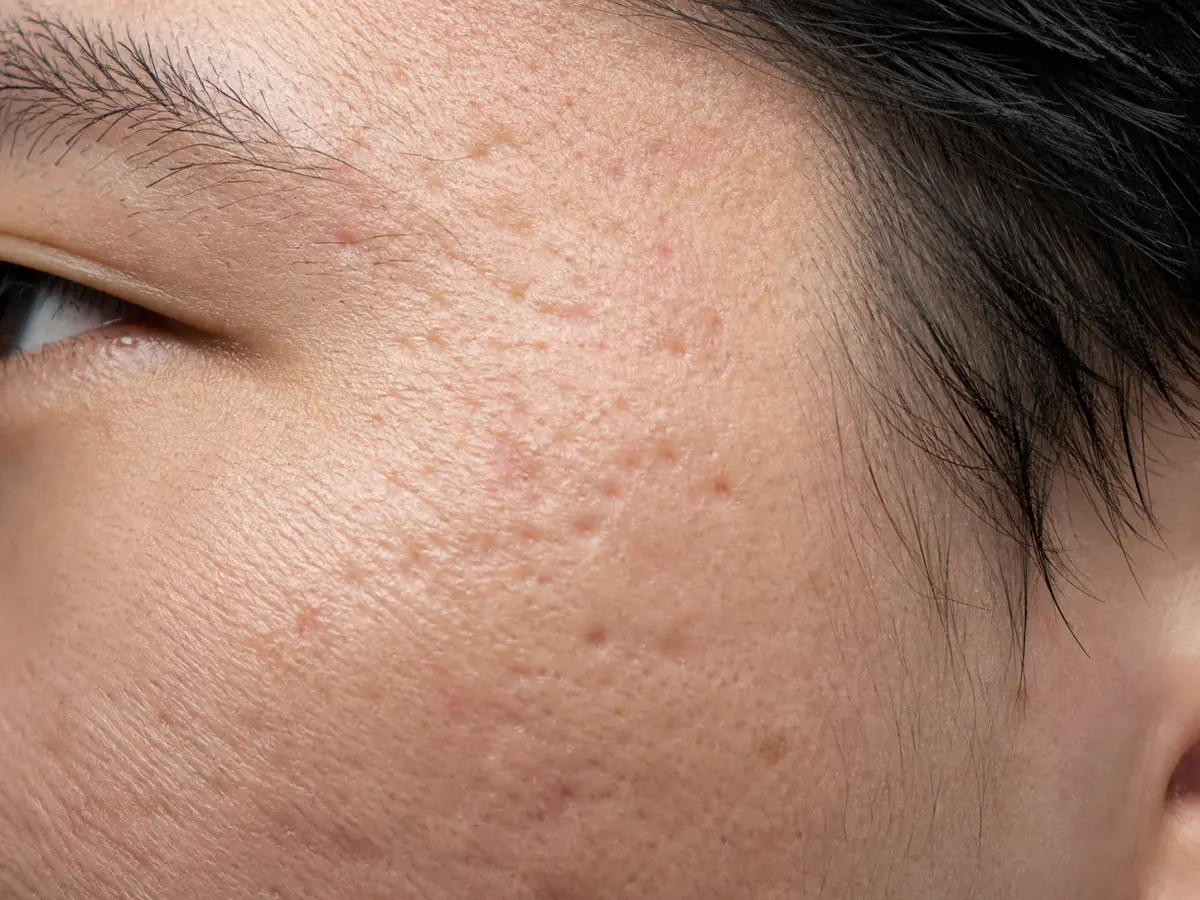
Since indentations with different widths, borders, and depths can be mixed in one area, we distinguish between flat marks and structural scars.
This is how we examine during the medical evaluation
Post-acne hyperpigmentation: depth of symptoms and remaining traces
Post-acne hyperpigmentation is a change where melanin increases at the site where inflammation has passed, leaving flat brown or grayish-brown spots. It differs from structural scars in that the skin surface is not pitted or raised, and it is distinguished from post-inflammatory erythema, which is primarily pink or red. UV exposure, friction,Extractionand if new inflammation recurs, marks may become darker and last longer.
Changes to check first
Post-acne hyperpigmentation is a change where melanin increases in the area where inflammation has passed, leaving flat brown or grayish-brown spots. It differs from structural scars in that the skin surface is not indented or raised, and it is distinguished from post-inflammatory erythema, which is primarily pink or red. These marks may become darker and last longer if UV exposure, friction, extraction, and new inflammation recur.
Repeated timing and context
Post-acne hyperpigmentation is a change where melanin increases in the area where inflammation has passed, leaving flat brown or grayish-brown spots. It differs from structural scars in that the skin surface is not indented or raised, and it is distinguished from post-inflammatory erythema, which is primarily pink or red. These marks may become darker and last longer if UV exposure, friction, extraction, and new inflammation recur.
Changes to monitor after treatment
We create a skin condition where the rate of new inflammation and marks is reduced, and existing pigment management can continue without irritation.
Reasons Why It Does Not Heal Easily
Post-Acne Hyperpigmentation: Why new acne continues to appear even after one is calmed
Korean herbal medicine treatment does not promise to directly remove melanin pigment that has already formed. If new inflammation continues to appear on the chin and cheeks, and if this is linked to sleep, menstruation, digestion, or heat sensations, we perform a pattern identification (Byeonjeung) of the conditions causing recurrent inflammation to prevent further marks.
Criteria for evaluating color and surface separately
We first distinguish whether the area is flat brown or if there are indentations or protrusions.
Reducing the causes of new marks
We examine the progression where extraction, friction, and UV exposure overlap with new inflammation.
Criteria for identifying aggravating factors in daily life via a timeline
We only reflect changes that fluctuate in tandem with acne among menstruation, sleep, bowel movements, and upper body heat.
Using photos as medical records
Post-Acne Hyperpigmentation: Comparing 7-day changes using photos with the same lighting
We create a skin condition where the rate of new inflammation and marks is reduced, and existing pigment management can continue without irritation.
If it is flat, it may be a pigment change
If there are no shadows or indentations even when light is shone from the side, it may differ from structural scarring.
Redness and brown tones may be mixed
As a single acne lesion heals, it may appear to change from red to brown, or both changes may remain together.
Do not squeeze with your hands
Damage from extraction and recurrent inflammation can simultaneously increase the risk of marks and scars.
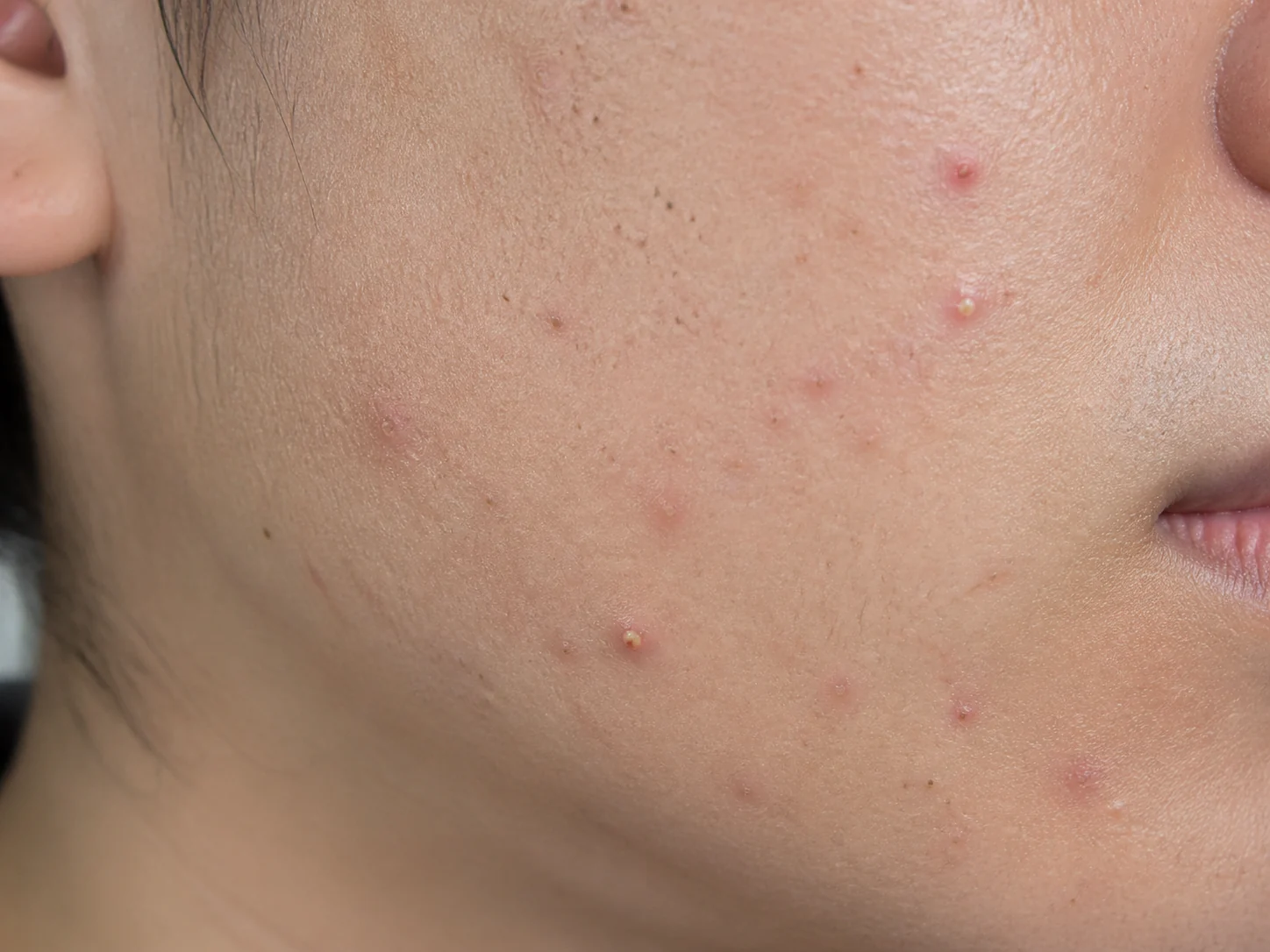
Since comedones, papules, and pustules can appear together on one face, we examine the deepest acne and the rate at which new ones form together.
Pattern Identification (Byeonjeung) with Korean herbal medicine for post-acne hyperpigmentation
Why prescriptions for post-acne hyperpigmentation differ based on sebum, heat, dryness, and menstruation
The goals of Korean herbal medicine treatment differ depending on whether only existing marks remain or if new inflammation and dryness persist.
When only flat brown spots remain
We examine areas where brown or grayish-brown marks remain without any change in skin texture. We check if they darken after UV exposure or extraction. While pigment treatment is handled separately, the focus is on preventing new inflammation and irritation.
When pustules continue to appear among brown marks
sebum, red papulepustules that recur in the same spot. We inquire about worsening factors such as upper body heat, alcohol consumption, constipation, and lack of sleep. The priority is placed on reducing the recurrence of new inflammation, sebum, and heat.
When skin stings and darkens after using exfoliating products
We examine widespread dryness, flaking, burning sensations, and color changes. Simultaneously, we check for any recently changed products and the frequency of face washing. The priority is placed on reducing irritation and supporting recovery.
Changes to monitor during treatment
Changes to check in next week's photos
We aim to slow the rate at which new inflammation and marks appear, creating a skin condition where existing pigment management can continue without irritation.
Photos distinguishing brown marks from newly formed acne
Please take photos under the same lighting for 7 days and include a note titled 'Photos distinguishing brown marks from newly formed acne'.
Whitening/exfoliating products currently in use and extraction history
Please take photos under the same lighting for 7 days and include a note titled 'Whitening/exfoliating products currently in use and extraction history'.
Timing of new inflammation in relation to menstruation, sleep, and digestion
Please take photos under the same lighting for 7 days and include a note titled 'Timing of new inflammation in relation to menstruation, sleep, and digestion'.
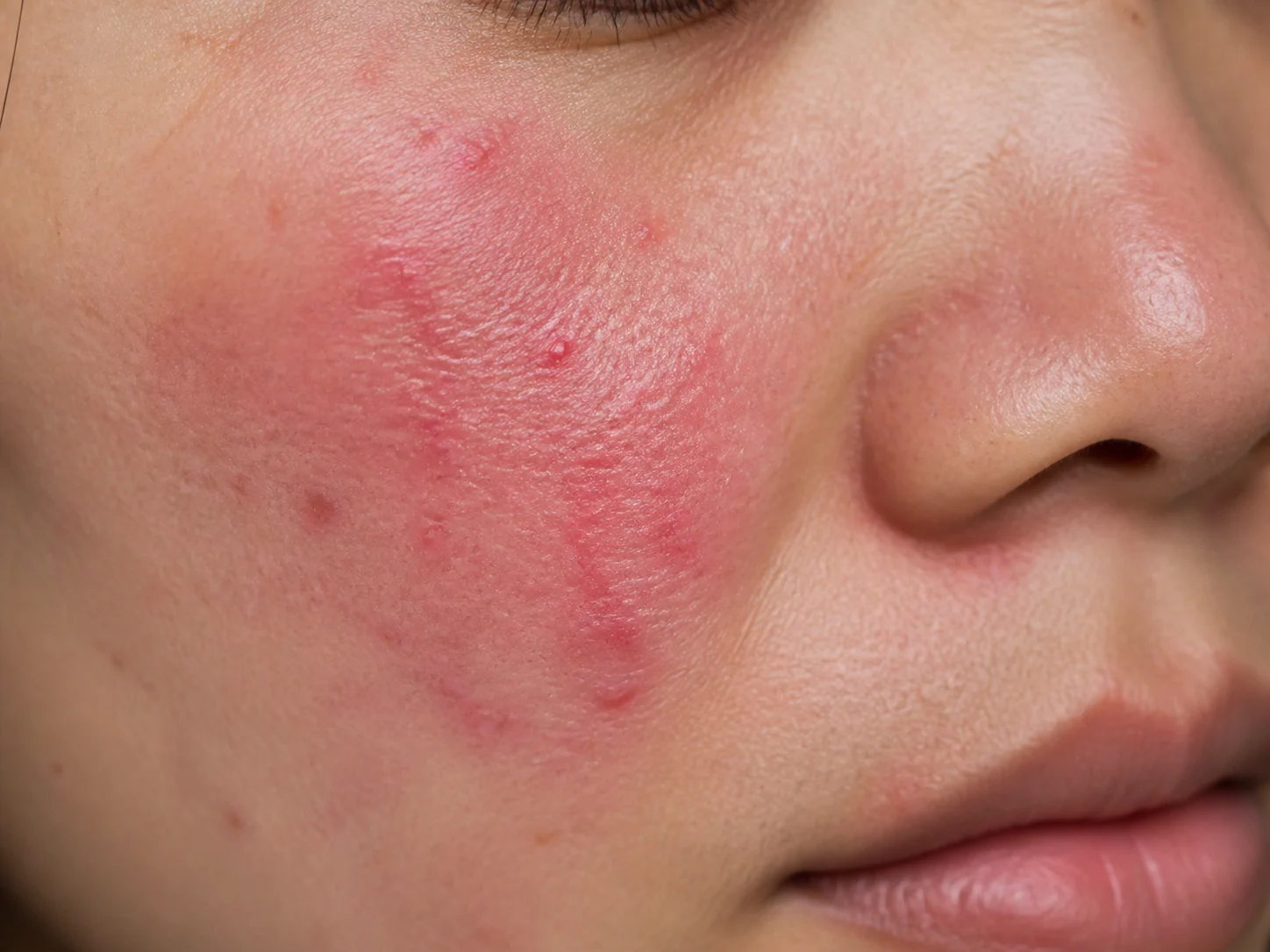
If wide redness on the nose and cheeks recurs due to heat or alcohol consumption without distinct comedones, we also check for rosacea-related flushing.
At the crossroads of sebum, heat, and recovery speed
Criteria for categorizing brown marks into pigment-centered, persistent inflammation, or barrier damage
The goals of Korean herbal medicine treatment differ depending on whether only existing marks remain or if new inflammation and dryness persist.
Pattern identification (Byeonjeung) is not about assigning a single constitution name to acne. The priority of the prescription changes depending on the connection between comedones, inflammation, heat sensation, sebum, delayed recovery, and menstruation, sleep, and digestion.
When only flat brown spots remain
- Changes observed in acne
- We examine areas where brown or grayish-brown marks remain without any change in skin texture.
- Accompanying changes observed in the body
- We check if they darken after UV exposure or extraction.
- Prescription priority
- Pigmentation treatment is handled separately, with the primary focus on preventing new inflammation and irritation.
When pustules continue to form amidst brown spots
- Changes observed in acne
- We check if sebum, red papules, and pustules recur in the same locations.
- Accompanying changes observed in the body
- We inquire about upper body heat, alcohol consumption, constipation, and lack of sleep as aggravating factors.
- Prescription priority
- The priority is placed on reducing the recurrence of new inflammation, sebum, and heat.
When skin feels stinging and spots darken after using exfoliating products
- Changes observed in acne
- We examine widespread dryness, flaking, burning sensations, and color changes.
- Accompanying changes observed in the body
- We simultaneously verify any recently changed products and the frequency of face washing.
- Prescription priority
- The priority is placed on reducing irritation and supporting recovery.
When skin is dry and sensitive, but inflammation and marks persist
- Changes observed in acne
- For post-acne hyperpigmentation, we monitor the time it takes for tightness, flaking, and redness around the acne to subside.
- Accompanying changes observed in the body
- We check if new acne becomes deeper following lack of sleep, nighttime heat sensations, dry mouth, or fatigue.
- Prescription priority
- Rather than only lowering heat, we increase the focus on supplementing bodily fluids and supporting skin recovery.
Order of prescription adjustment
- Categorize into brown spots, redness, and indentations
Different types of changes are not grouped together as the same kind of mark.
- Count new inflammation weekly
We continuously monitor the number of new acne breakouts first, rather than the color of existing marks.
- Simultaneously reduce UV exposure, extraction, and product irritation
We identify lifestyle factors that cause spots to darken during treatment.
Why consider Korean herbal medicine treatment now?
- When new acne continues to appear along with brown spots
- When inflammation along the jawline repeatedly coincides with menstruation or sleep patterns
- When dryness and inflammation increase after irritating skincare treatments
What is evaluated in herbal medicine treatment for this condition
- Photos distinguishing between brown spots and newly formed acne
- History of extraction and current use of whitening or exfoliating products
- Timing of new inflammation in relation to menstruation, sleep, and digestion
Deep nodules, widely spreading infections, and rapidly forming scars must be checked at a dermatology clinic without delay. For already pitted scars, separate procedures should be considered; Korean herbal medicine treatment examines the patterns of recurring new inflammation and the state of sleep, digestion, and menstruation that slow down skin recovery.
Consult about the progress of post-acne hyperpigmentationAcne Glossary
Additional information to know regarding post-acne hyperpigmentation
You can check simple definitions before proceeding to detailed explanations.Frequently Asked Questions
Frequently Asked Questions about post-acne hyperpigmentation
What is the difference between brown acne marks and scars?
Brown marks are color changes on a flat surface, whereas scars are primarily characterized by changes in texture, such as indentations or protrusions.
Can red marks turn brown?
During the recovery process, redness and brown pigmentation may appear together or may look different depending on the stage of healing.
Does extracting acne worsen hyperpigmentation?
Repeated extraction and inflammatory damage can increase the risk of pigmentation and scarring, so it is recommended not to squeeze them by hand.
Can Korean herbal medicine remove brown marks?
We do not promise to directly remove pigmentation that has already formed. If new inflammation continues to occur, the consultation will focus on the goal of reducing the conditions that cause this recurrence.
What should I record before a consultation for post-acne hyperpigmentation?
Photos distinguishing brown marks from new acne; whitening or exfoliating products currently in use and extraction history; and the timing of new inflammation in relation to menstruation, sleep, and digestion.
Evidence and Update Information
Dr. Choi Yeon-seung, a Korean medicine doctor, organized this content based on the official professional materials and disease-specific clinical data below, and updated the content on 2026-08-26.
- American Academy of Dermatology: Adult acne treatmentGuide to Post-Inflammatory Hyperpigmentation After Acne
- DermNet: Postinflammatory hyperpigmentationIncreased Melanin After Inflammation and the Influence of UV Rays
- American Academy of Dermatology: Acne skin care tipsExtraction and the risk of scarring and hyperpigmentation
- American Academy of Dermatology: Acne resource centerPatient Guide on Acne and Subsequent Color Changes
- DermNet: Acne scarringDistinguishing Post-Inflammatory Erythema/Hyperpigmentation from Structural Scarring