Sebum and the Skin Barrier
When You Have High Sebum but Your Skin Feels Stinging and Dry
We explain how to distinguish between active acne, treatment irritation, and skin barrier dryness, and how to simultaneously pursue sebum-reducing treatment and recovery-supporting care.
Some skin types feel greasy in the afternoon but tight after cleansing, and sting when acne medication is applied. Sebumif you keep washing and drying your skin simply because it feels oily skin barrierthe skin balance becomes more unstable, making it difficult to continue even the necessary treatments.
| Perceived Change | What to Distinguish | Information for Medical Evaluation |
|---|---|---|
| Oiliness in the afternoon | The time and area where sebum increases | How many hours after cleansing it becomes severe |
| Inner tightness after washing | Dryness and skin barrier irritation | Cleanser used, water temperature, and frequency of washing |
| Burning sensation after applying medication | Expected initial irritation vs. severe inflammation | Name of topical medication, dosage, and start date |
| Red acne continues to appear | Remaining active inflammation separate from irritation | Weekly count of new papules, pustules, and nodules |
Having oily skin is not the same as having strong skin
Sebum is the oil component on the skin surface, while the skin barrier is the structure that retains moisture and blocks external irritants. Because they are different, you may have an oily T-zone while your cheeks and mouth area are dry, feel tightness after cleansing, or experience burning when applying medication.
If you keep drying out your skin thinking that you should not moisturize because you have acne, dead skin cells will flake and irritation will increase. The moment you increase cleansing intensity based only on oiliness, it becomes difficult to distinguish the redness of new acne from irritant contact dermatitisthe redness of
Distinguish new acne from treatment irritation by shape and timing
comedones·Red papule·When pustules form newly around specific pores, it is closer to active acne. On the other hand, if the entire area where medication or new cosmetics were applied feels stinging, red, and flaky, we first consider the possibility of skin barrier irritation or contact dermatitis.
While mild dryness may occur in the early stages of treatment, you do not need to unconditionally endure burning sensations close to pain, swelling, or cracking. Depending on whether new inflammation decreases while only stinging increases, or if both irritation and acne increase, the points for adjusting the amount, frequency of topical medication, and moisturizing will differ. In particular, noting whether you feel burning immediately after applying sunscreen, or if stuffiness and small bumps increase only in the afternoon, helps us more easily distinguish between barrier irritation and pore clogging concerns. If you also record whether marks became more prominent on days you stopped using sunscreen, we can more quickly determine whether your skin needs continued sun protection or if the texture and number of skincare steps should be changed first.
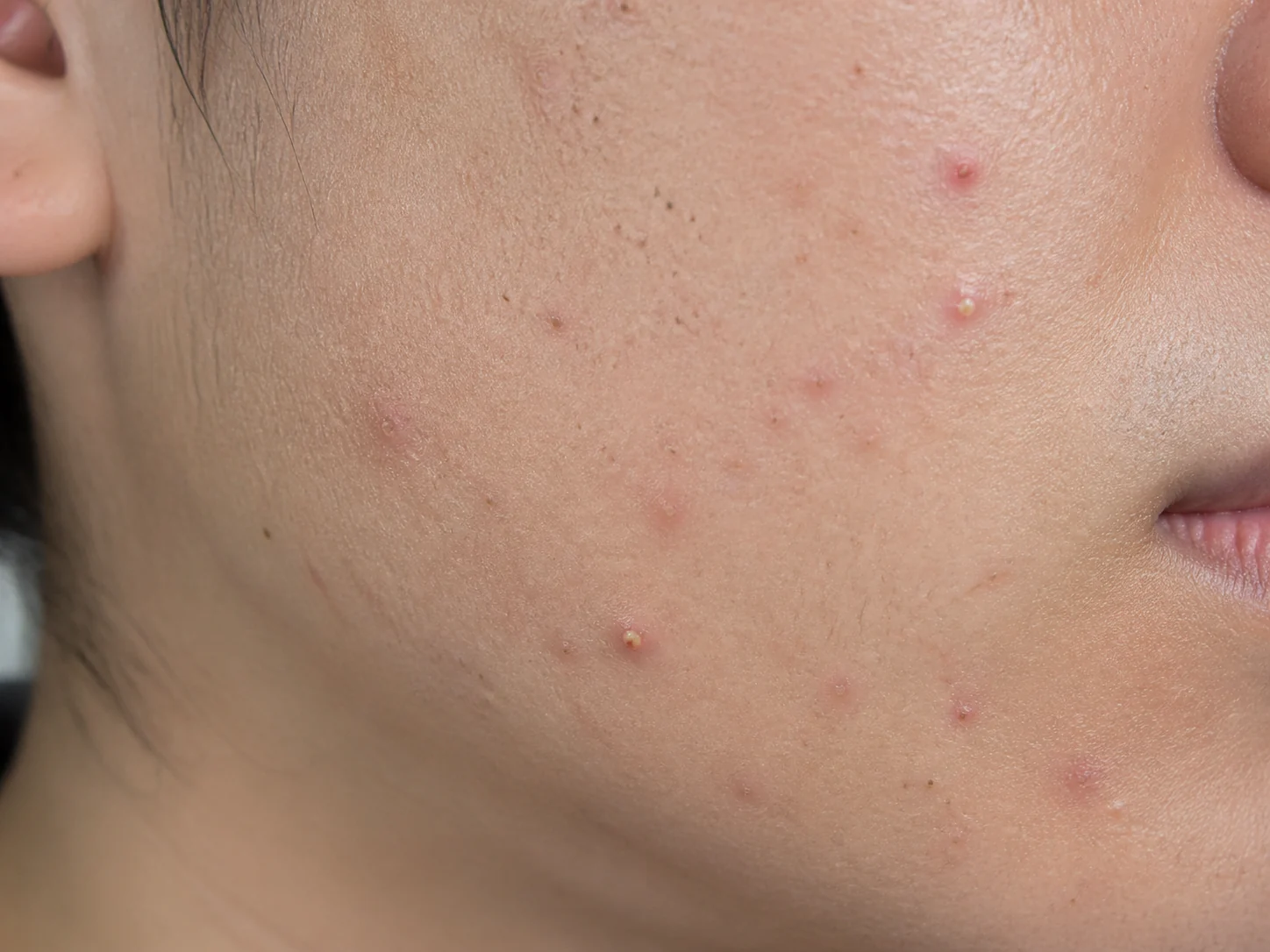
Since comedones, papules, and pustules can appear together on one face, we examine the deepest acne and the rate at which new ones form together.
Keep cleansing and moisturizing simple so as not to interfere with acne treatment
Cleansing multiple times a day to remove oil or using hot water scrubbingUsing these may make the skin look temporarily matte, but it can increase tightness and stinging. Wash gently with lukewarm water and a mild cleanser; after sweating heavily, it is better to simply rinse without rubbing.
Rather than applying heavy, greasy moisturizers, non-comedogenicuse products labeled as such in thin layers. If your skin is too dry to apply acne medication, it is important to adjust the order of moisturizing and medication to create a skin condition where treatment can continue without interruption.
Korean medicine treatment balances the focus between sebum, inflammation, and delayed recovery
The focus of Korean herbal medicine prescriptions differs for someone whose face is oily with nightly burning and rapidly appearing red inflammation, versus someone who experiences prolonged peeling and dryness after treatment, making it difficult to use new medications. For the former, the focus is on reducing the flow of heat and dampness to the face; for the latter, the focus is on strengthening the skin's ability to withstand irritation and recover.
At Baekrokdam, we also observe whether sebum and inflammation actually increase during periods such as before menstruation, after staying up all night, or during times of digestive or bowel discomfort. We use Korean herbal medicine to reduce these fluctuations and acupuncture to regulate instability in tension, sleep, and digestion, creating a foundation for topical treatments to proceed stably.
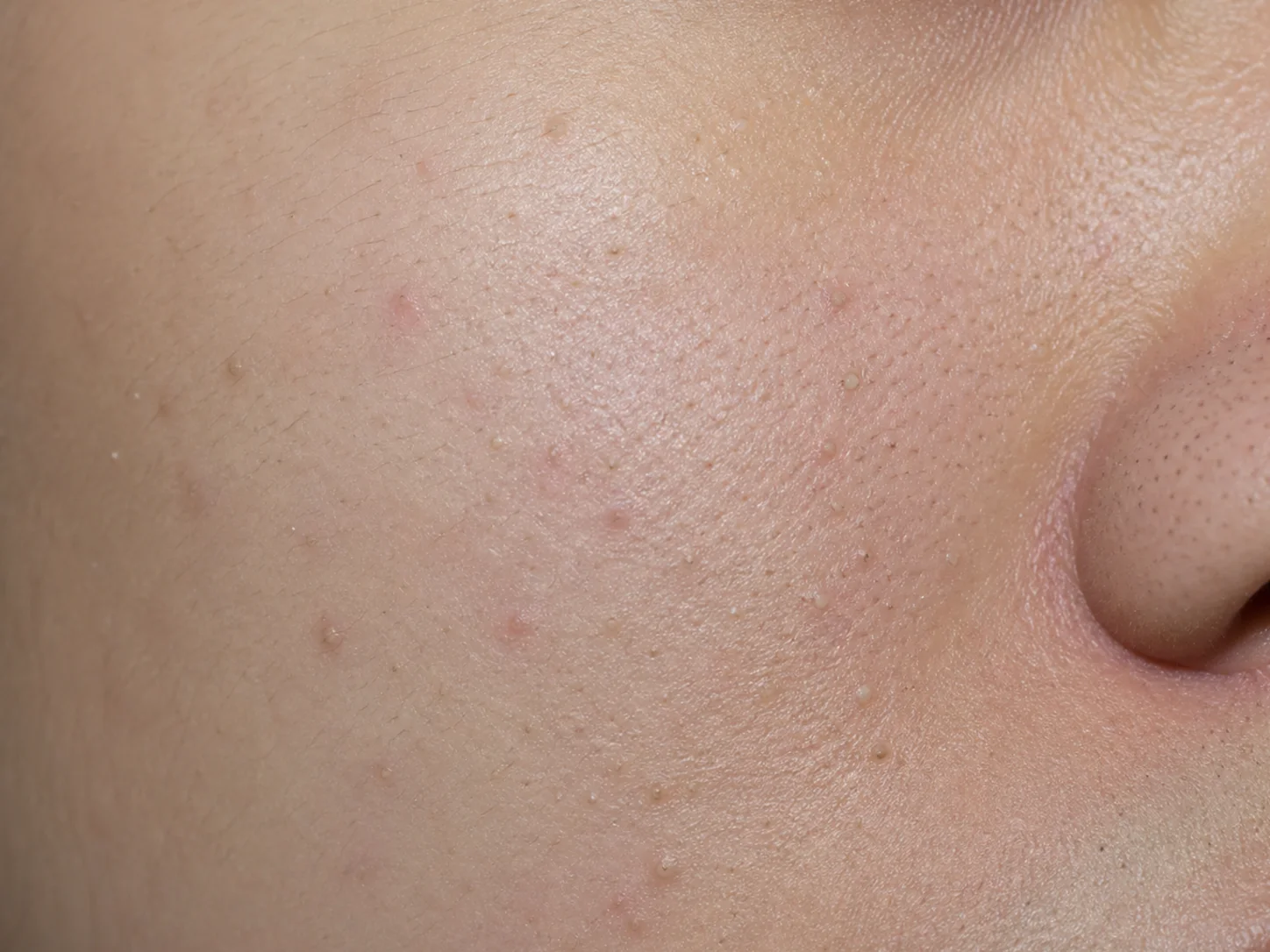
Even if there is almost no redness, small bumps may appear continuous depending on the direction of the light. Rather than pushing hard, we check for changes following stimulation.
You do not need to restrict necessary daily activities just to avoid oil
Completely stopping sunscreen and moisturizers or using oil-blotting sheets multiple times a day can make the skin more sensitive. UV protection and moisturizing are acne marksnecessary for the skin barrier, so keep it simple with non-comedogenic products that suit your skin.
If breakouts recur only in areas where hair products or masks touch, reduce that contact, and gently wash away sweat after exercising. Rather than changing all products at once, it is more helpful to first check the area of contact with a single recently added product to distinguish between acne and irritation.
Improving skin does not only mean skin that is less oily
Treatment is properly balanced when new comedones and red inflammation decrease, the feeling of tightness after washing becomes shorter, and there is less stinging and peeling when using topical medications. Even if some sebum remains in the afternoon, there is no reason to make the skin unconditionally drier if the skin feels comfortable and new acne has decreased.
During your evaluation, it is sufficient to describe the most uncomfortable moment among morning, immediately after washing, afternoon, or after applying medication, as well as the areas where new inflammation primarily occurs. We will observe whether Korean medicine treatment or dermatological treatment responded first to either the inflammation or the barrier, and then adjust the intensity of the next treatment.
The skin barrier can be weakened even if there is plenty of sebum. While continuing treatment to reduce new acne, lower irritation through washing and moisturizing, and use Korean herbal medicine and acupuncture to regulate recurring fluctuations in sebum, heat sensation, sleep, and digestion.
Evidence and Update Information
This content was organized by Korean medicine doctor Choi Yeon-seung based on the materials below and was updated on 2026-09-01.