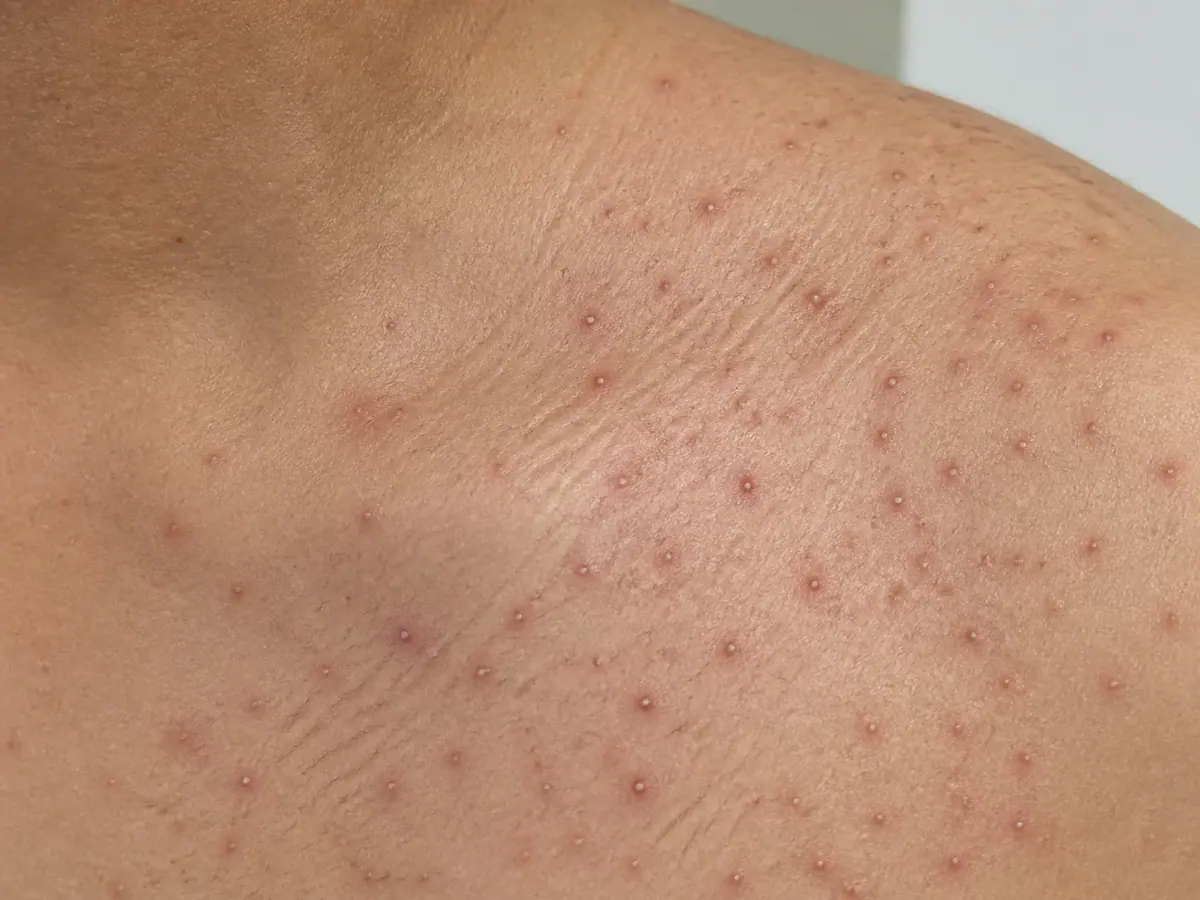
Folliculitis that looks like acne: Read in order of your curiosity
Before concluding based on a single red spot
Folliculitis that looks like acne: Criteria for examining appearance and remaining marks on the skin
In folliculitis, red papules and pustules of similar size often appear simultaneously around the hair follicles, and itching can be prominent. In contrast, acne often involves a mix of comedones, such as blackheads and whiteheads, and skin changes of varying sizes and depths. Bacterial folliculitis and Malassezia folliculitisrequire different treatments, making it difficult to distinguish them from a single photograph.
Distinguishing similar breakouts
Four characteristics that distinguish acne from folliculitis
| Points to Check | Acne-like | Folliculitis-like |
|---|---|---|
| Comedones | Mix of blackheads and whiteheads | Generally not distinct |
| Size of skin changes | Mix of various sizes and depths | Similar sizes appearing all at once |
| Sensation | Tenderness of acne formed deep in the skin | Itching may be prominent |
| Triggers | Sebum, cycle, products | Sweat, humidity, friction |
When to seek medical evaluation first
When to seek prompt medical evaluation for infection
The following changes prioritize medical evaluation over self-care.
- When redness, pain, or heat spreads rapidly
- When large boils, abscesses, or red streaks appear
- When accompanied by fever, chills, or body aches
Distinguishing acne from other causes first
Before assuming folliculitis is acne, examine recurring situations and your general physical condition at that time
Identify the cause of infection to first connect with necessary skin treatment; after differentiation, observe patterns that recur alongside sweat, humidity, and friction. If upper body heat, sleep, or digestive discomfort are also unstable, Korean herbal medicine treatment can address skin recovery after inflammation and Recurrence the underlying conditions together.
Criteria for prioritizing comedones and itching
Check whether blackheads and whiteheads are mixed in, or if itching is the primary symptom.
Keep a record of sweat, humidity, and friction
Check if the locations of skin changes overlap with the use of workout clothes, backpacks, or hats.
Criteria for distinguishing between infection treatment and recurrence management
The management of acute pus and pain is not described as having the same role as the management of recurring environmental factors.
Treatment GoalWe reduce the frequency of recurring skin changes, itching, and worsening after sweating or friction, without overlooking the treatment of the underlying cause.
Consult using 7-day photos of folliculitis that looks like acne and records of newly developed acne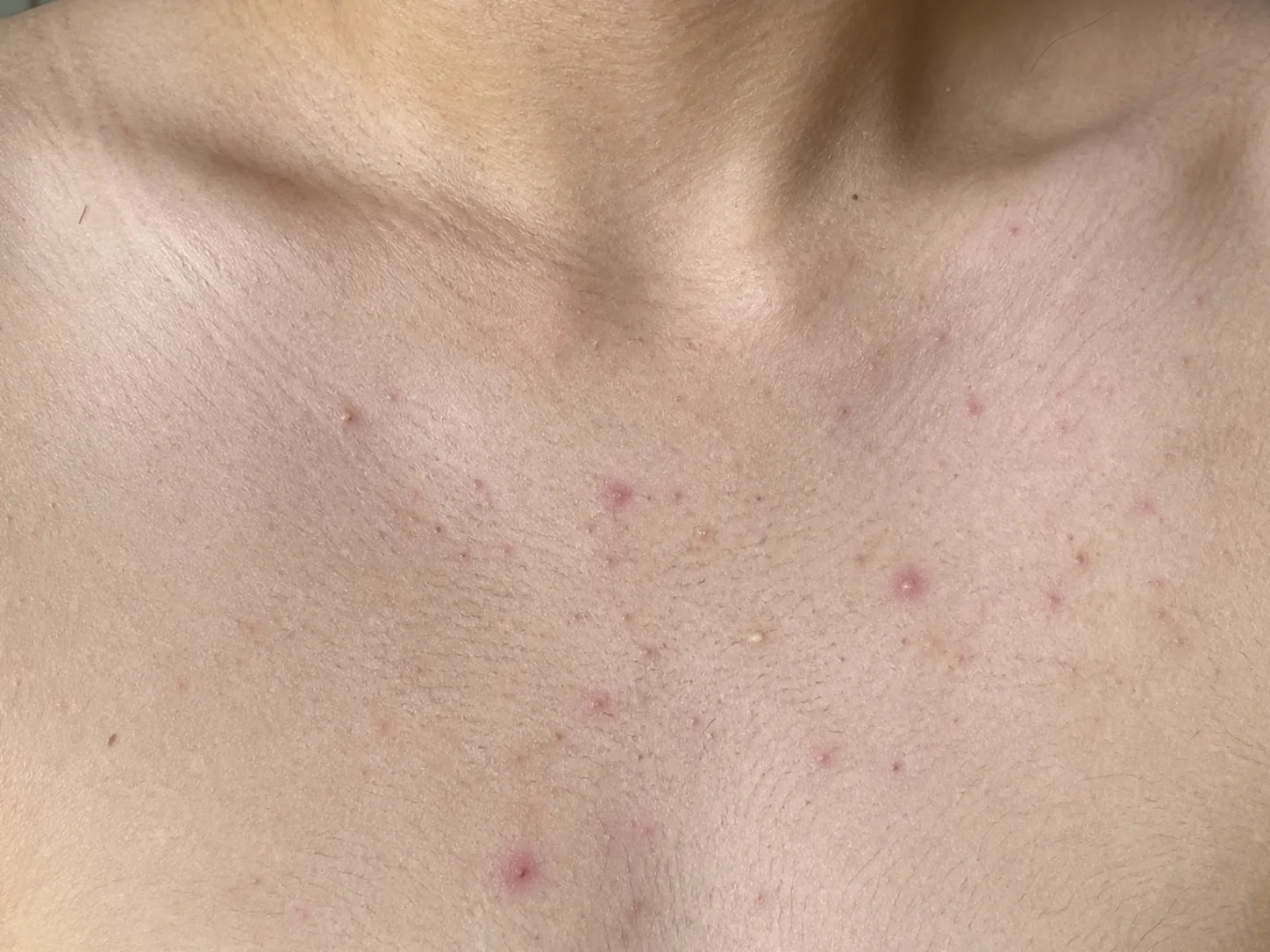
The torso has longer contact time with sweat, friction, and clothing, and folliculitis can look similar, so it is not evaluated using the same criteria as facial acne.
Educational reproduction images and simplified diagrams of the process do not represent actual patient photos or treatment results.If you have had these experiences
For those whose small, itchy breakouts remain even after treatment for back acne
We first identify the cause of infection to connect you with necessary skin treatment, and then examine recurring patterns associated with sweat, humidity, and friction. If upper body heat, sleep, or digestive discomfort are also unstable, we use Korean herbal medicine to address both skin recovery after inflammation and the conditions for recurrence.
For those with small pustules of the same size spreading across the chest and back
When breakouts recur with sweat even after necessary skin medical evaluation
For those who experience itching and worsening after sweating without blackheads
When skin changes on the chest and back coincide with upper body heat and lack of sleep
For those who experience stinging and increased skin changes the more they use acne products
ExtractionWhen barrier irritation has increased after using acne products
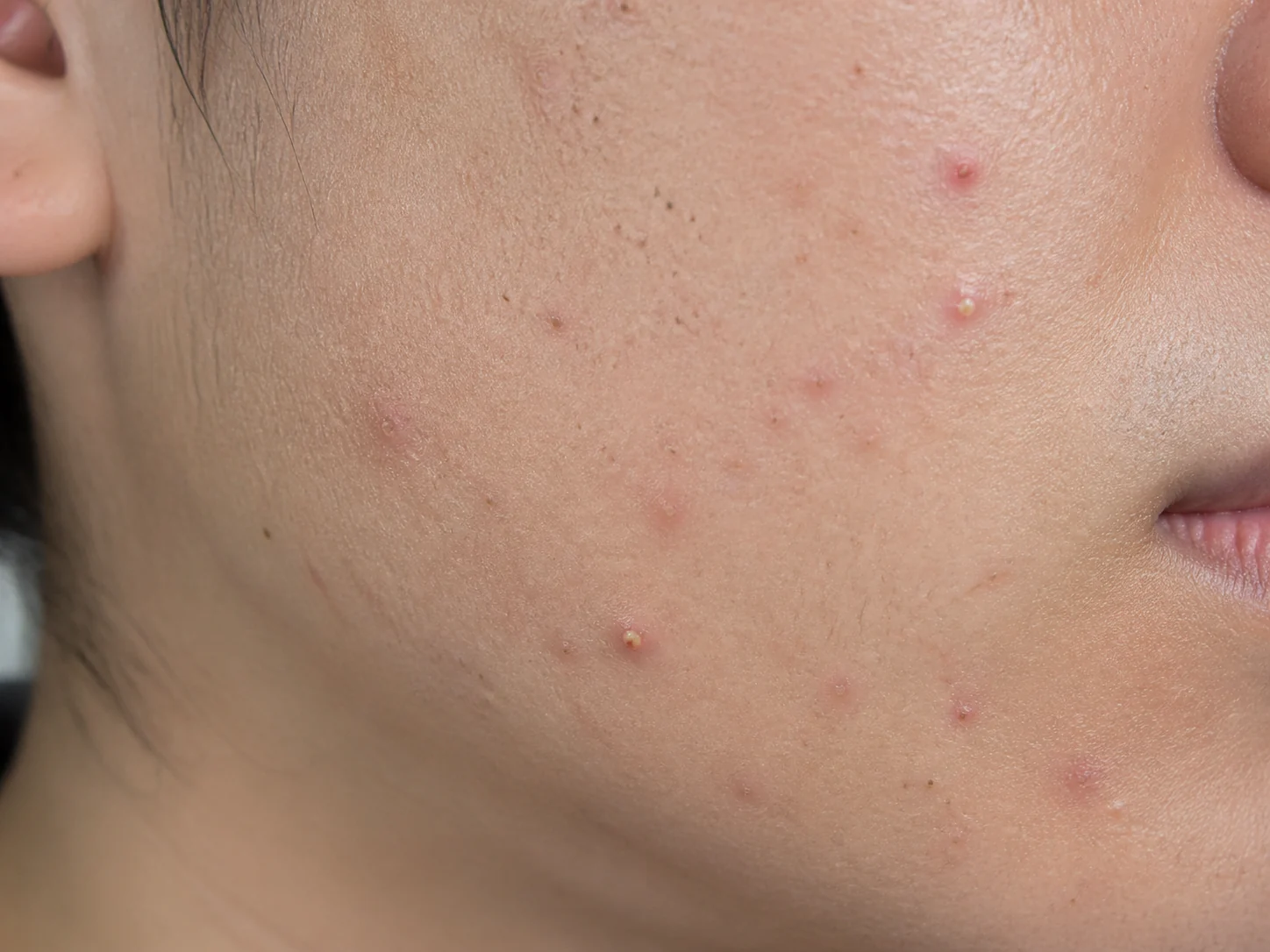
Since comedones, papules, and pustules can appear together on one face, we examine the deepest acne and the rate at which new ones form together.
This is how we examine during the medical evaluation
Folliculitis that looks like acne: Criteria for distinguishing appearance and remaining marks
folliculitisRed papules and pustules of similar size may appear all at once around the hair follicle, and itching may be prominent. In contrast, acne often involves a mix of comedones, such as blackheads and whiteheads, and skin changes of varying size and depth. Since bacterial folliculitis and Malassezia folliculitis require different treatments, it is difficult to distinguish them with a single photo.
Changes to check first
Hair follicleFolliculitis may present as red papules and pustules of similar size appearing all at once around the hair follicle, and itching may be prominent. In contrast, acne often involves a mix of comedones, such as blackheads and whiteheads, and skin changes of varying size and depth. Since bacterial folliculitis and Malassezia folliculitis require different treatments, it is difficult to distinguish them with a single photo.
Repeated timing and context
Folliculitis presents as red papules of similar size around the hair follicle,pustuleswhich may appear all at once and be accompanied by prominent itching. In contrast, acne often involves a mix of comedones, such as blackheads and whiteheads, and skin changes of varying size and depth. Since bacterial folliculitis and Malassezia folliculitis require different treatments, it is difficult to distinguish them with a single photo.
Changes to monitor after treatment
We reduce the frequency of recurring skin changes, itching, and worsening after sweating or friction, without overlooking the treatment of the underlying cause.
Reasons Why It Does Not Heal Easily
Folliculitis that looks like acne: Why new acne continues to appear even after one lesion subsides
We first identify the cause of infection to connect you with necessary skin treatment, and then examine recurring patterns associated with sweat, humidity, and friction. If upper body heat, sleep, or digestive discomfort are also unstable, we use Korean herbal medicine to address both skin recovery after inflammation and the conditions for recurrence.
Criteria for first evaluating comedones and itching
Blackheads ·whiteheadsCheck if they are mixed in or if itching is the primary symptom.
Keep a record of sweat, humidity, and friction
Observe if the locations of skin changes overlap with where you wear workout clothes, backpacks, or hats.
Criteria for distinguishing between infection treatment and recurrence management
Acute pus and pain are not described as having the same role as the management of recurring environmental factors.
Using photos as medical records
For folliculitis that looks like acne, compare changes over 7 days using photos taken under the same lighting
Reduce the frequency of recurring skin changes, itching, and worsening after sweat or friction, while ensuring the root cause is treated.
The presence of comedones is a characteristic closer to acne
Check if black dots, whiteheads, and deep inflammation are present together.
Criteria for identifying folliculitis when lesions are of similar size and itchy
Check specifically if they increase after sweating on the chest, back, or forehead.
Criteria for observing the placement of workout clothes and backpacks
Record whether skin changes are concentrated at the boundaries where friction, occlusion, and sweat overlap.
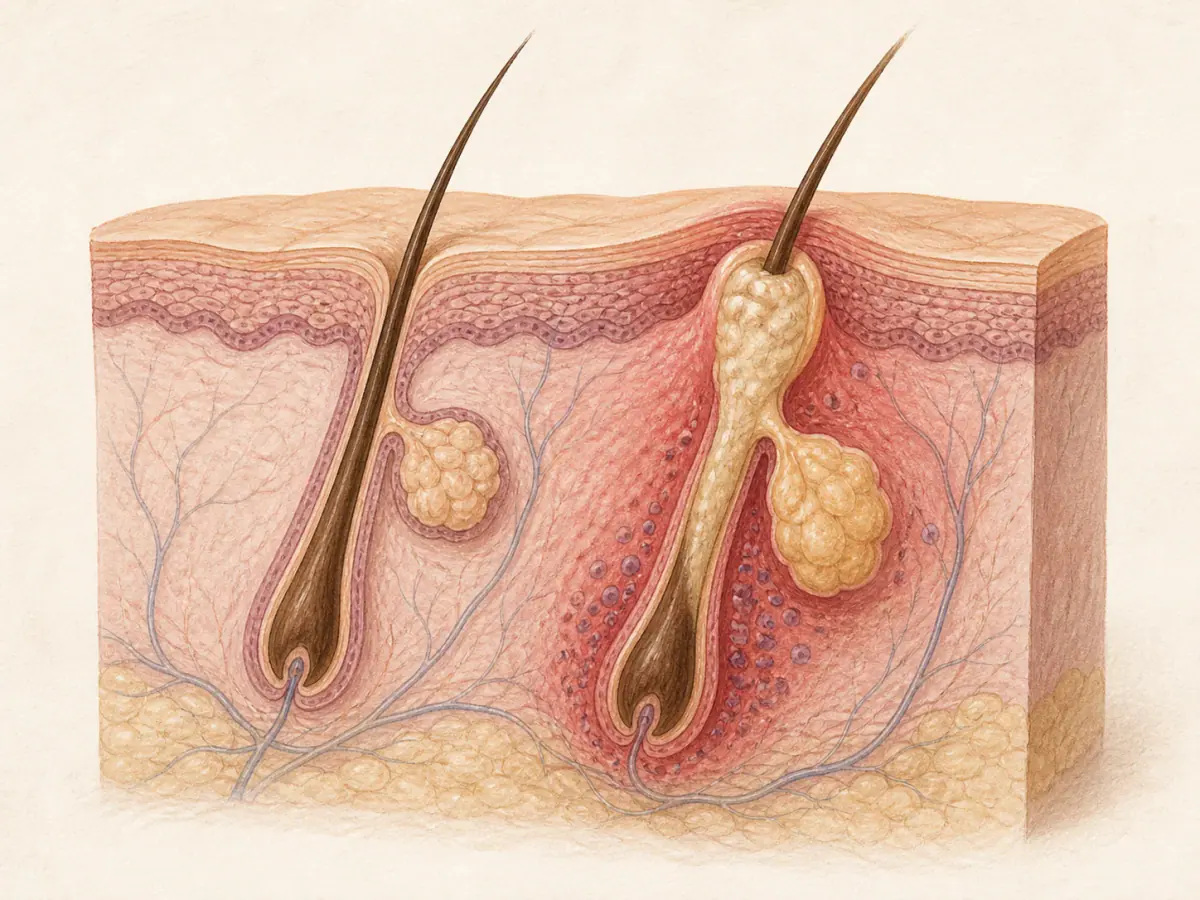
As sebum and dead skin cells accumulate at the entrance of the hair follicle and inflammation deepens, the appearance of the acne and the risk of scarring may change.
Conceptual reference · American Academy of Dermatology: Acne overviewKorean herbal medicine pattern identification for folliculitis that looks like acne
Why prescriptions for folliculitis that looks like acne differ based on sebum, heat, dryness, and menstruation
First, distinguish acne from other conditions. Then, check if periods of increased sweat, friction, skin heat, poor sleep, or poor digestion repeatedly overlap and reflect this in the prescription.
When itchy papules increase on the chest and back after sweating
Observe follicles of similar size papuleas the center. Check humidity, workout clothes, upper body heat, and sticky sweat. The focus is on reducing damp-heat and recurring inflammation after sweating.
When red and painful pustules recur
Observe tenderness, pus, surrounding heat, and the speed of spreading. If fever or body aches are present, prioritize prompt medical evaluation. Help inflammatory recovery without delaying necessary infection treatment.
When skin becomes stinging and broadly red after using exfoliating products
Check if even skin without visible changes feels dry or burning. Verify the frequency of cleansing, peeling, and extraction. Reduce irritation and skin barrier Recovery is the first priority.
Changes to monitor during treatment
Changes to check in next week's photos
While ensuring the root cause is treated, we reduce the frequency of recurring skin changes, itching, and worsening after sweating or friction.
Presence of comedones and itching
Please take photos under the same lighting for 7 days and note the 'presence of comedones and itching' as well.
Sweat, workout clothes, friction, and time of onset
Please take photos under the same lighting for 7 days and note 'sweat, workout clothes, friction, and time of onset' as well.
Reaction to antifungal, antibacterial, or acne products used
Please take photos under the same lighting for 7 days and note the 'reaction to antifungal, antibacterial, or acne products used' as well.
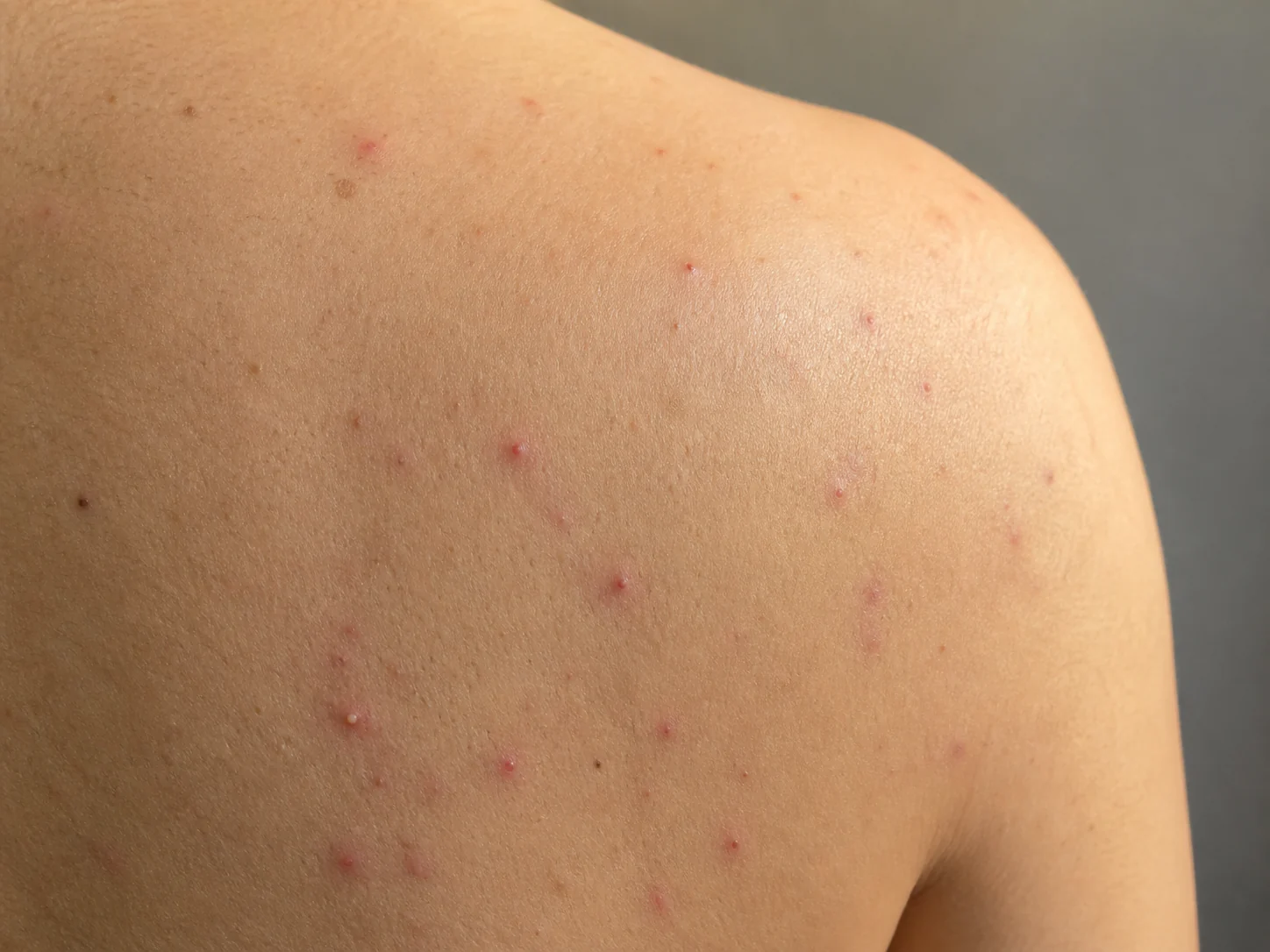
Similar acne on the back and chest needs to be distinguished from other conditions such as folliculitis, so we check both the location and shape.
At the crossroads of sebum, heat, and recovery speed
Folliculitis as a criterion for distinguishing between damp-heat, febrile inflammation, and barrier damage
First, we distinguish acne from other diseases. Then, we check if periods of worsening sweat, friction, skin heat, sleep, and digestion overlap repeatedly to reflect this in the prescription.
Pattern identification (Byeonjeung) is not about assigning a single constitution name to acne. The priority of the prescription changes depending on the connection between comedones, inflammation, heat sensation, sebum, delayed recovery, and menstruation, sleep, and digestion.
When itchy papules on the chest and back increase after sweating
- Changes observed in acne
- We observe follicular-centered papules of similar size.
- Accompanying changes observed in the body
- We check humidity, workout clothes, upper body heat, and sticky sweat.
- Prescription priority
- The focus is on reducing damp-heat and recurring inflammation after sweating.
When red and painful pustules recur
- Changes observed in acne
- We observe tenderness, pus, surrounding heat, and the speed of spreading.
- Accompanying changes observed in the body
- If there is fever or body aches, prompt medical evaluation is prioritized.
- Prescription priority
- We help inflammation recover without delaying necessary infection treatment.
When there is stinging and widespread redness after using exfoliating products
- Changes observed in acne
- We check if dryness and burning sensations extend even to skin without visible changes.
- Accompanying changes observed in the body
- We check the frequency of cleansing, peeling, and extraction.
- Prescription priority
- Prioritize reducing irritation and restoring the skin barrier.
When skin is dry and sensitive, but inflammation and marks persist
- Changes observed in acne
- Observe the time it takes for tightness, flaking, and redness around skin changes that look like acne (folliculitis) to subside.
- Accompanying changes observed in the body
- We check if new acne becomes deeper following lack of sleep, nighttime heat sensations, dry mouth, or fatigue.
- Prescription priority
- Rather than only lowering heat, we increase the focus on supplementing bodily fluids and supporting skin recovery.
Order of prescription adjustment
- Keep a record of comedones, itching, and size
Acne and folliculitis are distinguished by whether comedones are present, if itching is severe, or if rashes of similar size spread along the hair follicles.
- First, identify changes suspected of being an infection
Prioritize prompt medical evaluation for skin issues if there is rapid onset of pain, localized heat, or fever.
- Continuously monitor the relationship between sweat and recurrence intervals
Observe whether the number of skin changes varies after exercise or with the seasons.
Why consider Korean herbal medicine treatment now?
- When symptoms recur along with sweating even after necessary skin treatment
- When skin changes on the chest and back coincide with upper body heat sensations and lack of sleep
- When barrier irritation increases after extraction or using acne products
What is evaluated in herbal medicine treatment for this condition
- Presence of comedones and itching
- Timing of onset in relation to sweat, workout clothes, or friction
- Response to antifungal, antibacterial, or acne products used
Deep nodules, widely spreading infections, and rapidly forming scars must be checked at a dermatology clinic without delay. For already pitted scars, separate procedures should be considered; Korean herbal medicine treatment examines the patterns of recurring new inflammation and the state of sleep, digestion, and menstruation that slow down skin recovery.
Consult about the progress of folliculitis that looks like acneAcne Glossary
Additional information to know regarding folliculitis that looks like acne
You can check simple definitions before proceeding to detailed explanations.Frequently Asked Questions
Frequently Asked Questions about folliculitis that looks like acne
What is the biggest difference between acne and folliculitis?
We look at whether comedones are mixed in, if the size of the skin changes is uniform, and whether itching, sweat, and friction have a significant impact.
Does folliculitis also improve with extraction?
Depending on the cause, there is a risk of worsening or scarring, so it is advisable not to repeat extraction without a diagnosis.
Can acne and folliculitis coexist on the chest and back?
Yes, it is possible. If both comedones and uniform itchy papules are visible, an evaluation of the different types of acne is necessary.
When should I consider herbal medicine treatment?
You may seek a consultation if symptoms recur along with sweating, heat, sleep issues, or digestive problems, even after the necessary cause evaluation and treatment have been completed.
What should I record before a consultation for folliculitis that looks like acne?
Presence of comedones, itching, timing of onset in relation to sweat, workout clothes, or friction, and reactions to antifungal, antibacterial, or acne products used.
Evidence and Update Information
Dr. Choi Yeon-seung, a Korean medicine doctor, organized this content based on the official professional materials and disease-specific clinical data below, and updated the content on 2026-08-26.
- American Academy of Dermatology: Acne diagnosis and treatmentAcne-like conditions such as folliculitis and perioral dermatitis
- DermNet: Acne mimicsDistinguishing between Malassezia folliculitis and acne
- American Academy of Dermatology: Acne overviewEvidence explaining the process of development, including pore clogging by sebum and dead skin cells, inflammation within the follicle, and the risk of scarring from deep nodules and cysts
- American Academy of Dermatology: Sports equipment and acne mechanicaBasis for determining that heat and sweat trapped under sportswear, backpacks, or protective gear, along with pressure and friction, worsen acne on the shoulders and back
- American Academy of Dermatology: Adult acne causesOfficial guidance that hormonal changes, stress, family history, and hair or skincare products can influence adult acne