Chest and back acne
How to record chest and back breakouts, sweat, sportswear, and friction?
Before continuously switching products, record the location of the acne and the boundaries of sweat and friction like a single map.
Click on unfamiliar terms to see their meanings immediately.
For torso acne, we distinguish between acne and folliculitiswhile also considering sportswear, backpacks, hats, shower timing, and seasonal changes.
| Scenario | Points to check on the cheek | Record |
|---|---|---|
| Worsening after exercise | Sweat, occlusion, friction | Workout clothes and shower time |
| Under backpack straps or bra lines | Pressure boundaries | Photos of contact areas |
| Itchy and uniform in size | Possibility of folliculitis | Presence of comedones and itchiness |
| Various depths and comedones | Possible acne | Number of new nodules/pustules |
Take photos including the boundary where acne meets clothing
Check the distribution under backpack straps, bra lines, helmets, and hats.
Distinguish between comedones and itching
comedonesIf you have a mix of pimples of different sizes, and the location and timing coincide with where your workout clothes or equipment touch your skin, try changing your clothes after sweating, reducing friction, and recording any changes. Conversely, if itchy rashes of the same size spread across your torso without comedones, do not simply repeat acne care; visit a dermatology clinic to Hair folliclefirst check for other causes, such as folliculitis.
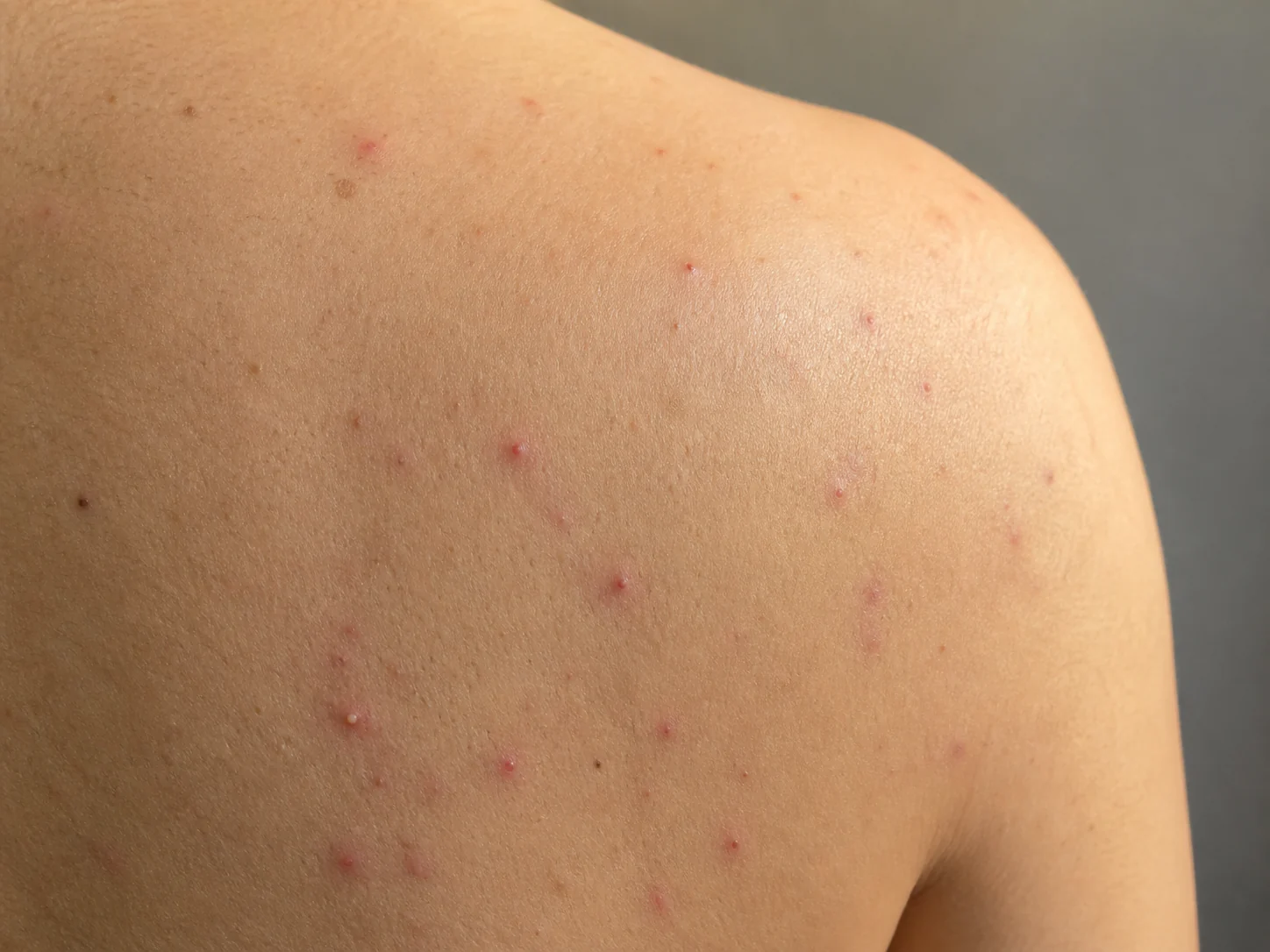
Similar acne on the back and chest needs to be distinguished from other conditions such as folliculitis, so we check both the location and shape.
Monitor seasons and exercise volume on a weekly basis
Look at repeated exposure and recovery intervals rather than a single instance of sweating.
Try organizing your information this way before your appointment
Take photos under the same lighting before and after exercising, and note the presence of comedones, itching, pimple size, and the timing of your workout clothes, equipment use, sweating, and showering. This will help you decide whether to try reducing sweat and friction or to seek a dermatological evaluation first.
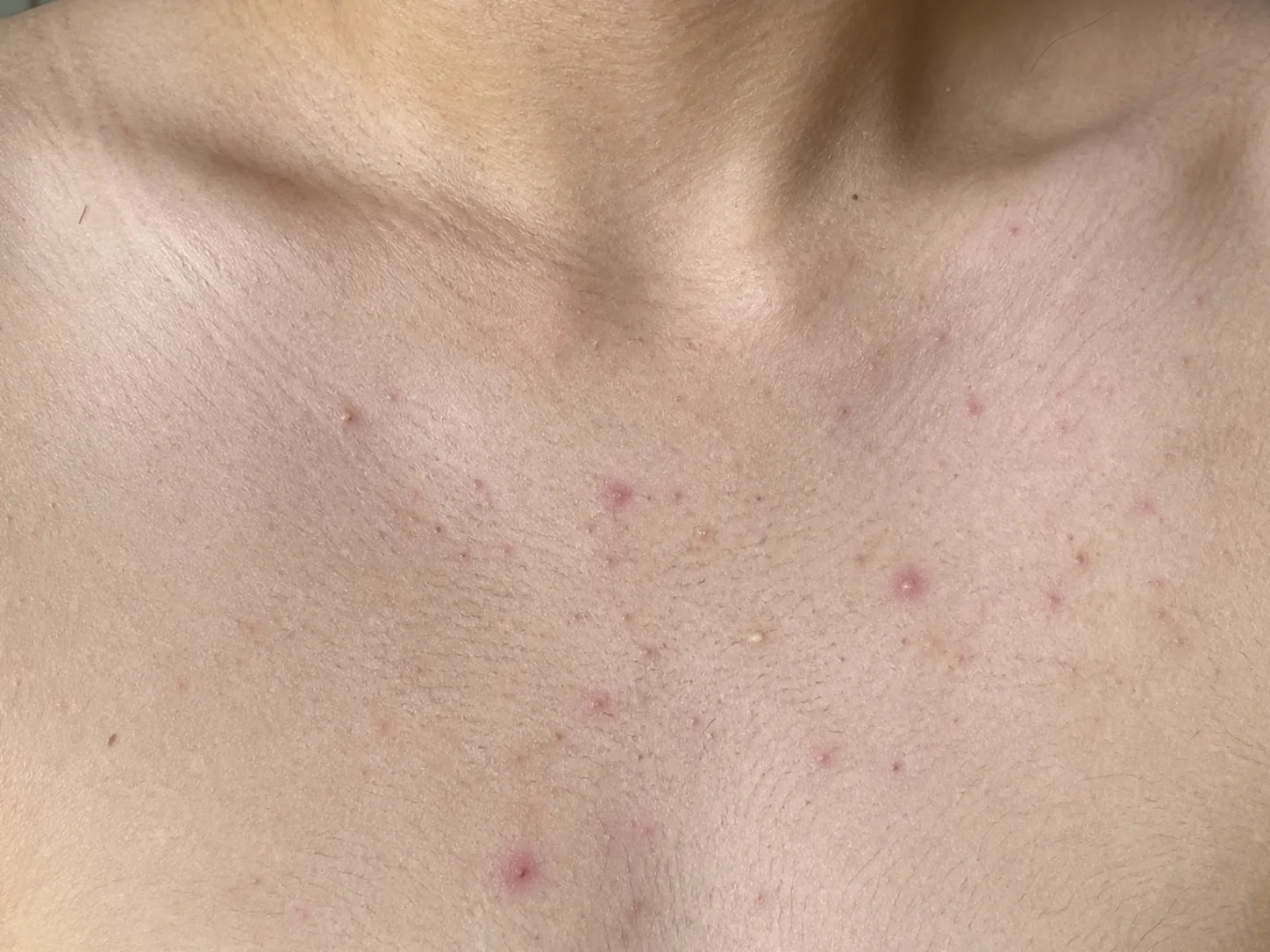
The torso has longer contact time with sweat, friction, and clothing, and folliculitis can look similar, so it is not evaluated using the same criteria as facial acne.
Keeping a torso map, records of comedones/itching, and a sweat/friction timetable makes it easier to distinguish conditions and manage recurrence.
View based on my situation
The next steps will vary depending on your current appearance
Rather than picking just one similar part from a photo, look at the depth of the acne, remaining marks, and accompanying discomforts such as itching or stinging.
When it is close to back acne
The cause of back acne is not due to poor hygiene, but SebumThe basic process involves dead skin cells blocking the pores and inflammation occurring within the hair follicle. On the back, sebaceous glandsmany of these, and heat and sweat easily become trapped under sportswear, backpacks, and protective gear, which often adds friction. If itchy pimples of similar size suddenly spread, other diagnoses such as bacterial or Malassezia folliculitis are possible, so a dermatology evaluation is necessary.
Reduce the rate at which new inflammation occurs on the face, chest, and back, and decrease the extent to which the same areas spread significantly due to sweat, friction, or seasonal changes.When it is closer to acne-like folliculitis
Folliculitis consists of red papules of similar size centered around the hair follicles papule·pustuleswhich may appear all at once and be accompanied by prominent itching. In contrast, acne often involves a mix of comedones, such as blackheads and whiteheads, and skin changes of varying size and depth. Since bacterial folliculitis and Malassezia folliculitis require different treatments, it is difficult to distinguish them with a single photo.
While ensuring the root cause is treated, we reduce the frequency of recurring skin changes, itching, and worsening after sweating or friction.When it is closer to inflammatory acne
Inflammatory acne occurs when inflammation develops inside a blocked pore pore, appearing as red papules or pustules; if it deepens, hard and painful nodulesnodules or cysts may form. Rather than just counting the number of acne lesions, monitor the ratio of comedones to inflammation, the number of deep and painful acne lesions, and the risk of inflammation and scarring that developed within a week.
Reduce the number and depth of new inflammation occurring each week, and shorten the time it takes for pain to subside and for red or brown marks to remain.Please record only this much before your appointment
- Presence of comedones, itching, depth of acne, and whether it accompanies facial acne
- Sweat, clothing, friction, hair products, and season
- Upper body heat sensation, coldness in hands and feet, digestion, bowel movements, and sleep
- Those with recurring inflammatory bumps on the back and shoulders where sportswear, backpacks, or protective gear touch
- Those whose back skin has become rough or feels clogged after changing shampoos, conditioners, or body products
- Those who want to distinguish between folliculitis and acne and Recurrence understand the priorities for chronic management
Frequently Asked Questions
Common questions after reading this guide
Is back acne caused by poor hygiene?
No. The primary causes are clogged pores from sebum and dead skin cells and subsequent inflammation, which can be worsened by sweat and friction. Scrubbing too hard during cleansing can increase irritation.
Is sweat the reason why back acne occurs during exercise?
It is not just sweat; tight-fitting clothes and protective gear can trap heat and sweat and cause friction. Please change your clothes after exercising and keep your equipment clean.
Are itchy bumps on the back also acne?
If itchy acne of the same size spreads without comedones, it may be Malassezia or bacterial folliculitis. Since the treatments differ, you should visit a dermatology clinic to confirm if it is a different condition.
Can I use only body wash to treat back acne?
Mild acne may benefit from BPO cleansers, but combined use of topical retinoids may be necessary. If lesions are deep, painful, or cause scarring, seek prescription treatment from a dermatologist.
Evidence and Update Information
This content was compiled by Korean medicine doctor Choi Yeon-seung based on the materials below and was updated on 2026-09-09.
- DermNet: Acne mimics
- UCLA Health: Acne Clinic
- American Academy of Dermatology: Acne overviewEvidence explaining the process of development, including pore clogging by sebum and dead skin cells, inflammation within the follicle, and the risk of scarring from deep nodules and cysts