Chest and back acne
Distinguishing Chest and Back Acne from Folliculitis: Comedones and Itching
Rather than blaming exercise and sweat itself, we look at the areas and duration of contact with clothing, equipment, and hair products.
Click on unfamiliar terms to see their meanings immediately.
Red bumps on the torso can resemble not only acne but also bacterial or malassezia Hair follicleIt may resemble inflammation or friction rash. comedonesCheck the size of the acne, itching, and distribution.
| Points to Check | Trunk Acne | Possibility of Folliculitis |
|---|---|---|
| Comedones | May be a mix of blackheads and whiteheads | Usually not centered around comedones |
| Acne size | Varies from comedones to nodules | Papules and pustules of similar size may be uniform |
| Sensation | Tenderness or deep pain possible | Itching may be prominent |
| Distribution | Chest, back, shoulders, and friction areas | Centered around hair follicles, associated with sweat and humid environments |
First, check for the presence of comedones
While acne is a mix of comedones and inflammation of varying sizes, folliculitissimilar papulespustulesmay be seen in each hair follicle.
Take photos of the boundaries where sportswear and equipment touch the skin
Record the areas where backpacks, bras, protectors, or helmet straps touch, and the time elapsed until sweat is washed off.
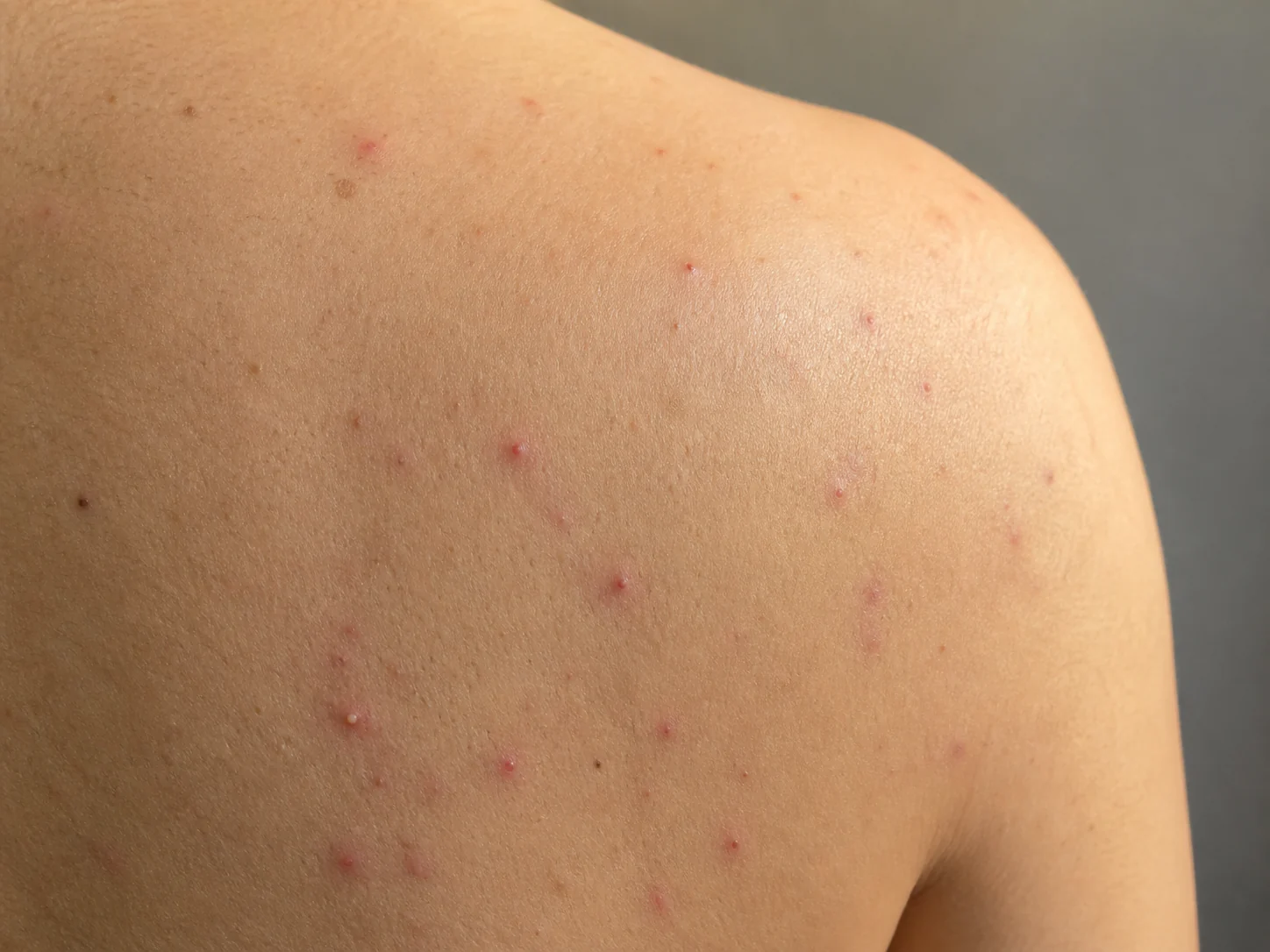
Similar acne on the back and chest needs to be distinguished from other conditions such as folliculitis, so we check both the location and shape.
If it is itchy and spreads suddenly, evaluating the cause comes first
Before repeating acne treatments, distinguish other causes such as infections, fungi, or drug-induced eruptions.
Try organizing your information this way before your appointment
In 7-day photos taken under the same lighting, separate new comedonespapule, pustulesnodulesBy separating remaining redness, brown spots, and indentations, it is easier to determine the treatment sequence. Refer to these records when comparing with guides for back acne, inflammatory acne, or general acne.
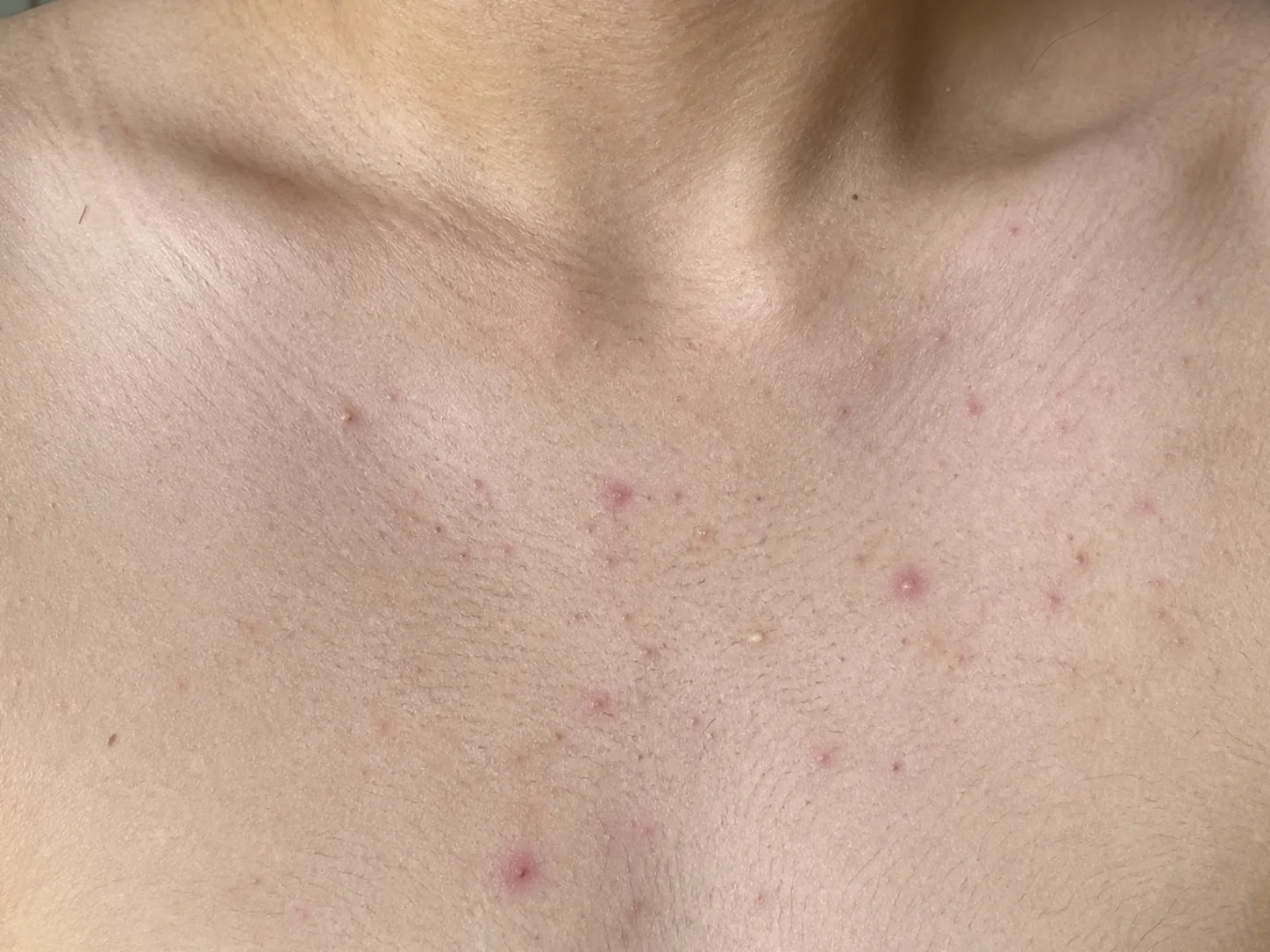
The torso has longer contact time with sweat, friction, and clothing, and folliculitis can look similar, so it is not evaluated using the same criteria as facial acne.
For chest and back acne, look at comedones, itchiness, the uniformity of acne size, and the range of friction together.
View based on my situation
The next steps will vary depending on your current appearance
Rather than picking just one similar part from a photo, look at the depth of the acne, remaining marks, and accompanying discomforts such as itching or stinging.
When it is close to back acne
The cause of back acne is not due to poor hygiene, but Sebumis fundamentally a process where sebum and dead skin cells block the pores, leading to inflammation within the follicle. The back has many sebaceous glands, and heat and sweat easily get trapped under sportswear, backpacks, or protective gear, adding friction. If itchy breakouts of similar size spread suddenly, bacterialMalassezia folliculitis or other diagnoses are possible, so a dermatology evaluation is necessary.
Reduce the rate at which new inflammation occurs on the face, chest, and back, and decrease the extent to which the same areas spread significantly due to sweat, friction, or seasonal changes.When it is closer to inflammatory acne
inflammatory acneis a pattern where inflammation occurs within blocked pore pores, appearing as red papules or pustules; if it deepens, hard and painful nodules or cysts may form. Rather than just counting the number of acne lesions, look at the ratio of comedones to inflammation, the number of deep and painful acne lesions, and the risk of inflammation and scarring that developed within a week.
Reduce the number and depth of new inflammation occurring each week, and shorten the time it takes for pain to subside and for red or brown marks to remain.When it closely resembles acne
Acne begins with follicular keratinization, where dead skin cells at the opening of the hair follicle clump with sebum and block the pore; then, acne-causing bacteria naturally present on the skin contribute to inflammation. Hormonal changes such as puberty or pregnancy, family history, and certain medications can increase the risk, and skin or hair products that clog pores may also be related to acne. Diet or stress may be aggravating factors for some people, but a single food or cleansing habit cannot be concluded as the sole cause of all acne.
The first goal is to reduce the rate at which new inflammation occurs and the interval of recurrence in the same spot. While reducing medication, prescriptions are adjusted to ensure that skin condition, sleep, digestion, and menstrual rhythms are not significantly disrupted.When it is closer to acne-like folliculitis
Folliculitis presents as red papules and pustules of similar size appearing simultaneously around the hair follicles, and itching may be prominent. Conversely, acne often involves a mix of comedones, such as blackheads and whiteheads, and skin changes of varying sizes and depths. Bacterial folliculitis and Malassezia folliculitis require different treatments, making them difficult to distinguish from a single photograph.
While ensuring the root cause is treated, we reduce the frequency of recurring skin changes, itching, and worsening after sweating or friction.Please record only this much before your appointment
- Presence of comedones, itching, depth of acne, and whether it accompanies facial acne
- Sweat, clothing, friction, hair products, and season
- Upper body heat sensation, coldness in hands and feet, digestion, bowel movements, and sleep
- Those with recurring inflammatory bumps on the back and shoulders where sportswear, backpacks, or protective gear touch
- Those whose back skin has become rough or feels clogged after changing shampoos, conditioners, or body products
- Those who want to distinguish between folliculitis and acne and understand the priorities for chronic recurrence management
Frequently Asked Questions
Common questions after reading this guide
Is back acne caused by poor hygiene?
No. The primary causes are clogged pores from sebum and dead skin cells and subsequent inflammation, which can be worsened by sweat and friction. Scrubbing too hard during cleansing can increase irritation.
Is sweat the reason why back acne occurs during exercise?
It is not just sweat; tight-fitting clothes and protective gear can trap heat and sweat and cause friction. Please change your clothes after exercising and keep your equipment clean.
Are itchy bumps on the back also acne?
If itchy acne of the same size spreads without comedones, it may be Malassezia or bacterial folliculitis. Since the treatments differ, you should visit a dermatology clinic to confirm if it is a different condition.
Can I use only body wash to treat back acne?
Mild acne may benefit from BPO cleansers, but combined use of topical retinoids may be necessary. If lesions are deep, painful, or cause scarring, seek prescription treatment from a dermatologist.
Evidence and Update Information
This content was organized by Korean medicine doctor Choi Yeon-seung based on the materials below and was updated on 2026-08-26.
- American Academy of Dermatology: Acne overview
- American Academy of Dermatology: Sports equipment and acne mechanicaBasis for determining that heat and sweat trapped under sportswear, backpacks, or protective gear, along with pressure and friction, worsen acne on the shoulders and back
- American Academy of Dermatology: Adult acne causesOfficial guidance that hormonal changes, stress, family history, and hair or skincare products can influence adult acne