Marks and Scars
Red Marks, Brown Marks, and Pitted Scars: What Should Be Managed First?
While they may all feel like 'scars' in the mirror, flat color changes and changes in skin texture differ in their progression and approach.
Click on unfamiliar terms to see their meanings immediately.
Flat color changes remaining where acne has subsided are not the same as scars where the skin surface is pitted or raised. We separate the process of reducing new inflammation from the management of remaining marks.
| Appearance of the scar | Points for self-check | Items to determine during consultation |
|---|---|---|
| Flat red mark | Whether there is almost no difference in height when touched by hand | Inflammation control and management of UV rays and irritation |
| Flat brown mark | Skin tone and color changes after sun exposure | Presence of hyperpigmentation and safe management |
| Depressed scar | Whether contours are visible depending on the direction of the shadow | Selection of procedures by scar type and control of active acne |
| Raised scar | Whether it becomes thicker or larger than original acne | Evaluation of hypertrophic scars and keloids |
Flat color changes may not be scars
Flat marks that remain red or brown after acne may be color changes following inflammation and may fade over time. In contrast, changes in skin texture that are pitted or raised are evaluated as scars and should not be treated with the same cosmetics.
If new acne, marks, and scars are all visible, they are categorized in this order
If deep, painful new nodules develop or pustulescontinue to appear, we determine a treatment to first reduce new acne rather than rushing into procedures for marks or scars. Flat red·brown marksare recorded separately from new inflammation, while indentations or protrusions are categorized for dermatology procedure consultations. When planning scar procedures, please disclose all current acne medications and recent treatments.
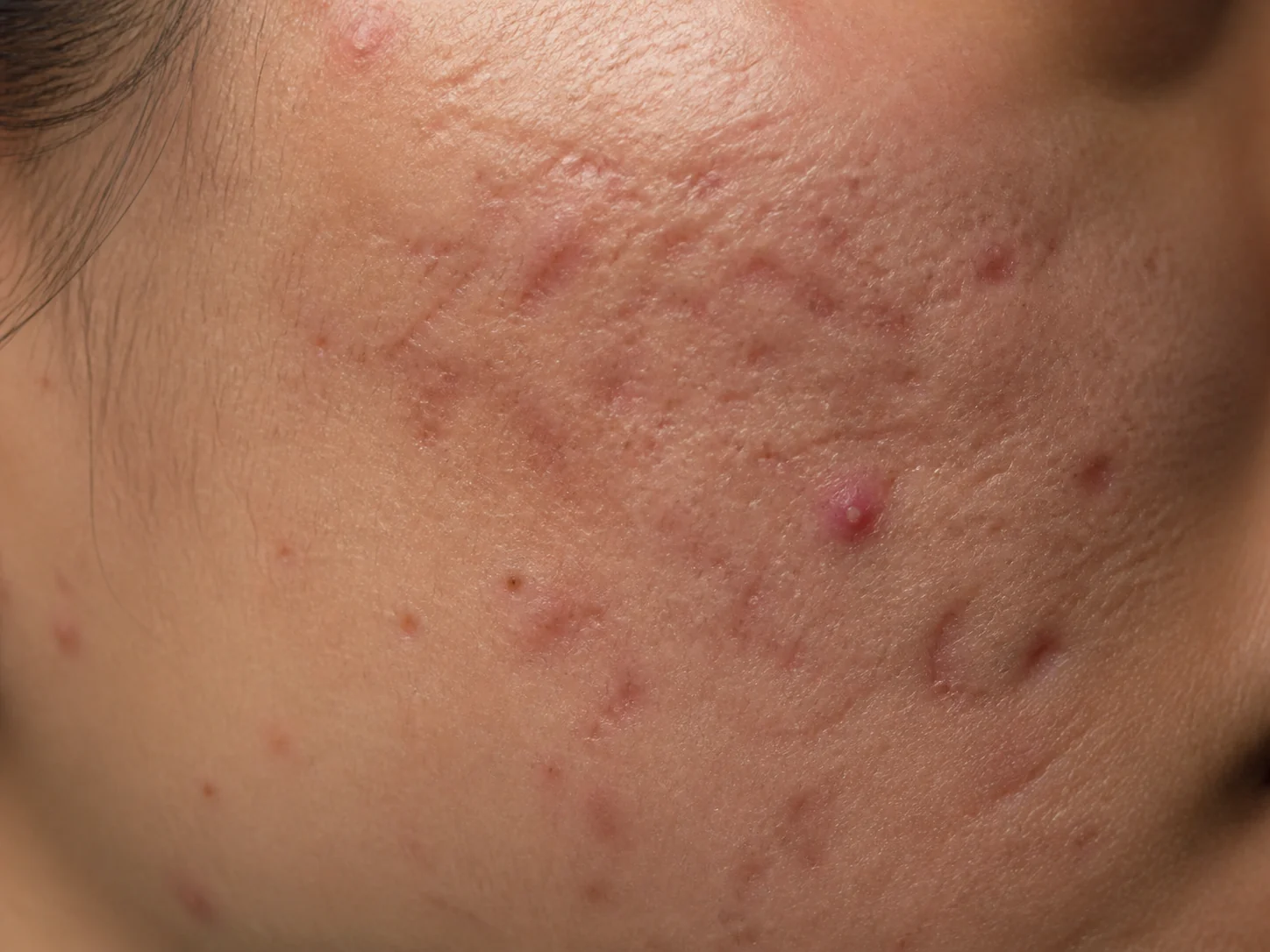
We distinguish between flat marks where only discoloration remains and scars where the skin level has changed, and first determine the sequence to reduce new inflammation.
Determine expectations and recovery time before the name of the scar
pitted scarsThere are various scar shapes, and a single procedure may not make them all the same. Desired changes, possible recovery periods, skin tone, and costs will be organized together during the consultation.
Try organizing your information this way before your appointment
In photos taken every 7 days under the same lighting, new comedones·papulepustules, nodules, and remaining redness, brown marks, or pitting should be counted separately to make it easier to determine the treatment sequence. This record is also used when comparing with guides on acne scars, inflammatory acne, and acne.
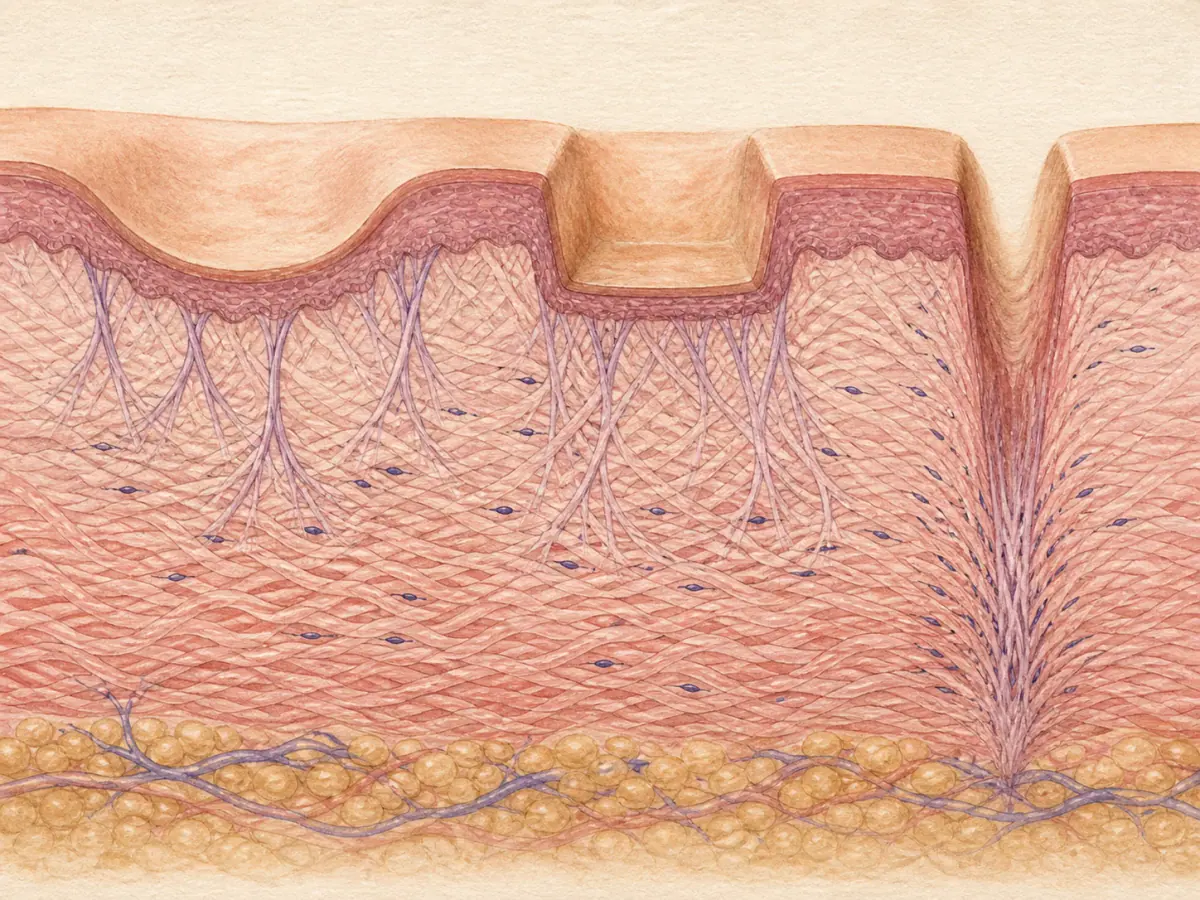
Even if all indentations look similar from the outside, the surface width and the depth within the dermis can vary, which may lead to different dermatology treatment plans.
Distinguish between flat color changes and skin texture scars, and first confirm the sequence for reducing new acne.
View based on my situation
The next steps will vary depending on your current appearance
Rather than picking just one similar part from a photo, look at the depth of the acne, remaining marks, and accompanying discomforts such as itching or stinging.
When it is closer to an acne scar
Acne scar symptoms are divided into atrophic scars, where the skin is indented, and hypertrophic or keloid scars, which are firmly raised. Indented scars can be narrow and deep Icepick-type, box-shaped scars with relatively clear boundaries and rolling-shaped scars that appear wide and wavy may be mixed. On the other hand, red or brown changes that remain flat after acne Post-inflammatory erythemamay be erythema or hyperpigmentation and must be distinguished from scars where the structure has changed. If new acne continues to appear, or if there is pus, heat, rapid swelling, acne that looks like a scar grows rapidly, or bleeding and ulcers occur, a dermatology consultation is the priority.
First, reduce the trend of increasing new inflammation and scars, and stabilize the skin's redness, dryness, and recovery conditions so that a separate scar treatment plan can be established.When it is closer to inflammatory acne (cystic/pustular)
Purulent acne Sebumis created through a complex process where excessive sebum is produced and dead skin cells block the pores, deepening the inflammation. Cystic acne, which feels like a large, painful lump inside, or deep noduleslesions are prone to leaving scars, so it is better to determine the treatment direction early. Hormonal changes during puberty or around menstruation, certain medications, and repeated friction may overlap to worsen the condition, but it cannot be attributed to a single food item or a failure to wash.
Lower the rate at which new deep nodules and pustules form, and reduce the duration that redness, pain, and marks persist after inflammation.When it closely resembles acne
Acne is Hair follicle is a process that begins with follicular keratosis, where keratin at the opening tangles with sebum to block the pore, and acne bacteria naturally living on the skin contribute to inflammation. Hormonal changes such as puberty or pregnancy, family history, and certain medications can increase the risk, poreand skin or hair products that block pores may also be related to acne. Diet or stress may be aggravating factors for some people, but a single food or cleansing habit cannot be concluded as the sole cause of all acne.
The first goal is to reduce the rate at which new inflammation occurs and the interval of recurrence in the same spot. While reducing medication, prescriptions are adjusted to ensure that skin condition, sleep, digestion, and menstrual rhythms are not significantly disrupted.When it is closer to post-acne erythema (red marks)
Post-acne red marks may be post-inflammatory erythema, where vascular redness remains flat in the area where inflammation has subsided. It should be confirmed that it is not raised or painful to the touch and that pink or red tones are more central than brown. However, new papules/pustules, persistent redness across the entire face, or indented surface changes must be distinguished as active acne, rosacea, or scars, respectively.
reduce the speed at which new inflammation occurs and the number of days facial heat persists, allowing for separate management of existing marks and newly formed acne.Please record only this much before your appointment
- Distinguishing between flat marks, depressions, protrusions, and active acne
- The number of new inflammations, the duration of remaining marks, and history of procedures
- Skin dryness, heat sensation, sleep, digestion, menstruation, and current medications
- Those who notice cheek indentations more prominently depending on the light direction during morning makeup
- Those who have developed hard, itchy, or painful raised marks on the jawline, chest, or back
- Those who worry that flat red or brown marks after acne are permanent scars
Frequently Asked Questions
Common questions after reading this guide
What types of indented acne scars are there?
There are ice-pick scars (narrow and deep), box-shaped scars (round or oval boundaries), and rolling scars (wide, gentle, and wavy), and these may be mixed in one area.
Are brown acne marks also permanent scars?
Flat brown or red discolorations may be post-inflammatory hyperpigmentation or erythema, which differ from structural scars. Please confirm the exact type before starting management.
Should I seek medical evaluation if a raised acne scar becomes itchy or grows larger?
Hypertrophic scars or keloids can be itchy or painful, and keloids may grow larger than the original acne. If they continue to grow or the diagnosis is uncertain, seek dermatology evaluation early.
Do I start scar treatment even if acne remains?
Since new inflammation can lead to additional scarring, acne is often controlled first. Determine the sequence of current medications and procedures during a skin evaluation.
Evidence and Update Information
This content was compiled by Korean medicine doctor Choi Yeon-seung based on the materials below and was updated on 2026-09-09.
- American Academy of Dermatology: Acne scars: Signs and symptoms
- American Academy of Dermatology: Acne scars: Consultation and treatment
- DermNet: Acne ScarringClinical characteristics of atrophic, hypertrophic, and keloid scars, post-inflammatory erythema and pigment changes, and the basis for medical evaluation of uncertain raised acne