Acne scars: Read in the order of your curiosity
Before concluding based on a single red spot
Acne scars: Depth of symptoms and remaining marks
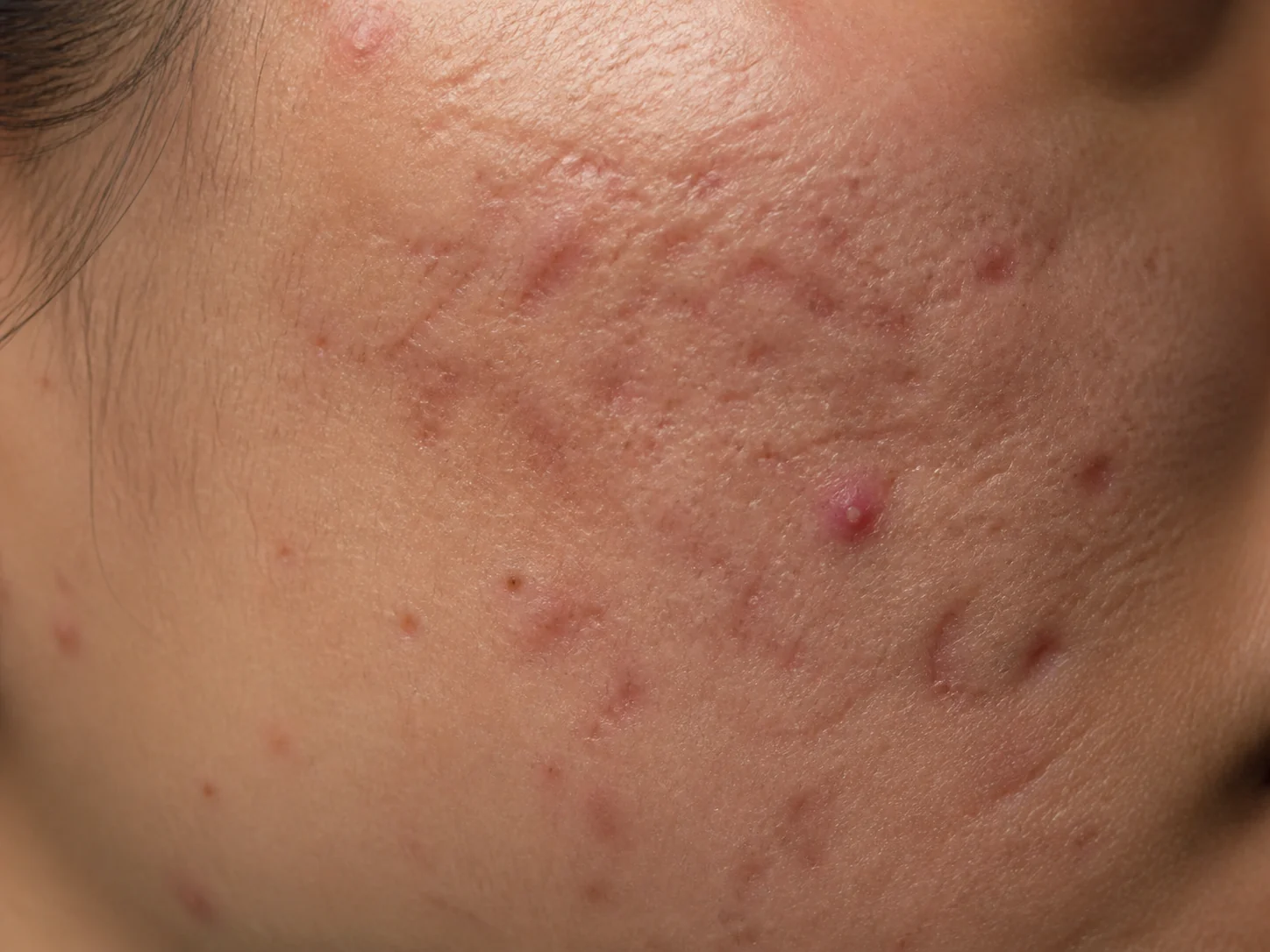
Acne scar symptoms are divided into atrophic scars, where the skin is indented, and hypertrophic or keloid scars, which are firmly raised. Indented scars can be narrow and deep Icepick-type, boxcar-type with relatively distinct borders, and rolling-type that appears wide and wavy. On the other hand, red or brown changes that remain flat after acne may be post-inflammatory erythema or hyperpigmentation, and should be distinguished from scars where the structure has changed. If new acne continues to appear, or if there is pus, heat, rapid swelling, acne that looks like a scar grows rapidly, or bleeding or ulcers occur, a dermatology evaluation should come first.
Identification criteria by shape
First, distinguish between indentations, protrusions, and flat color changes
Do not refer to all marks as the same scar simply because they were where acne was; check the surface height, borders, color, and current inflammation.
| Visible changes | Distinguishing characteristics | Next action |
|---|---|---|
| Small holes that are narrow and deeply pitted | Possible ice pick atrophic scar | Evaluate depth and mixed types at a dermatology clinic |
| Round or oval indentation with visible borders | Possible boxcar atrophic scar | Record distribution using photos with consistent lighting |
| Wide and shallow indentation, skin appears wavy | Possible rolling atrophic scar | Check shadows and range according to light direction |
| Firmly raised, itchy or painful | Possible hypertrophic scar or keloid | Early dermatology evaluation if it is growing |
| Surface is flat and red or brown | Possible post-inflammatory erythema or hyperpigmentation | Distinguish from scars for UV management and diagnosis |
| New pus, heat sensation, rapid swelling, or sudden growth | Active acne, infection, or other skin acne | Do not perform self-treatment; seek prompt medical evaluation |
When to seek medical evaluation first
Changes requiring dermatological evaluation rather than being dismissed as scars
The following changes require confirmation of active inflammation, infection, or other skin acne.
- If red, painful nodules or pus continue to form newly
- If redness, heat, pain, or swelling spreads rapidly after a procedure or extraction
- If there is pus accompanied by fever and body aches, or if the skin turns black
- If raised acne grows rapidly or if bleeding and ulcers occur repeatedly
- If the face or lips swell suddenly or if breathing becomes difficult
When new inflammation continues to occur even while managing marks and pitted scars
Criteria for identifying conditions that cause new scars and delayed recovery, rather than claiming that herbal medicine alone can fill scars
Flat red marksbrown marksand pitted or raised scars are distinguished first. Korean herbal medicine treatment focuses on factors that slow recovery, such as the recurrence of new inflammation, persistent redness, dryness, heat, and digestion or sleep status; procedures for scars where the skin structure has already changed are planned separately.
First, categorize by color and elevation
Distinguish whether it is a flat mark, if pitting is visible depending on the light, or if it is raised and widening.
Criteria for determining when to stop new inflammation before treating scars
If active nodules or pustules persist, the priority is to first reduce the rate at which new scars form.
Why skin recovery conditions are monitored between procedures
Dryness, heat, sleep, digestion, and the persistence of redness are considered together when adjusting prescriptions.
Treatment GoalWe first reduce the trend of increasing new inflammation and scars, and stabilize the skin's redness, dryness, and recovery conditions so that separate scar treatment can be planned.
Consult using 7-day acne scar photos and records of new acne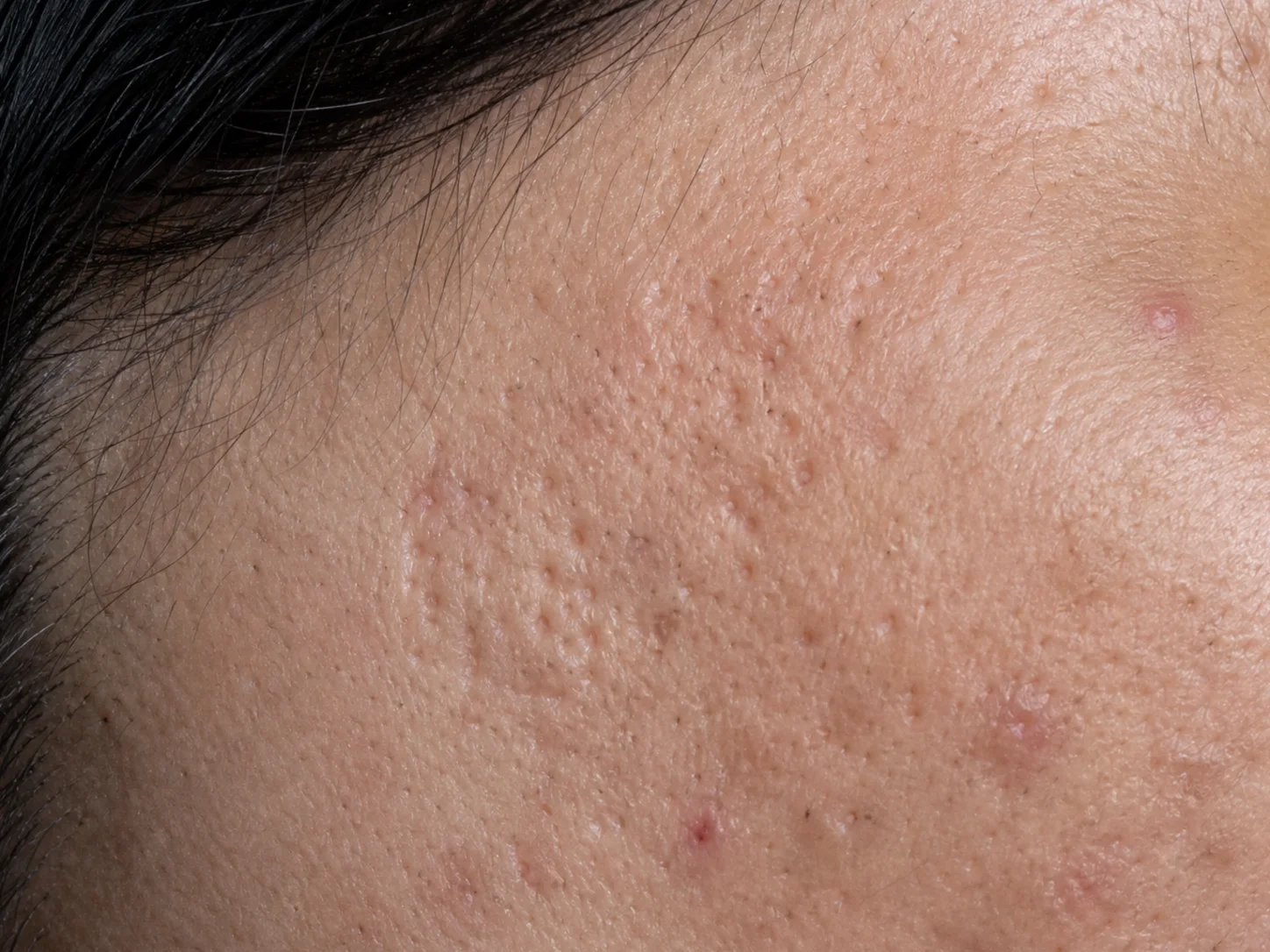
The width, boundary, and depth of indentations can vary even within a single area. We first reduce active inflammation and then plan dermatological procedures according to the scar type.
Educational reproduction images and simplified diagrams of the process do not represent actual patient photos or treatment results.If you have had these experiences
For those confused about the types of marks remaining in the mirror or photos
First, distinguish between flat red/brown marks and indented or raised scars. Korean herbal medicine treatment focuses on factors that hinder recovery, such as recurring new inflammation, persistent redness, dryness, heat sensation, and digestion or sleep status, while procedures for scars where the skin structure has already changed are planned separately.
Those whose cheek indentations become more prominent depending on the light direction during morning makeup
When new nodules·pustules occur and marks continue to increase even during scar management
Those who have developed hard, itchy, or painful raised marks on the jawline, chest, or back
When redness, heat sensation, and dryness persist long after inflammation has subsided
Those who worry that flat red or brown marks after acne are scars
When inflammation recurs around the marks during times of fatigue, lack of sleep, or indigestion
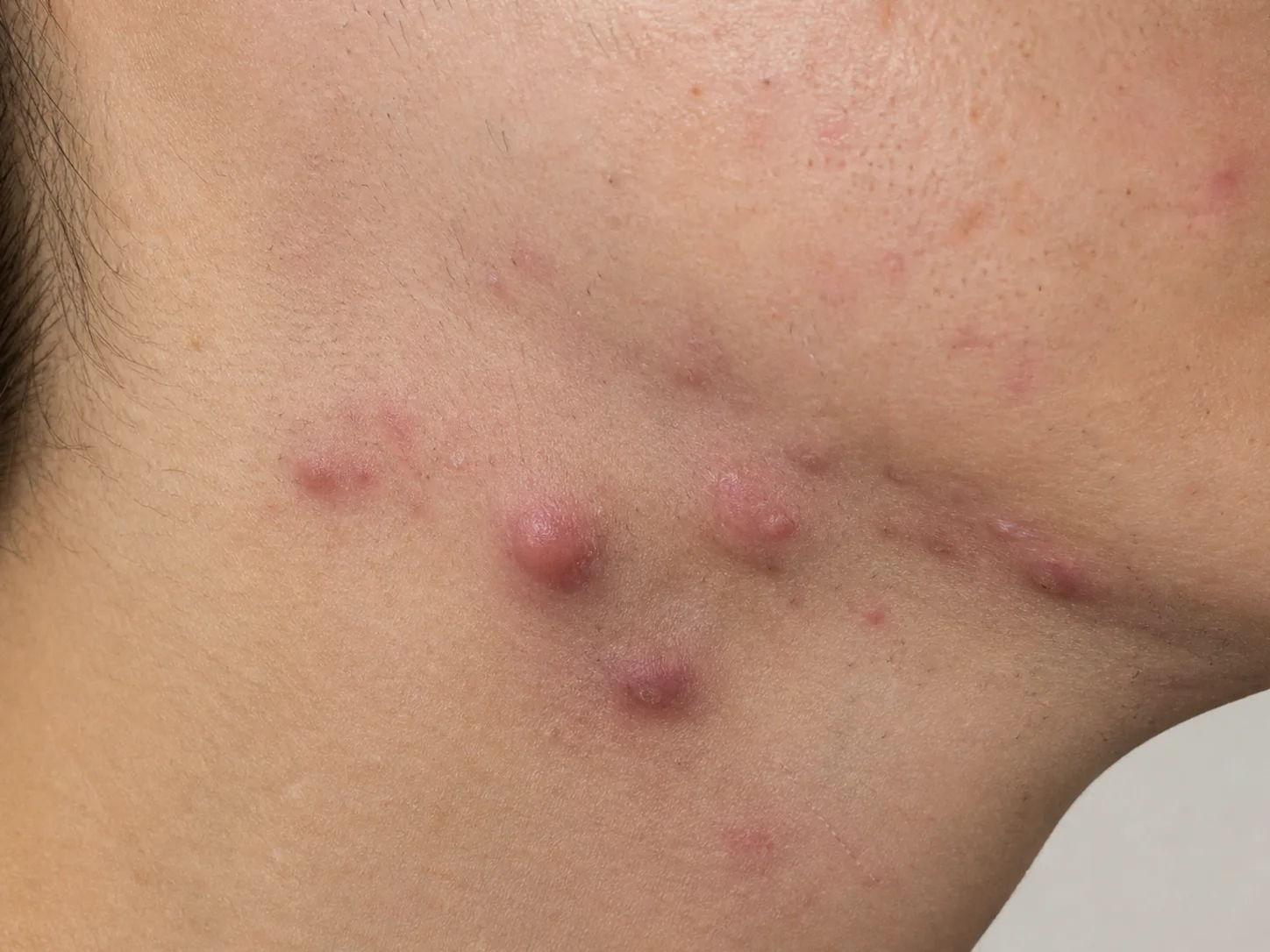
If acne that feels wider and deeper than surface red spots persists, prioritize a dermatology evaluation before scarring occurs.
This is how we examine during the medical evaluation
Acne scars: depth of symptoms and remaining marks
Acne scar symptoms are divided into atrophic scars, where the skin is indented, and hypertrophic or keloid scars, which are firmly raised. Indented scars can be narrow and deep ice-pick types, or those with relatively distinct boundaries like boxcar type, or a mix of wide, wave-like rolling types. On the other hand, flat red or brown changes remaining after acne may be post-inflammatory erythema or hyperpigmentation, which must be distinguished from scars where the structure has changed. If new acne continues to appear, or if there is pus, heat sensation, rapid swelling, acne that looks like a scar grows rapidly, or if bleeding or ulcers occur, a dermatological evaluation is the first priority.
We first rule out infections and other types of skin acne
Check for new pus, heat sensation, rapid swelling, fever, sudden growth, bleeding, or ulcers to ensure dermatology evaluation is not delayed.
Keep separate records of indentations, protrusions, and color
Using photos taken under the same lighting, as well as touch, itching, and pain, we distinguish between atrophic scars, hypertrophic scars, and flat post-inflammatory pigment changes.
Continuously monitor new inflammation alongside daily changes
By examining the number and depth of new inflammation and its connection to menstruation, sleep, and digestion, we provide separate consultations on the goals of herbal medicine treatment and the sequence of structural scar treatment.
Reasons Why It Does Not Heal Easily
Acne scars: Why new acne continues to appear even after one lesion subsides
First, distinguish between flat red or brown marks and indented or protruding scars. Herbal medicine treatment focuses on factors that slow recovery, such as recurring new inflammation, persistent redness, dryness, heat sensation, and the state of digestion and sleep; procedures for scars where the skin structure has already changed are planned separately.
First, categorize by color and elevation
Distinguish whether it is a flat mark, an indentation visible depending on the light, or a protrusion that is widening.
Criteria for determining when to stop new inflammation before treating scars
Active nodules ·pustulesIf these continue, we first focus on reducing the rate at which new scars form.
Why we monitor skin recovery conditions between procedures
Dryness, heat sensation, sleep, digestion, and the persistence of redness are considered together when adjusting prescriptions.
Using photos as medical records
Acne scars: Compare 7-day changes using photos taken under the same lighting
Please prepare photos taken from the same lighting and distance, the onset timing of indentations, protrusions, or color changes, recent new inflammation with pus, pain, or itching, and your current history of dermatology medications and procedures for a consultation at Baekrokdam.
Icepick scars appear narrow but deep
These are indentations that look like small holes and extend deep into the skin. Depth should be evaluated through a skin examination rather than guessing based on surface area alone.
Boxcar scars show rounded indentations and visible borders
These are wider and more rounded or oval-shaped than icepick scars, and may have relatively distinct edges like walls.
Rolling scars create wide, wave-like shadows
These are wide, gentle depressions that make the skin look uneven or wavy depending on the direction of the light. Different types of scars may be mixed in the same area.
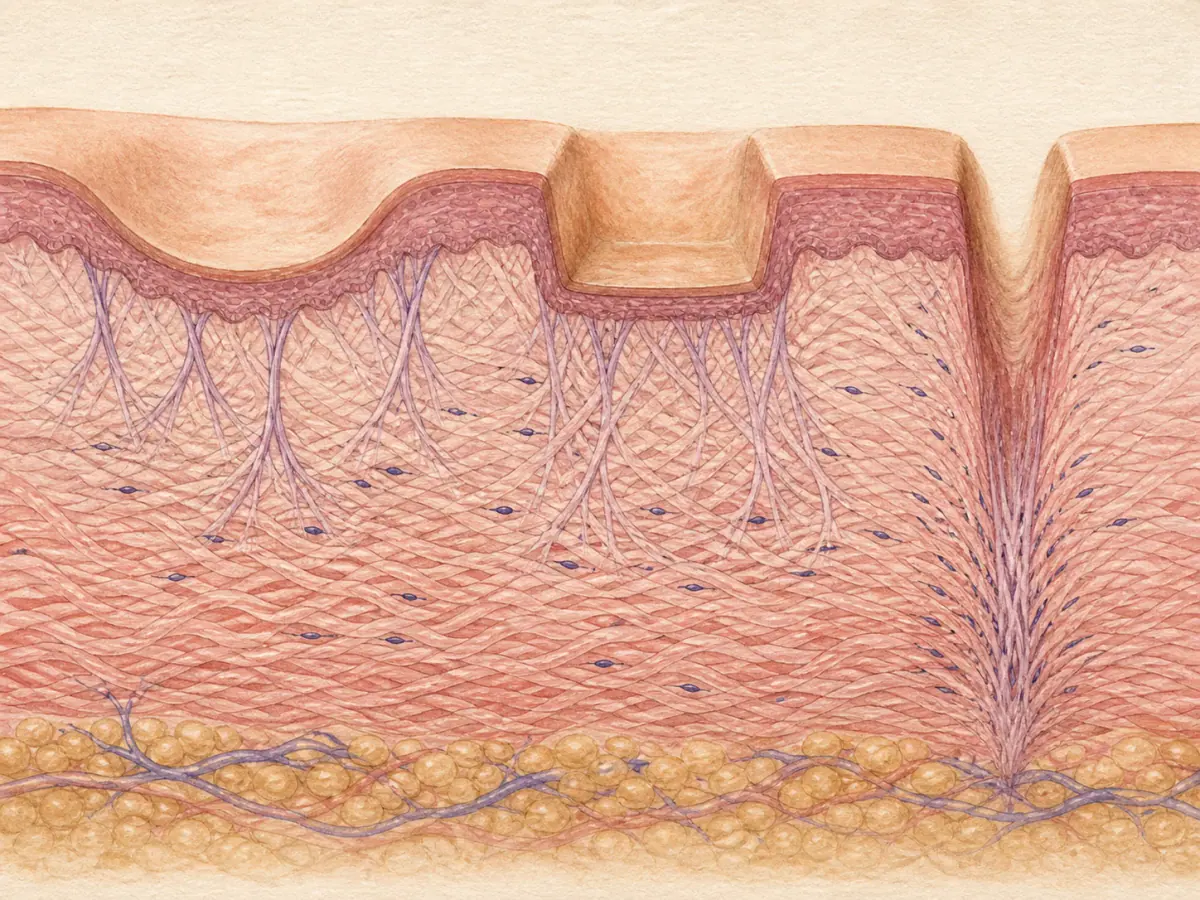
Even if all indentations look similar from the outside, the surface width and the depth within the dermis can vary, which may lead to different dermatology treatment plans.
Conceptual reference · American Academy of Dermatology: Acne scarsHerbal Medicine Pattern Identification for Acne Scars
Why Acne Scar Prescriptions Differ Based on Sebum, Heat, Dryness, and Menstruation
We examine whether there is significant residual red inflammation, if the skin is thin and dry leading to slow recovery, or if dark red marks and nodules are accumulating, Sebum· and whether digestion issues are linked to the emergence of new inflammation.
When red papules and a sensation of heat persist around the marks
We look for new papule· pustules and burning sensations among flat red marks. We check for flushing following upper-body heat, thirst, or stress. We increase the proportion of heat-clearing and detoxifying treatments to reduce residual heat and new inflammation.
When skin is thin and dry, and redness lasts long after irritation
We look for tightness, flaking, delayed recovery after procedures, and persistent red marks. We ask about lack of sleep, nighttime heat, dry mouth, and fatigue. We supplement body fluids and recovery power while lowering remaining deficiency heat.
When dark red marks and hard nodules persist in the same area for a long time
We look for deep marks, tenderness, and indentations left by acne that formed deep within the skin. Premenstrual exacerbation· We check for menstrual cramps, coldness in the hands and feet, and stagnation of circulation. We help recovery after inflammation by regulating the circulation of Qi and Blood and resolving blood stasis.
Changes to monitor during treatment
Changes to check in next week's photos
We first reduce the trend of increasing new inflammation and scars, and stabilize the skin's redness, dryness, and recovery conditions so that a separate scar treatment plan can be established.
Distinguishing between flat marks, indentations, protrusions, and active acne
Please take photos under the same lighting for 7 days and also note the 'distinction between flat marks, indentations, protrusions, and active acne'.
Number of new inflammations, duration of marks, and history of procedures
Please take photos under the same lighting for 7 days and also note the 'number of new inflammations, duration of marks, and history of procedures'.
Skin dryness, heat sensation, sleep, digestion, menstruation, and current medications
Please take photos under the same lighting for 7 days and also note 'skin dryness, heat sensation, sleep, digestion, menstruation, and current medications'.
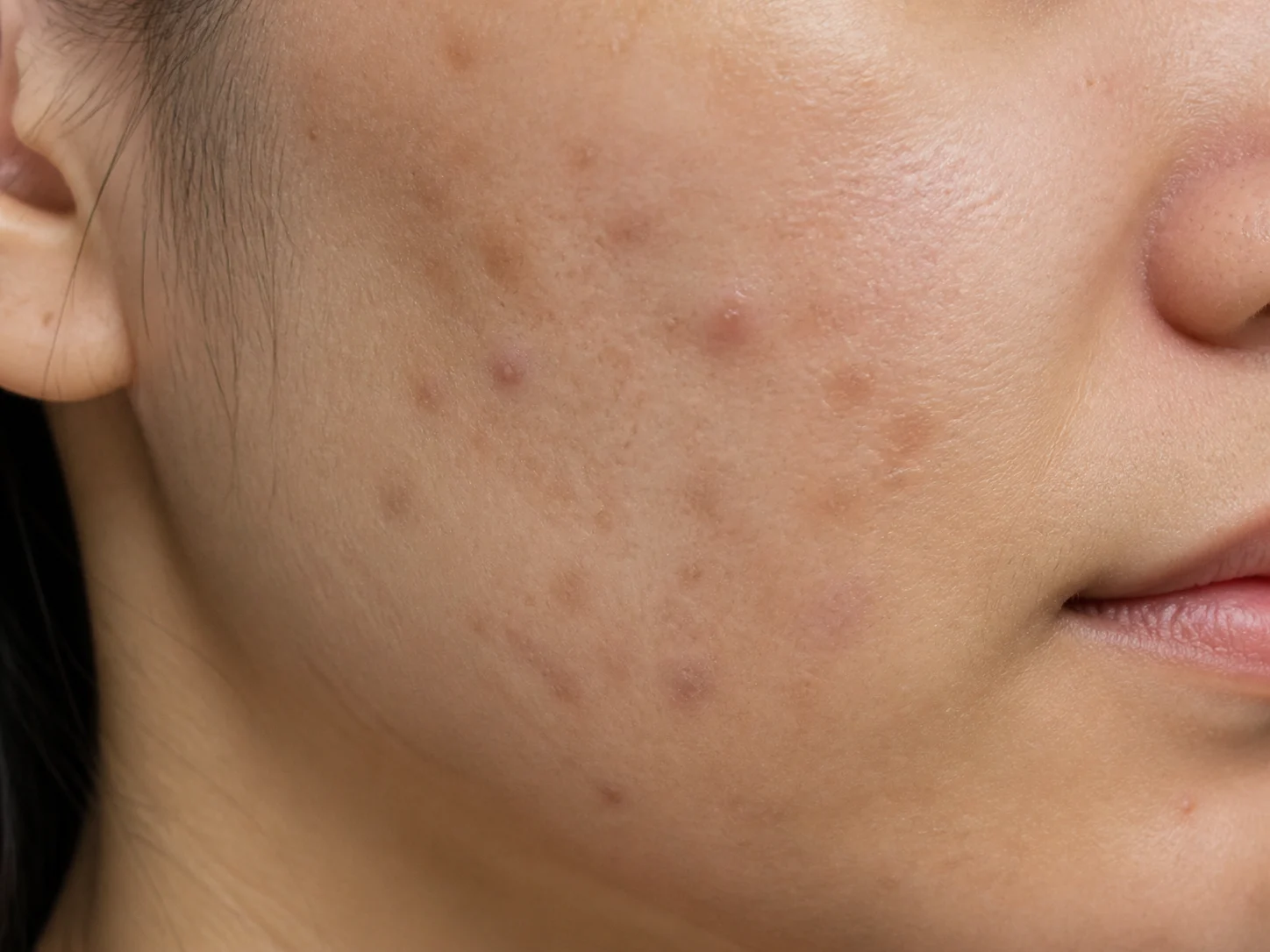
Distinguish brown marks from scars with changes in elevation, and record the influence of UV rays, extraction, and new inflammation.
At the crossroads of sebum, heat, and recovery speed
Acne accompanied by marks and scars is categorized into Upper-Body Wind-Heat, Yin Deficiency Internal Heat, Qi and Blood Stagnation, and Spleen-Stomach Damp-Heat
We examine whether there is significant residual red inflammation, if the skin is thin and dry leading to slow recovery, if dark red marks and nodules are accumulating, or if sebum and digestion issues are linked to new inflammation.
Pattern identification (Byeonjeung) is not about assigning a single constitution name to acne. The priority of the prescription changes depending on the connection between comedones, inflammation, heat sensation, sebum, delayed recovery, and menstruation, sleep, and digestion.
When red papules and a feeling of heat persist around the marks
- Changes observed in acne
- We look for new papules, pustules, and a burning sensation among flat red marks.
- Accompanying changes observed in the body
- We check for flushing following upper body heat, thirst, or stress.
- Prescription priority
- We increase the proportion of heat-clearing and detoxifying treatments to reduce residual heat and new inflammation.
When skin is thin and dry, and redness lasts long after irritation
- Changes observed in acne
- We look for tightness, flaking, delayed recovery after procedures, and persistent red marks.
- Accompanying changes observed in the body
- We ask about lack of sleep, nighttime heat sensations, dry mouth, and fatigue.
- Prescription priority
- We lower remaining deficiency heat while supplementing body fluids and recovery power.
When dark red marks and hard nodules persist in the same area for a long time
- Changes observed in acne
- We look for deep marks, tenderness, and indentations left by deep-seated acne.
- Accompanying changes observed in the body
- We check for worsening before menstruation, menstrual cramps, cold hands and feet, and circulation stagnation.
- Prescription priority
- We help recovery after inflammation by regulating Qi and blood circulation and resolving blood stasis.
When there is excessive oil, digestive blockage, and new pustules continue to form
- Changes observed in acne
- We look for recurring pustules, comedones over the marks, and oiliness.
- Accompanying changes observed in the body
- We ask about bloating, bad breath, constipation or sticky stools, and worsening after late-night snacks.
- Prescription priority
- We reduce the damp-heat in the spleen and stomach to stop the cycle of new inflammation increasing the number of marks.
Order of prescription adjustment
- Criteria for distinguishing between marks, indentations, protrusions, and new inflammation
We do not mix the treatment goals for structural scars and active acne.
- Identifying the core issue: residual heat, dryness, stagnation, or damp-heat
If sleep, digestion, and heat sensations also worsen during periods of slow skin recovery, these patterns are reflected in the prescription.
- Criteria for adjusting based on new acne and the recovery period
The focus is not on whether scars are filled immediately, but on the number of new inflammations, redness, and persistent dryness.
Why consider Korean herbal medicine treatment now?
- When new nodules or pustules appear and marks continue to increase even during scar management
- When redness, heat sensation, or dryness persist for a long time after inflammation has subsided
- When inflammation recurs around marks during times of fatigue, lack of sleep, or indigestion
What is evaluated in herbal medicine treatment for this condition
- Distinguishing between flat marks, depressions, protrusions, and active acne
- The number of new inflammations, the duration of remaining marks, and history of procedures
- Skin dryness, heat sensation, sleep, digestion, menstruation, and current medications
First, distinguish infections from other types of acne
We check for new pus, heat sensation, rapid swelling, fever, sudden growth, bleeding, or ulcers to ensure that dermatology evaluations are not delayed.
Record depressions, protrusions, and discoloration separately
Using photos taken under the same lighting, as well as texture, itching, and pain, we categorize them into atrophic scars, hypertrophic scars, and flat post-inflammatory pigment changes.
Continuously monitor new inflammations alongside changes in daily life
By examining the number and depth of new inflammations and their connection to menstruation, sleep, and digestion, we provide separate consultations on the goals of herbal medicine treatment and the sequence of structural scar treatment.
Things to prepare before the consultationPlease prepare photos taken from the same lighting and distance, the starting point of depressions, protrusions, or color changes, recent new inflammations with pus, pain, or itching, and your current dermatology medications and procedure history for your consultation.
Deep nodules, widely spreading infections, and rapidly forming scars must be checked at a dermatology clinic without delay. For already pitted scars, separate procedures should be considered; Korean herbal medicine treatment examines the patterns of recurring new inflammation and the state of sleep, digestion, and menstruation that slow down skin recovery.
Consult about acne scar progressAcne Glossary
Additional information to know regarding acne scar guidance
You can check simple definitions before proceeding to detailed explanations.Frequently Asked Questions
Frequently Asked Questions about Acne Scars
What types of indented acne scars are there?
Narrow and deep icepick scars, boxcar scars with round or oval boundaries, and wide, gentle, wave-like Rolling-typeand may be mixed in one area.
Are brown acne marks also permanent scars?
Brown or red changes where the surface is flat post-inflammatory hyperpigmentationor erythema, and are different from structural scars. Please manage them after confirming the exact type.
Should I seek medical evaluation if a raised acne scar becomes itchy or grows larger?
Hypertrophic scars or keloids can be itchy or painful, and keloids may grow larger than the original acne. If they continue to grow or the diagnosis is uncertain, seek dermatology evaluation early.
Do I start scar treatment even if acne remains?
Since new inflammation can lead to additional scarring, acne is often controlled first. Determine the sequence of current medications and procedures during a skin evaluation.
Which procedure is best for pitted scars?
It depends on the type (icepick, rolling, or boxcar), depth, and skin tone. Since a combination of microneedling, lasers, fillers, or incisions may be used, an examination is required first.
Can herbal medicine treatment fill in scars?
Herbal medicine pitted scars cannot be promised to directly restore the structure. The goals are separated from structural scar treatment, and consultations include the cycle of recurring inflammation as well as accompanying discomforts such as redness, sleep issues, and digestion.
Evidence and Update Information
Dr. Choi Yeon-seung, a Korean medicine doctor, organized this content based on the official professional materials and disease-specific clinical data below, and updated the content on 2026-08-26.
- American Academy of Dermatology: Acne scars: Signs and symptomsBasis for distinguishing between icepick, rolling, and boxcar atrophic scars, hypertrophic and keloid scars, and post-inflammatory hyperpigmentation (which is not a scar)
- DermNet: Acne ScarringClinical characteristics of atrophic, hypertrophic, and keloid scars, post-inflammatory erythema and pigment changes, and the basis for medical evaluation of uncertain raised acne
- American Academy of Dermatology - Acne scars: Consultation and treatmentThis is the basis for determining combined procedures by scar type, prioritizing the control of active acne, and setting treatment expectations.
- American Academy of Dermatology - Laser treatmentThis is the basis for the range of scar improvement via laser, the risk of burns or post-inflammatory hyperpigmentation according to skin tone, and the need for UV protection.
- NHS - Acne complicationsThis is the basis for the treatment limitations where the selection of peeling, laser, punch techniques, or subcision cannot guarantee complete removal.