Distinguishing Mark Color
What is the difference between red acne marks and brown pigmentation?
Within the single term 'acne marks,' you must first distinguish between redness, brown pigmentation, and indentations to clarify the order of management.
Click on unfamiliar terms to see their meanings immediately.
flat Red marksis vascular erythema, while brown or grayish-brown marks may be primarily due to increased melanin. Color and surface elevation are evaluated separately.
| Observation | Red marks | Brown marks |
|---|---|---|
| Primary color | Pink or red | Brown or grayish-brown |
| Surface | Generally flat | Generally flat |
| When they become more prominent | Appear redder after heat or irritation | Appear darker after UV exposure or friction |
| First steps | Distinguish between new inflammation and flushing | Manage UV exposure, extraction, and new inflammation |
If there is no difference in height, it may be different from structural scarring
Check if there are any indentations or protrusions even under slanted light.
Redness and brown tones can remain on the same face simultaneously
Depending on the skin tone and the point at which the acne healed, these two color changes may be mixed.
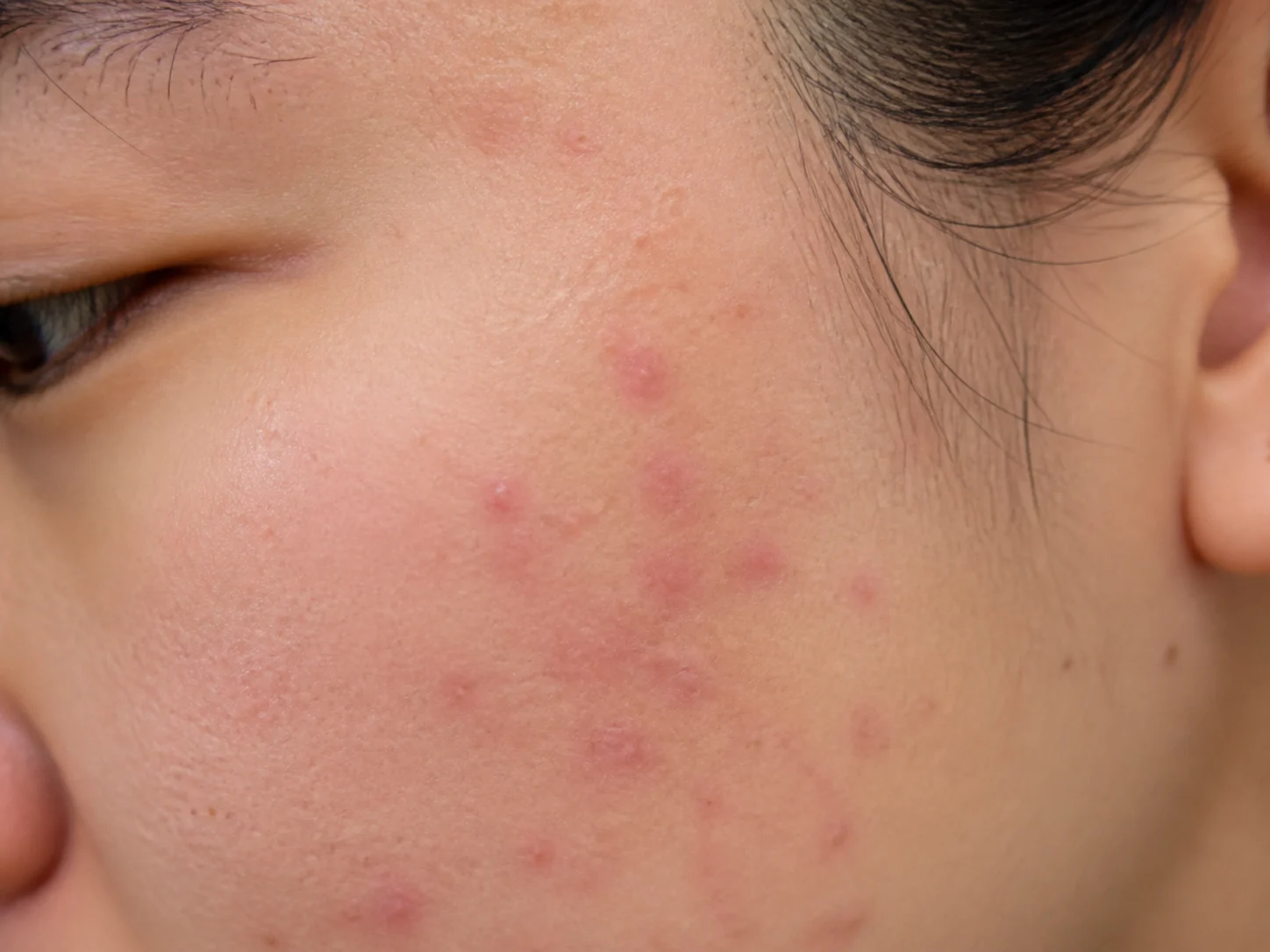
Redness that remains flat at the site of acne, without being raised or painful, must be distinguished from new inflammation, rosacea, and pitted scars.
New inflammation must be reduced to prevent more marks from appearing
Record the number of newly formed acne lesions and the number of marks separately on a daily basis.
Try organizing your information this way before your appointment
In photos taken every 7 days under the same lighting, new comedones·papule·It is easier to determine the treatment sequence if you count pustules/nodules separately from remaining redness, brown marks, and indentations. This record is also used when comparing with the guides for post-acne erythema, post-inflammatory hyperpigmentation, and atrophic acne scars.
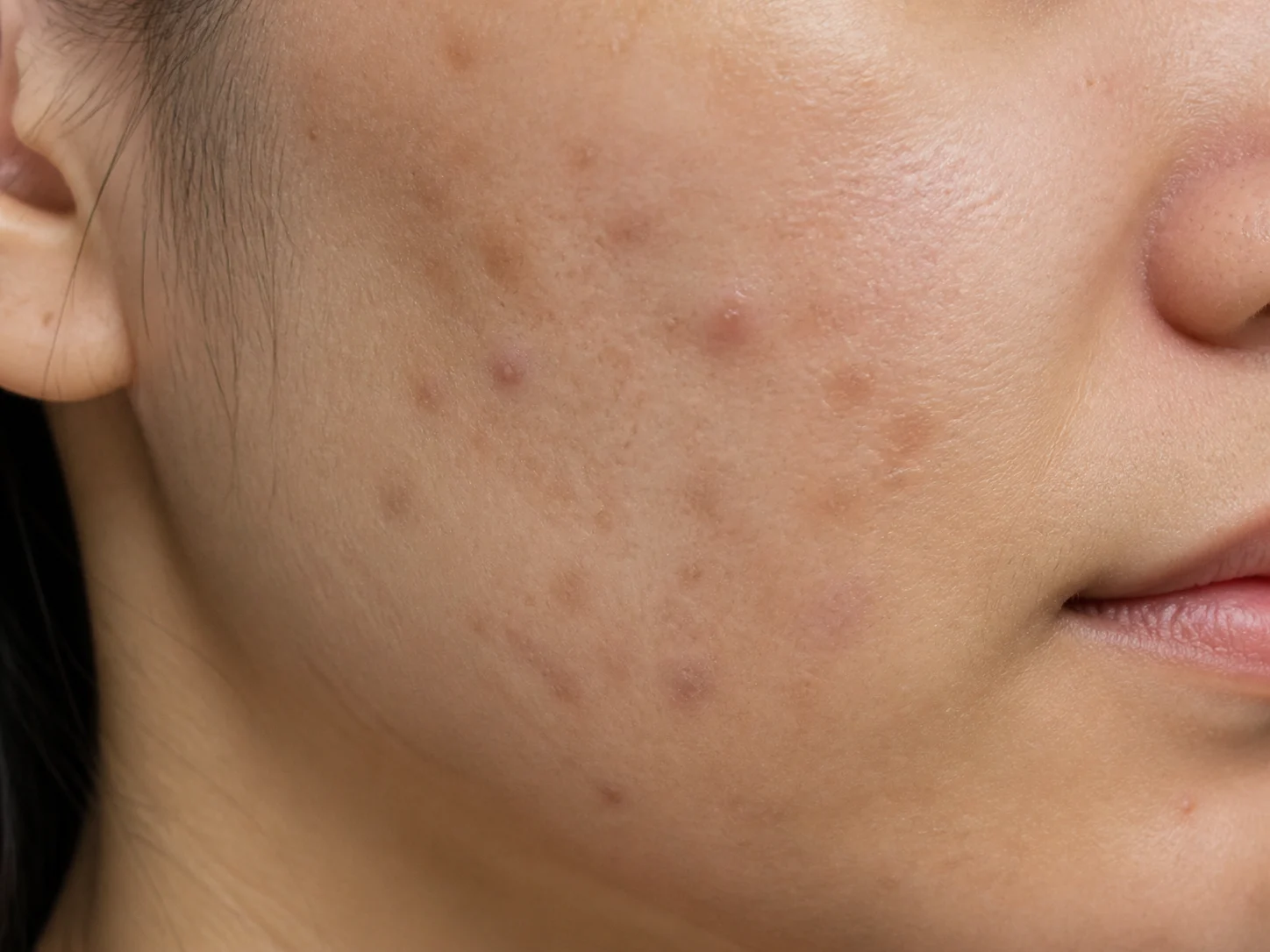
Distinguish brown marks from scars with changes in elevation, and record the influence of UV rays, extraction, and new inflammation.
Divide the marks into redness, brown tones, and indentations, and record them along with the number of newly formed acne lesions under the same lighting.
View based on my situation
The next steps will vary depending on your current appearance
Rather than picking just one similar part from a photo, look at the depth of the acne, remaining marks, and accompanying discomforts such as itching or stinging.
When it is closer to post-acne erythema (red marks)
Post-acne red marks are flat, vascular redness that remains where inflammation has subsided, Post-inflammatory erythemait may be. You must check that it is not raised or painful to the touch, and that pink or red tones are more central than brown. However, new papules orpustules, persistent flushing of the entire face, and pitted surface changes must be distinguished from active acne, rosacea, and scars, respectively.
reduce the speed at which new inflammation occurs and the number of days facial heat persists, allowing for separate management of existing marks and newly formed acne.When it is closer to post-inflammatory hyperpigmentation (brown marks)
Post-acne hyperpigmentation is a change where melanin increases at the site where inflammation has passed, leaving flat brown or grayish-brown spots. It differs from structural scars in that the skin surface is not pitted or raised, and it is distinguished from post-inflammatory erythema, which is primarily pink or red. UV exposure, friction,Extractionand if new inflammation recurs, marks may become darker and last longer.
reduce the speed at which new inflammation and marks appear, and create a skin condition where existing pigment management can continue without irritation.When it is closer to atrophic acne scars (indentations)
Pitted acne scars are categorized into narrow and deep Icepick-type, where relatively angular borders are visible boxcar type, and wide, gently undulating rolling types, which may be mixed in one area. Even if red or brown, if the surface is flat, it may be post-inflammatory hyperpigmentation. We cannot promise that Korean herbal medicine will fill an already pitted dermal structure; we distinguish between the role of reducing recurrent inflammation and recovery conditions that create new scars, and the actual scar procedures.
reduce active inflammation to lower the speed at which new indentations increase, and help ensure that structural scar treatment is performed on stabilized skin.Please record only this much before your appointment
- Weekly photos taken under the same lighting
- Number of new inflammatory lesions and number of red marks
- The time relationship between redness and heat, alcohol consumption, menstruation, and sleep
- Those who feel the skin is flat to the touch but still see red spots in photos
- Those who find it difficult to distinguish between red marks and new inflammation
- Those whose entire face turns red after heat, alcohol, or cleansing Rosaceaand are confused with
Frequently Asked Questions
Common questions after reading this guide
How do I distinguish between red acne marks and new acne?
Red marks are usually flat and painless, whereas new inflammatory lesions are raised and may be painful when pressed or may show pus.
Are red marks and brown marks the same?
Red marks are distinguished as vascular erythema, while brown marks may primarily be due to increased melanin.
Is overall facial flushing also considered an acne mark?
If redness extends beyond the acne sites to the entire nose and cheeks and worsens with heat or alcohol, we check for rosacea or facial flushing.
Will herbal medicine make the red marks disappear immediately?
does not promise direct removal. If new inflammation and heat continue to recur, the Recurrence consultation will focus on the goal of adjusting those conditions.
Evidence and Update Information
This content was organized by Korean medicine doctor Choi Yeon-seung based on the materials below and was updated on 2026-08-26.
- American Academy of Dermatology: Adult acne treatment
- DermNet: Acne scarring
- American Academy of Dermatology: Acne resource centerPatient Guide on Acne and Subsequent Color Changes