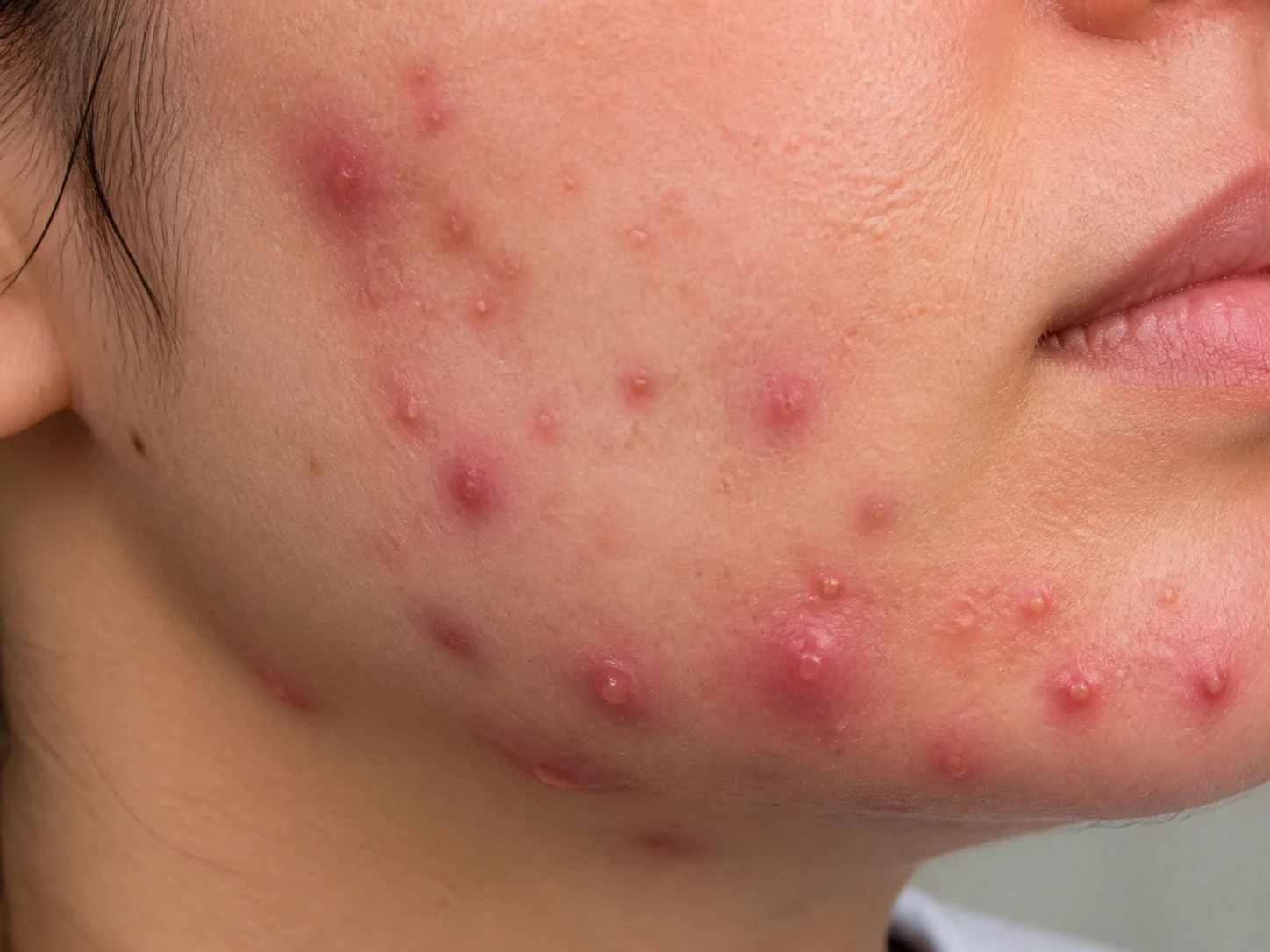
Inflammatory acne: Read in the order of your curiosity
Before concluding based on a single red spot
Inflammatory acne: Depth of symptoms and remaining scars
Inflammatory acne occurs through a complex process where excessive sebum is produced and inflammation deepens in areas where dead skin cells block the pores. Those that feel like large, painful lumps deep inside, cystic acneor deep nodules are prone to leaving scars, so it is better to determine a treatment direction early. Hormonal changes during puberty or around menstruation, certain medications, and repeated friction may overlap to worsen the condition, but it cannot be attributed to a single food item or a failure to wash.
Distinguishing between causes and aggravating factors
Points to check regarding the location of acne and changes before and after
Do not determine the cause based on a single instance; record the depth, pain, scars, and their relationship with time together.
| Observed Pattern | Possible Meaning | Next Step |
|---|---|---|
| Recurring before/after menstruation or during puberty | Possibility that hormonal changes, such as androgens, are affecting sebum secretion | Record the cycle and location of acne on a calendar and share it with a dermatologist |
| Sudden increase after starting a new medication | Possibility of a correlation with certain medications | Do not stop medication arbitrarily; verify the medication name and start date with the prescribing medical staff |
| Severe under helmets, masks, or bag straps | Possibility that pressure, friction, sweat, and humidity are contributing to the worsening | Compare changes after reducing contact areas and usage time |
| Recurring deep, painful lumps that leave marks | Risk of nodular acne and scarring | Do not squeeze; seek prompt dermatological evaluation |
| Red areas spreading rapidly and feeling hot | Need to distinguish from infections other than common acne | Evaluation at a medical institution on the same day |
When to seek medical evaluation first
Cases where a dermatology evaluation should be prioritized over recording causes
If you notice the following changes, do not attempt to squeeze them yourself or continuously switch to new products; instead, check for the risk of acne and scarring.
- Deep, hard, and painful nodules or pus-filled acne occur repeatedly
- Pitted or raised scars and dark marks increase rapidly
- Redness, heat, and swelling spread rapidly to surrounding areas, or are accompanied by fever
- Symptoms suddenly worsened after starting a new medication, or other symptoms such as menstrual changes appear simultaneously
- Avoiding school, work, or interpersonal relationships due to appearance concerns, or experiencing severe depression
When deep and painful inflammation recurs even after using antibiotics or sebum regulators
Beyond looking only at surface pus, we analyze deep heat, dampness, blood stasis (dam-eo), and the rate of recovery
Nodular andpurulent acnerequire reducing the rate at which new nodules form while first checking the risk of scarring. We adjust the herbal medicine prescription by distinguishing between damp-heat (oily and suppurating), red heat in the upper body, blood stasis (dam-eo) along the jawline, and deficiency heat following overwork.
Treatment begins based on the deepest and most painful acne
We first examine the nodules that feel wider and deeper than surface pustules, as well as the rate of new scar formation.
We check the overall body condition that worsens along with pus, sebum, and heat
We verify whether the deterioration of digestion, bowel movements, menstruation, or sleep occurred before the acne formed deep in the skin.
The prescription is changed to a recovery phase once inflammation decreases
The proportion of heat-clearing and dampness-draining during the red and painful stage differs from the proportion of recovery during the stage where marks and dryness remain.
Treatment GoalWe lower the rate at which new deep nodules and pustules form and reduce the duration that redness, pain, and marks persist after inflammation.
Consult using 7-day photos of purulent acne and records of newly developed acne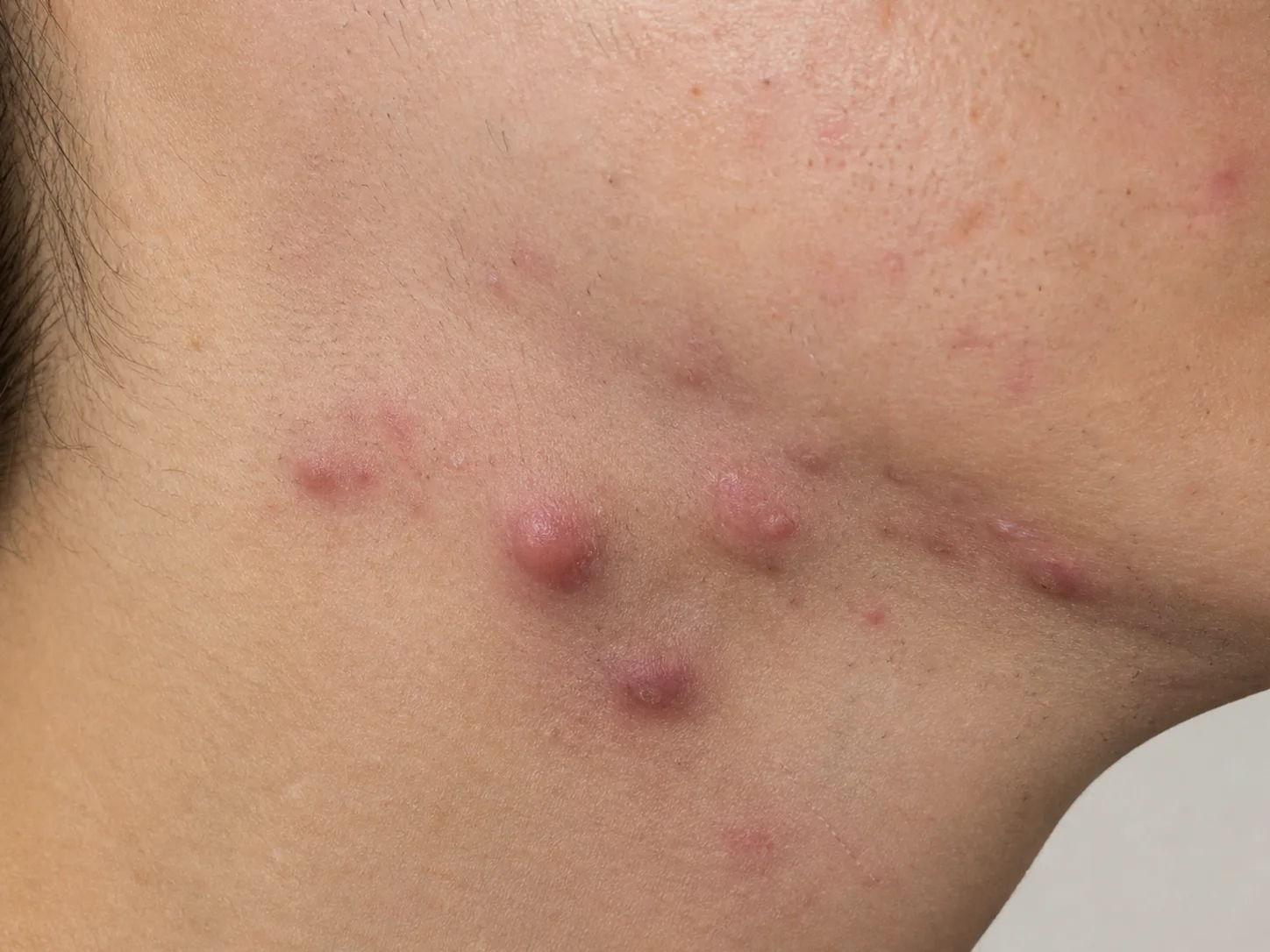
If acne that feels wider and deeper than surface red spots persists, prioritize a dermatology evaluation before scarring occurs.
Educational reproduction images and simplified diagrams of the process do not represent actual patient photos or treatment results.If you have had these experiences
For those wondering why deep acne throbs every night
nodulesFor adult and purulent acne, we must first check the risk of scarring and reduce the speed at which new nodules form. We adjust Korean herbal medicine prescriptions by distinguishing between damp-heat (oily and suppurating), red heat in the upper body, phlegm-stasis along the jawline, and deficiency heat following overwork.
Those who experience recurring deep, painful nodules on the jaw and cheeks before and after menstruation
When new nodules recur even after evaluation and treatment of deep-seated acnepustulesrecur
Those whose inflammation worsens in areas where exercise equipment or masks touch the skin
When hard inflammation and marks overlap on the same jawline or cheeks
Those worried about the cause of increasing purulent acne and scars despite frequent washing
When purulent acne noticeably increases after alcohol consumption, late-night snacks, menstruation, or staying up all night
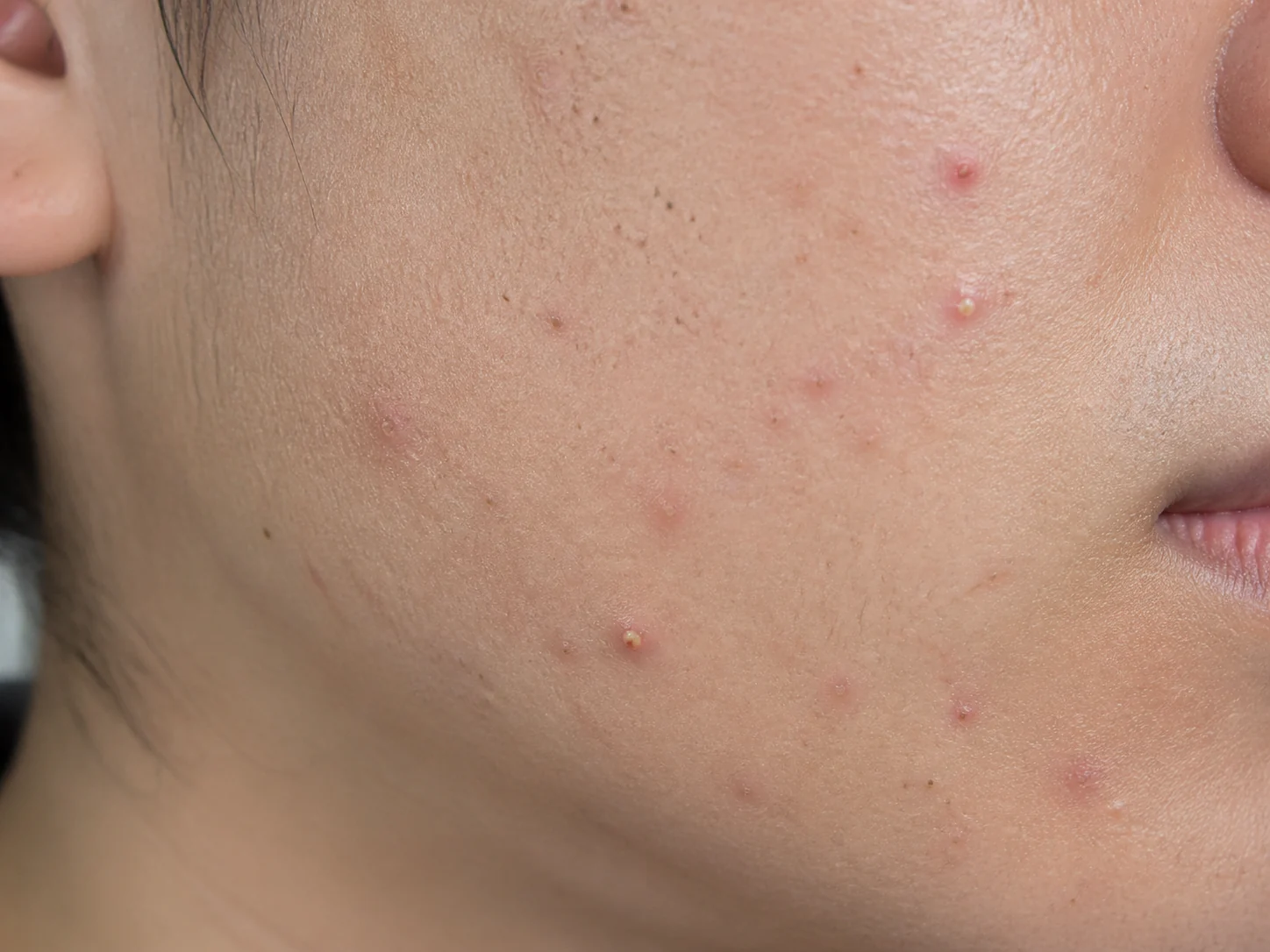
Since comedones, papules, and pustules can appear together on one face, we examine the deepest acne and the rate at which new ones form together.
This is how we examine during the medical evaluation
Purulent Acne: Depth of Symptoms and Remaining Traces
Purulent acne Sebumis created through a complex process where excessive sebum is produced and dead skin cells block the pores, deepening the inflammation. Cystic acne, which feels like large, painful lumps under the skin, or deep nodules are prone to leaving scars, so it is advisable to determine a treatment direction early. Hormonal changes during puberty or around menstruation, certain medications, and repeated friction may overlap to worsen the condition, but it cannot be attributed to a single food item or a lack of washing.
Points to first check regarding nodules, scars, and suspected infection
For deep and painful acne, rapidly spreading redness and heat, or new scars, we guide patients toward a dermatological evaluation before consulting on the cause.
Criteria for observing the timing of hormones, medication, and friction
The start date of menstruation or new medication, the location where equipment touches, Extractionand the state before and after cleansing are compared with acne photos to find changes related to recurring worsening.
Consulting on remaining recurring discomfort after treating identified causes
Without arbitrarily changing dermatological treatments or prescriptions, we examine changes in sleep, digestion, and menstruation alongside acne to explain the scope and limits of concurrent Korean herbal medicine treatment. Dermatology continues to take priority regarding deep nodules, scars, and medication safety; thereafter, Recurrence Baekrokdam continues to monitor the intervals of recurrence and delayed recovery.
Reasons Why It Does Not Heal Easily
Purulent Acne: Why new breakouts continue even after one subsides
For nodular and purulent acne, we must first assess the risk of scarring while reducing the rate at which new nodules form. Whether the acne is oily and suppurating damp-heat, red heat in the upper body, phlegm-accumulation along the jawline, or deficiency heat following overwork, we adjust the herbal medicine prescription accordingly.
Treatment begins based on the deepest and most painful acne
We first examine nodules that feel wider and deeper than surface pustules, as well as the rate of new scar formation.
We check for overall body conditions that worsen alongside pus, sebum, and heat sensations
We verify whether the deterioration of digestion, bowel movements, menstruation, or sleep occurs before the appearance of deep-seated acne.
As inflammation decreases, the prescription is changed to a recovery phase
The proportion of heat-clearing and dampness-draining agents used during the red and painful stage differs from the proportion of recovery agents used when marks and dryness remain.
Using photos as medical records
Purulent Acne: Comparing 7-day changes using photos taken under the same lighting
Before your consultation at Baekrokdam, please organize recent photos of your acne, start dates and locations, menstrual changes, any newly started medications, friction from equipment or masks, whether you have performed extractions, and your response to dermatological treatments.
Excessive sebum does not explain everything
Even if there is a lot of sebum poreif it is discharged well, the same type of acne may not occur. We examine the process where keratin blocks the pore and bacteria and inflammation overlap.
Blackheads are not caused by dirt
The black color seen when the pore opening is open is a change in color caused by the contents being exposed to air. Assuming they are black because you didn't wash and scrubbing harshly can actually increase irritation.
As inflammation deepens, the risk of nodules and scarring increases
If the pore wall is damaged and inflammation spreads deep into the surrounding skin, painful nodules or pus-filled acne can develop; therefore, the depth of the acne must be evaluated early.
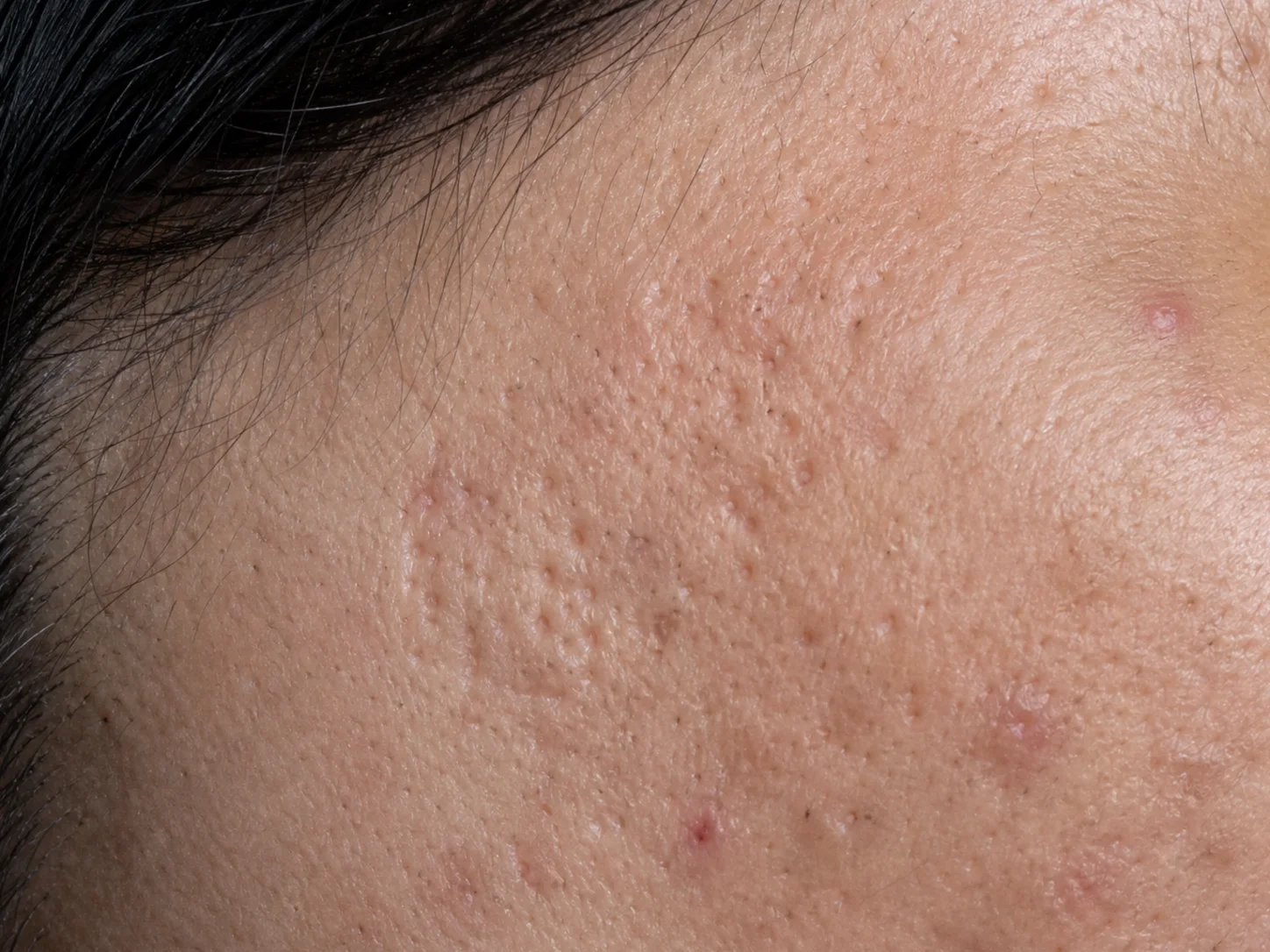
The width, boundary, and depth of indentations can vary even within a single area. We first reduce active inflammation and then plan dermatological procedures according to the scar type.
Herbal medicine pattern identification for purulent acne
Why prescriptions for purulent acne differ based on sebum, heat, dryness, and menstruation
We observe whether the acne is oily and suppurating, whether red heat concentrates on the forehead and nose, whether it accumulates firmly along the jawline, or whether heat recurs amidst fatigue and dryness.
When oily, yellow pustules recur around the cheeks and mouth
We look for pustules, greasiness, sticky sebum, and red heat sensations. We ask about digestive stagnation, bad breath, constipation or sticky stools, and worsening after alcohol or late-night snacks. We lower the damp-heat in the gastrointestinal tract and regulate purulent inflammation and sebum burden.
When red papules and pustules increase rapidly, centered on the forehead and nose
We examine red, hot inflammation in the T-zone and upper face. We check for heat sensations in the upper body, thirst, dryness, and flushing after stress. The focus is on Cheongsang-cheongyeol, which lowers heat concentrated in the upper body and reduces acute red inflammation.
When hard, deep lumps accumulate in the same spot along the jawline
We look for nodules with deep boundaries that persist, as well as dark red marks and tenderness. Premenstrual exacerbationWe ask about menstrual cramps, blood clots, and a cold sensation in the lower abdomen. The focus is on Hwalhyeol-hwadam, which resolves the stagnation of phlegm and blood stasis to support circulation in the lower abdomen.
Changes to monitor during treatment
Changes to check in next week's photos
We aim to slow the rate at which new deep nodules and pustules form, and reduce the duration that redness, pain, and marks persist after inflammation.
Weekly number of new nodules/pustules and the rate of pain/scarring
Please take photos under the same lighting for 7 days, and also record the 'weekly number of new nodules/pustules and the rate of pain/scarring'.
Sebum, heat sensation, itching, digestion, and bowel movements
Please take photos under the same lighting for 7 days, and also record 'sebum, heat sensation, itching, digestion, and bowel movements'.
Menstruation, sleep, fatigue, and the response period of medications
Please take photos under the same lighting for 7 days, and also record 'menstruation, sleep, fatigue, and the response period of medications'.
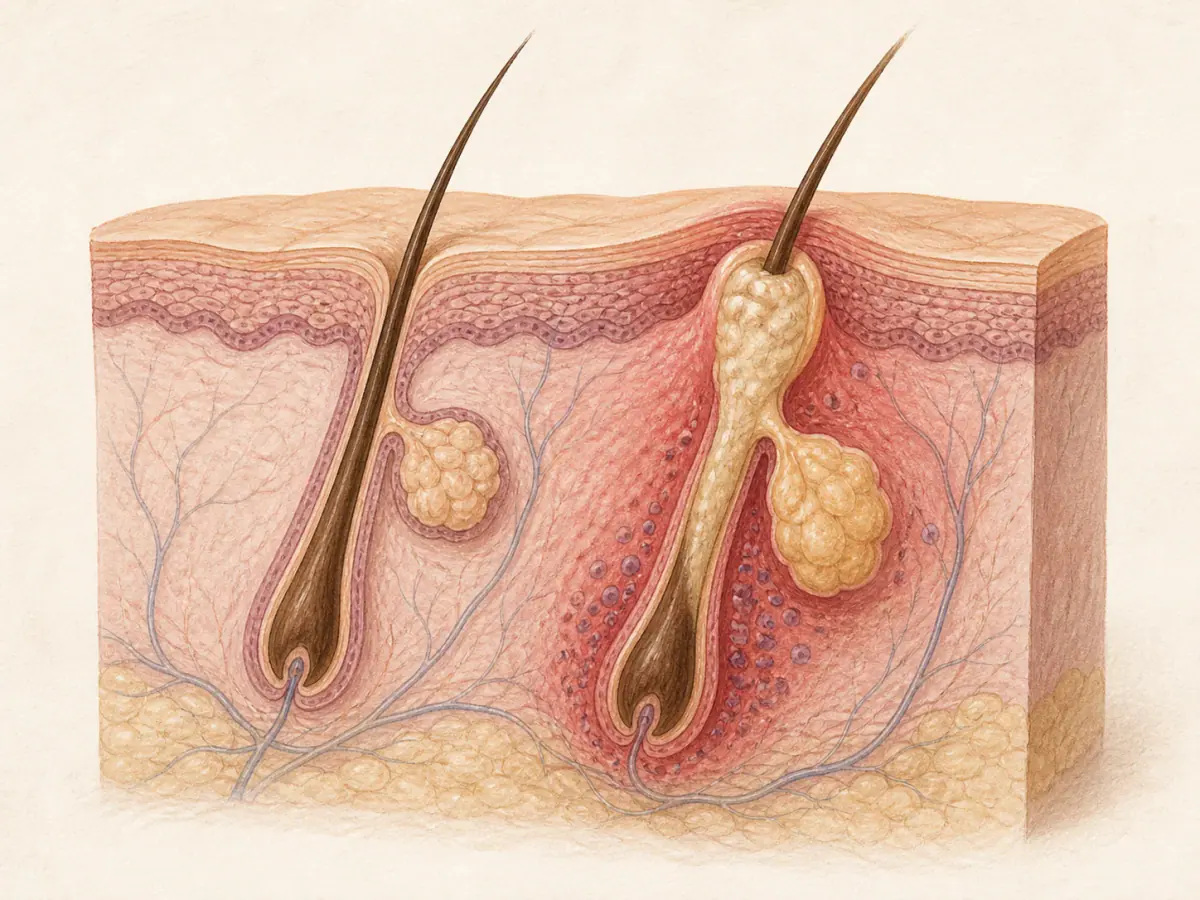
As sebum and dead skin cells accumulate at the entrance of the hair follicle and inflammation deepens, the appearance of the acne and the risk of scarring may change.
Conceptual reference · American Academy of Dermatology: Acne overviewAt the crossroads of sebum, heat, and recovery speed
Inflammatory acne is categorized into Stomach Damp-Heat, Lung-Wind-Heat, Blood Stasis-Phlegm, and Yin Deficiency-Fire Hyperactivity
We examine whether it is greasy and suppurating, whether red heat concentrates on the forehead and nose, whether hard lumps accumulate on the jawline, or whether heat recurs amidst fatigue and dryness.
Pattern identification (Byeonjeung) is not about assigning a single constitution name to acne. The priority of the prescription changes depending on the connection between comedones, inflammation, heat sensation, sebum, delayed recovery, and menstruation, sleep, and digestion.
When greasy, yellow pustules recur on the cheeks and around the mouth
- Changes observed in acne
- We look for pustules, oiliness, sticky sebum, and red heat sensations.
- Accompanying changes observed in the body
- We ask about digestive stagnation, bad breath, constipation or sticky stools, and worsening after alcohol or late-night snacks.
- Prescription priority
- We lower the damp-heat in the stomach and regulate inflammatory suppuration and sebum burden.
When red papules and pustules increase rapidly, mainly around the forehead and nose
- Changes observed in acne
- We examine red, hot inflammation in the T-zone and upper face.
- Accompanying changes observed in the body
- We check for heat sensations in the upper body, thirst, dryness, and flushing after stress.
- Prescription priority
- The focus is on Cheongsang-cheongyeol, which lowers heat concentrated in the upper body and reduces acute red inflammation.
When hard, deep nodules consistently form in the same area along the jawline
- Changes observed in acne
- We examine deep, long-lasting nodules, dark red marks, and tenderness.
- Accompanying changes observed in the body
- We inquire about worsening before menstruation, menstrual cramps, blood clots, and a cold sensation in the lower abdomen.
- Prescription priority
- The focus is on Hwalhyeol-Hwadam, which resolves the stagnation of phlegm and blood stasis while promoting circulation in the lower abdomen.
When deep inflammation occurs after staying up all night on thin, dry skin
- Changes observed in acne
- We examine red nodules and delayed recovery accompanied by dryness and stinging.
- Accompanying changes observed in the body
- We check for nighttime heat sensations, dry mouth, chronic fatigue, and lack of sleep.
- Prescription priority
- We supplement bodily fluids and recovery while lowering excessive deficiency heat.
Order of prescription adjustment
- First, we assess the risk of new nodules, pain, and scarring
Acne that deepens rapidly is given higher priority along with the necessary evaluation of skin condition.
- We determine the central cause among damp-heat, upward-surging heat, phlegm-stasis, or deficiency heat
The location of the acne and factors such as sebum, digestion, menstruation, and sleep are linked to the prescription.
- Criteria for adjustment based on new nodules and recovery speed every 2 weeks
We monitor changes in digestion, sleep, and heat sensations, as well as pain, size, and marks.
Why consider Korean herbal medicine treatment now?
- When new nodules or pustules recur even after evaluation and treatment of deep-seated acne
- When hard inflammation and marks overlap and remain on the same jawline or cheeks
- When purulent acne increases significantly after alcohol consumption, late-night snacks, menstruation, or staying up all night
What is evaluated in herbal medicine treatment for this condition
- Weekly count of new nodules and pustules, and the rate of pain and scarring
- Sebum, heat sensation, itching, digestion, and bowel movements
- Menstruation, sleep, fatigue, and the response period to medication
Points to first verify together regarding nodules, scars, and suspected infection
For deep and painful acne, rapidly spreading redness and heat, or newly forming scars, we guide the patient toward a dermatology evaluation before consulting on the cause.
Criteria for observing the timing of hormones, medications, and friction
We compare the start date of menstruation and new medications, the location of equipment contact, and the periods before and after extraction or cleansing along with acne photos to identify changes related to recurring worsening.
Consultation for recurring discomfort remaining after treating identified causes
Without arbitrarily changing dermatology treatments or prescriptions, we examine changes in sleep, digestion, menstruation, and acne together to explain the scope and limits of concurrent Korean herbal medicine treatment.
Things to prepare before the consultationPlease organize recent acne photos, start dates and locations, menstrual changes, newly started medications, friction from equipment or masks, whether extractions were performed, and responses to dermatology treatments before your consultation.
Deep nodules, widely spreading infections, and rapidly forming scars must be checked at a dermatology clinic without delay. For already pitted scars, separate procedures should be considered; Korean herbal medicine treatment examines the patterns of recurring new inflammation and the state of sleep, digestion, and menstruation that slow down skin recovery.
Consult regarding the progress of inflammatory acneAcne Glossary
Additional information to note regarding inflammatory acne
You can check simple definitions before proceeding to detailed explanations.Frequently Asked Questions
Frequently asked questions about inflammatory acne
Is inflammatory acne caused by insufficient cleansing?
It is not a disease caused by hygiene alone. Sebum, dead skin cells, bacteria, and inflammation act together; washing too frequently or too harshly can make the skin redder due to irritation.
Will the cause disappear if I stop eating chocolate or greasy foods?
While some foods may be related to worsening, they are not the same direct cause for everyone. Rather than excessive restriction, record your intake and acne changes and discuss them with your medical provider.
If it seems to be caused by medication, should I stop taking it immediately?
Even if some medications have an effect, stopping them arbitrarily is dangerous. Inform your prescribing provider of the medication name, start date, and the point when acne increased to check for possible adjustments.
Can I prevent scarring by quickly popping deep acne?
Extracting deep nodules can increase the risk of inflammation, infection, and scarring. If there is significant pain or recurrence, do not touch it and seek dermatology care.
What is the first step in treating inflammatory acne?
Treatment begins by assessing the risk of scarring and using topical medications, adding limited oral medications if necessary. Dermatology primarily handles acute deep nodules and scarring risks, while Baekrokdam helps adjust the recurrence rate, sebum, sleep, and digestion records that remain afterward.
When is isotretinoin used?
It is prescribed by a dermatologist after evaluating the risks and benefits for severe nodular acne that does not respond to other treatments.
Can I take isotretinoin during pregnancy?
No. It is contraindicated during pregnancy, when planning pregnancy, or while breastfeeding, Possibility of pregnancyIf there is a possibility, prevention and testing guidelines must be followed.
Evidence and Update Information
This content was compiled by Korean medicine doctor Choi Yeon-seung based on the official professional materials and disease-specific clinical data below, and was updated on 2026-09-02.
- NIAMS: AcneThe process where excess sebum, dead skin cells, bacteria, and various causes of inflammation act together; official evidence regarding hormones, medication, family history, and aggravating factors
- American Academy of Dermatology: Acne: Diagnosis and treatmentThe risk of scarring from deep nodular acne and the necessity of a dermatological evaluation; evidence for management considering the process where multiple causes act together
- AAD: Isotretinoin OverviewTreatment of severe cysts and nodules and scarring; pregnancy prevention, testing, and confirmation of medical progress
- NHS: IsotretinoinPrescriptions for severe acne and contraindications for pregnancy, pregnancy planning, and breastfeeding, as well as side effect management
- American Academy of Dermatology: Adult acneEvidence regarding the context of hormonal fluctuations, stress, family history, skin and hair products, certain medications, and underlying diseases