Acne-like rash
Acne, Folliculitis, Rosacea, Perioral Dermatitis: They may all look like breakouts, but they are different
If you have not responded to acne treatment, re-verify the specific type of acne before using stronger medication.
Click on unfamiliar terms to see their meanings immediately.
comedones, uniformity of acne size, widespread redness, and the lip boundary and stinging sensation are the first things to check to distinguish between these four conditions.
| Condition | Points for differentiation | Common locations and sensations |
|---|---|---|
| Acne | Comedones and acne of various depths | Face, chest, back; tenderness |
| Folliculitis | Follicular papules of similar size | Chest, back, forehead; itching |
| Rosacea | Widespread flushing in the center of the face without comedones | Nose, cheeks; burning sensation |
| perioral dermatitis | Small papules avoiding the lip border | Around the mouth and sides of the nose; stinging or dryness |
First, check for the presence of comedones
blackheads·whiteheadsare characteristics closer to acne.
Check for itching, flushing, and the lip border
The other three conditions differ based on the location and sensation of the spreading acne.
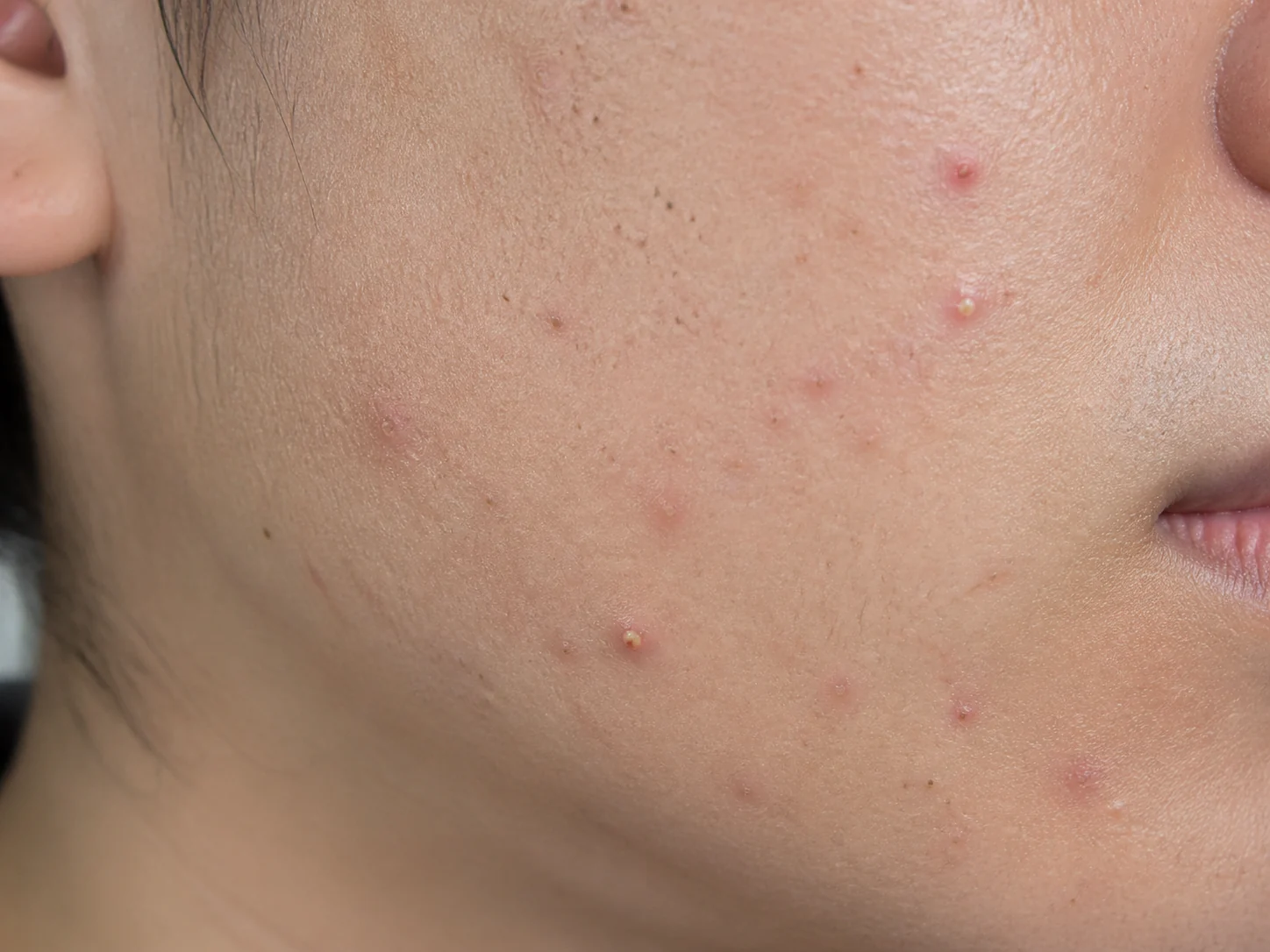
Since comedones, papules, and pustules can appear together on one face, we examine the deepest acne and the rate at which new ones form together.
Bring a timeline of medications and products used
Compare reactions to antibiotics, antifungals, facial ointments, and acne products.
Try organizing your information this way before your appointment
By categorizing new comedones, papules, pustules, and nodules separately from remaining redness, brown spots, and indentations in photos taken over 7 days under the same lighting, it is easier to determine the treatment sequence. When comparing acne or acne-like folliculitis· acne-like Rosacea· and facial flushing guides, refer to these records as well.
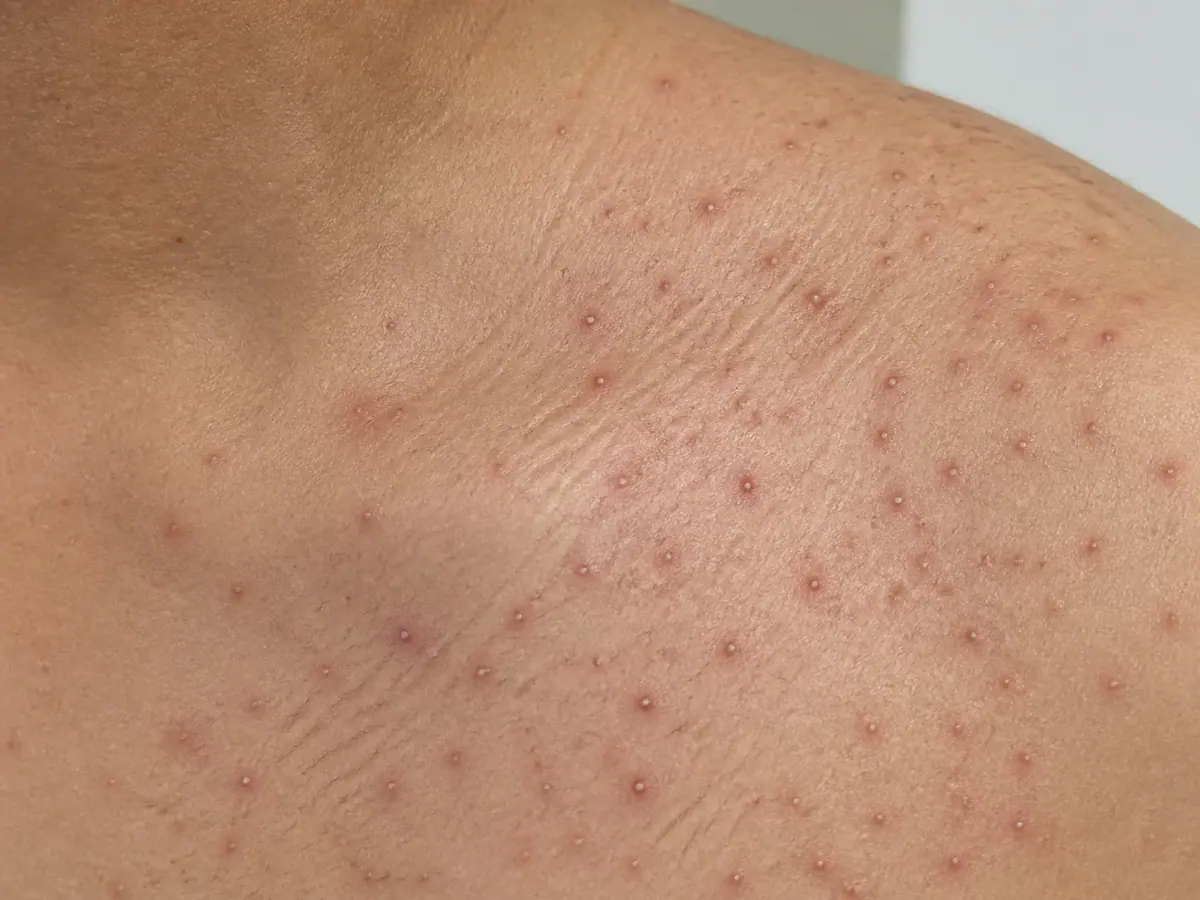
If itchy papules of similar size increase after sweating without comedones, check for folliculitis in addition to acne.
Narrow down the most likely condition using four characteristics, comedones, itching, widespread flushing, and the lip border, but do not make a final diagnosis based on photos alone.
View based on my situation
The next steps will vary depending on your current appearance
Rather than picking just one similar part from a photo, look at the depth of the acne, remaining marks, and accompanying discomforts such as itching or stinging.
When it closely resembles acne
Acne is Hair follicle When keratin at the opening Sebumbegins to clog the follicle through follicular keratosis, and the acne bacteria naturally residing in the skin contribute to inflammation. Hormonal changes such as puberty or pregnancy, family history, and certain medications can increase the risk, and skin or hair products that clog pores may also be related to acne. Diet or stress may be aggravating factors for some people, but a single food or cleansing habit cannot be concluded as the sole cause of all acne.
the speed at which new inflammation develops and the same area's Recurrence The first goal is to reduce the intervals. While reducing the medication, the prescription is adjusted to ensure that skin condition and sleep, digestion, and menstrual rhythms are not significantly disrupted.When it is closer to acne-like folliculitis
Folliculitis consists of red papules of similar size centered around the hair follicles papule·pustuleswhich may appear all at once and be accompanied by prominent itching. In contrast, acne often involves a mix of comedones, such as blackheads and whiteheads, and skin changes of varying size and depth. Since bacterial folliculitis and Malassezia folliculitis require different treatments, it is difficult to distinguish them with a single photo.
While ensuring the root cause is treated, we reduce the frequency of recurring skin changes, itching, and worsening after sweating or friction.When it is closer to acne, rosacea, or facial flushing
Acne involves a mix of comedones, such as blackheads and whiteheads, and skin changes of various depths. In contrast, rosacea is characterized by persistent redness, burning sensations, telangiectasia, and red papules centered around the nose and cheeks, often without distinct comedones. It is distinguished from facial flushing, which occurs briefly due to emotional changes or hot environments before subsiding, by the duration of the redness.
Separate the treatment goals for acne and flushing, and reduce skin irritation and the frequency of recurring widespread heat sensations and papules.When it is closer to perioral dermatitis and acne
Perioral dermatitis presents as similar small red papules spread around the mouth, sides of the nose, and around the eyes, slightly avoiding the immediate border of the lips, and may be accompanied by stinging or dryness. Even if it looks like acne, comedones are often not distinct, and the use of steroid ointments or cosmetics on the face is considered an important factor.
We separate the treatment goals for acne from other conditions and work to increase the intervals between recurring papules, stinging, and dryness.Please record only this much before your appointment
- The ratio of comedones, papules, pustules, and nodules, and the number of new acne breakouts per week
- Facial heat, sebum, dryness, and digestion, bowel movements, and sleep
- Menstrual cycle, oral and topical medications, the period of improvement, and the timing of recurrence
- Those who experience recurring comedones and inflammation on the face, chest, or back despite thorough cleansing
- Those whose acne worsens before or after hormonal changes such as menstruation or pregnancy
- Those who feel acne has increased after using new cosmetics, hair products, or prescription medications
Frequently Asked Questions
Common questions after reading this guide
What is the primary cause of acne?
It is a process where sebum and skin cells block the pores, and bacteria and inflammation are added. Risk contexts such as hormones, family history, medications, and products overlap differently for each person.
Will acne disappear if I stop eating chocolate or drinking milk?
While the link between certain diets and worsening symptoms is being researched, a single specific food is not the cause for everyone. Record reactions that recur for you, but it is difficult to view one single food as the sole cause.
Does stress cause new acne?
Stress can worsen acne for some people, but it is not established as the sole cause. Hormones, sleep, and changes in products are also considered.
If I think it was caused by medication, can I stop taking it immediately?
Do not stop taking medication arbitrarily. Show the prescriber the name of the medication, the start or change date, and photos of the acne to discuss the correlation and safe alternatives.
Evidence and Update Information
This content was organized by Korean medicine doctor Choi Yeon-seung based on the materials below and was updated on 2026-08-26.
- American Academy of Dermatology: Acne diagnosis and treatment
- DermNet: Acne mimics
- NIAMS: AcneEvidence regarding the process of pore clogging by sebum and skin cells, bacterial and inflammatory action, and the influence of hormones, family history, certain medications, and aggravating factors