Acne Shape and Depth
Whiteheads, red bumps, pus, and deep nodules, are they all the same kind of acne?
Comedones, red papules, pus-filled pustules, and deep, painful nodules each have different scarring risks and treatment priorities. Rather than simply counting the number of lesions, we explain the criteria for distinguishing the types, depth, and rate of new acne appearing on one face.
Click on unfamiliar terms to see their meanings immediately.
Even on one face, comedonespapule, pustulesnodulesThese may be mixed. The acne that occurs deepest in the skin and the rate at which new ones appear determine the risk of scarring and the priority for treatment.
| Acne | Appearance | Points to record |
|---|---|---|
| Closed comedones | Skin-colored or small white bumps | The number of new bumps before they turn red |
| Open comedones | Open pores that look like black dots | Record the distribution without squeezing |
| Papules and pustules | Red inflammation, may have a pus head | Pain and acne that appeared within the last week |
| Nodules and cysts | Deep, hard, and painful | Days of pain, scars, recurring locations |
Acne that develops deepest in the skin determines the treatment priority
small comedonesones may be numerous, but if there are deep and painful nodules, a plan is needed to first lower the risk of scarring.
Squeezing makes it harder to determine the depth of the acne
Extraction When subsequent swelling, wounds, and infections are mixed in, it becomes difficult to distinguish whether it was originally a papule or a deep nodule, and the risk of marks increases.
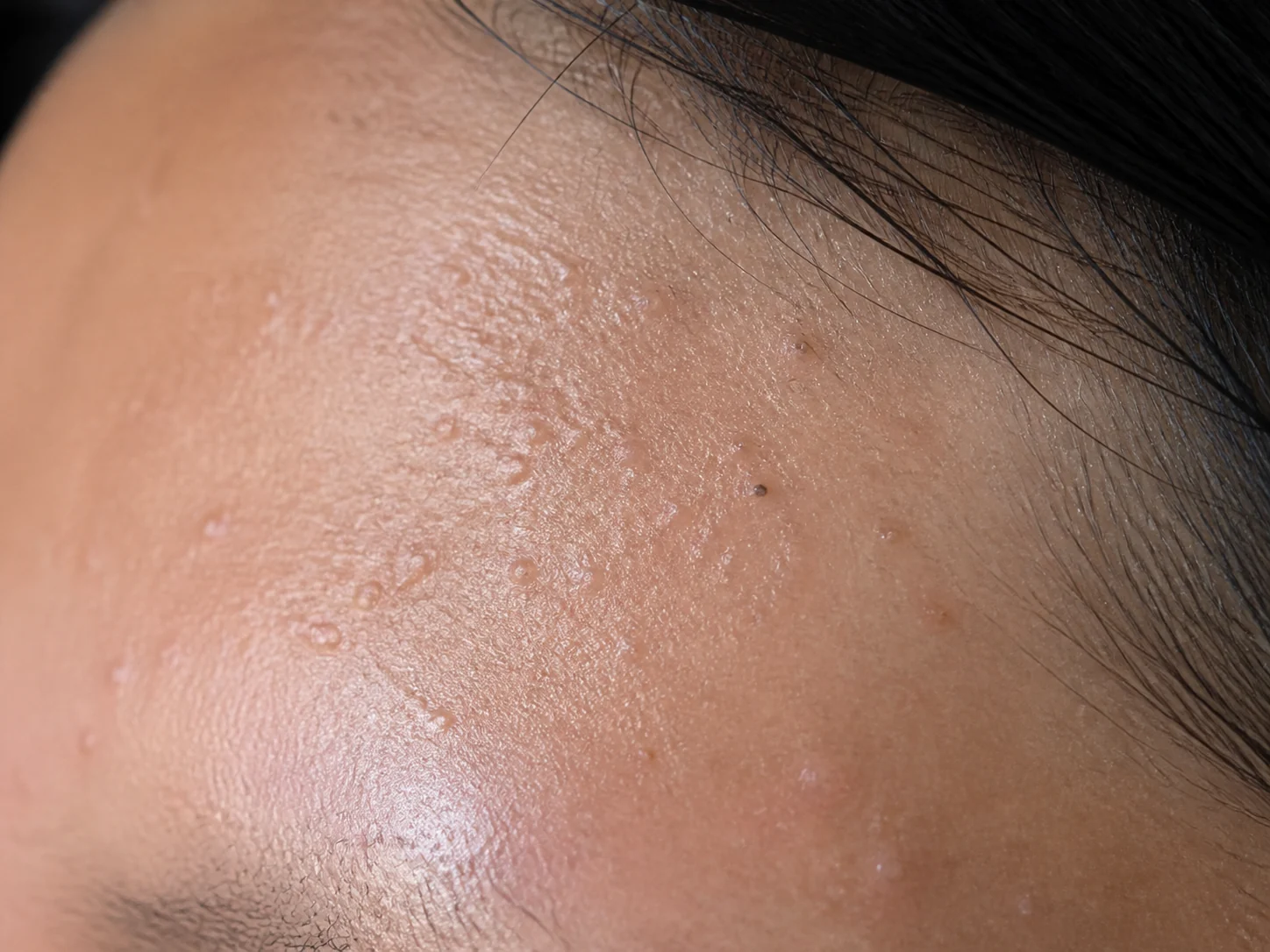
If small flesh-colored bumps are more prominent than red inflammation, check if it is comedonal acne before adding strong irritation.
Take weekly photos using the same lighting and angle
Separate subsided acne from new comedones, papules, and nodules to monitor the rate of occurrence over 7 days.
Try organizing your information this way before your appointment
By separating new comedones, papules, pustules, and nodules from remaining redness, brown spots, and indentations in 7-day photos taken under the same lighting, it is easier to determine the treatment sequence. Closed comedones·inflammatory acneand inflammatory acne, refer to these records as well.
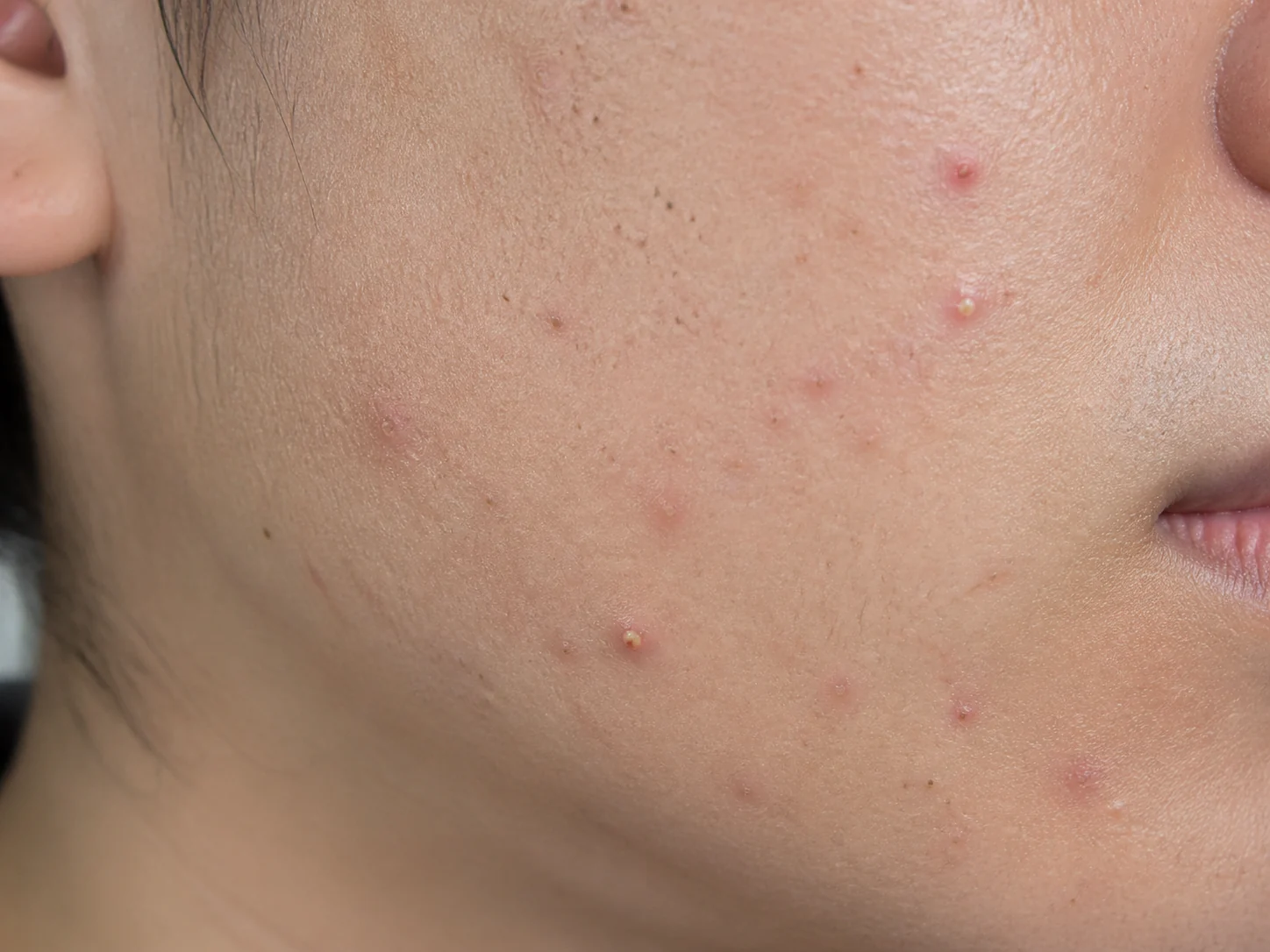
Since comedones, papules, and pustules can appear together on one face, we examine the deepest acne and the rate at which new ones form together.
Rather than the total count for today, separate them into comedones, papules, pustules, and nodules to count the acne that has newly formed over the week.
View based on my situation
The next steps will vary depending on your current appearance
Rather than picking just one similar part from a photo, look at the depth of the acne, remaining marks, and accompanying discomforts such as itching or stinging.
When it is closer to closed comedonal acne (whiteheads)
The focus of treating closed and open comedones (whiteheads and blackheads) is pore topical medication to reduce clogging and low-irritation skin care. topical retinoids, options such as benzoyl peroxide or azelaic acid are selected based on skin condition and possibility of pregnancy; since these typically take several weeks, record the initial irritation and the number of newly formed acne. Do not squeeze by hand or repeatedly use antibiotics alone.
Reduce the rate at which new comedones fill up and the ratio of them progressing to red inflammation, and stabilize the skin texture without excessive extractionexfoliation or irritation.When it is closer to inflammatory acne
Inflammatory acne occurs when inflammation develops inside a clogged pore, appearing as red papulespustulesand similar lesions; if it deepens, hard and painful nodules or cysts may form. Rather than just counting the number of acne, monitor the ratio of comedones to inflammation, the number of deep and painful acne, and the risk of new inflammation and scarring over a week.
Reduce the number and depth of new inflammation occurring each week, and shorten the time it takes for pain to subside and for red or brown marks to remain.When it is closer to inflammatory acne (cystic/pustular)
Purulent acne occurs through a complex process where excessive sebum is produced and inflammation deepens in areas where dead skin cells block the pores. Cystic acne, which feels like large, painful lumps under the skin, or deep nodules are prone to leaving scars, so it is advisable to determine a treatment direction early. Hormonal changes during puberty or around menstruation, certain medications, and repeated friction may overlap as aggravating factors, but it cannot be attributed to a single food or a lack of washing.
Lower the rate at which new deep nodules and pustules form, and reduce the duration that redness, pain, and marks persist after inflammation.When it closely resembles acne
Acne begins with follicular keratinization, where dead skin cells at the opening of the hair follicle clump with sebum and block the pore; then, acne-causing bacteria naturally present on the skin contribute to inflammation. Hormonal changes such as puberty or pregnancy, family history, and certain medications can increase the risk, and skin or hair products that clog pores may also be related to acne. Diet or stress may be aggravating factors for some people, but a single food or cleansing habit cannot be concluded as the sole cause of all acne.
The first goal is to reduce the rate at which new inflammation occurs and the interval of recurrence in the same spot. While reducing medication, prescriptions are adjusted to ensure that skin condition, sleep, digestion, and menstrual rhythms are not significantly disrupted.Please record only this much before your appointment
- The number of closed comedones, open comedones, and red inflammatory lesions
- Sebum levels, dryness, and stinging by area, and the products used
- Digestion, constipation, sleep, menstruation, and the interval of recurrence after extraction
- Those who are concerned about bumpy skin texture on the forehead and chin during morning cleansing or makeup application
- Closed comedone patients and their families who experience recurring symptoms and wish to know the priority of testing and treatment
- Those who are curious about how much Korean herbal medicine treatment can help while continuing their existing medical care
Frequently Asked Questions
Common questions after reading this guide
Do closed comedones disappear quickly if extracted?
Some comedones can be removed through skilled procedures, but repeated self-extraction increases the risk of inflammation and scarring. Treatment to reduce comedone formation is necessary.
How long does closed comedone treatment take?
Treatment with topical medication takes several weeks, and the response is typically evaluated around 12 weeks. Do not stop using the medication arbitrarily due to initial irritation; instead, adjust the application method.
Can I receive Korean herbal medicine treatment alongside treatment for closed comedones (small bumps)?
While maintaining the dermatology diagnosis and topical medication treatment, we will review all medications you are taking and consult on the necessary scope of Korean herbal medicine treatment for chronic recurring patterns.
What should I record before a consultation for closed comedones?
If you bring the time the symptoms started, recurring situations, test results, and a full list of prescribed medications, Korean herbal medicine, and supplements, we can determine during the Baekrokdam consultation whether re-testing is necessary and how Korean herbal medicine treatment can help.
Evidence and Update Information
This content was organized by Korean medicine doctor Choi Yeon-seung based on the materials below and was updated on 2026-08-26.
- American Academy of Dermatology: Acne signs and symptoms
- NICE: Acne vulgaris management recommendationsSkin care for comedonal and mild acne, combined treatment with topical medications, and 12-week evaluation
- AAD: Acne diagnosis and treatmentTopical medication treatment and scar prevention based on the degree of comedones and inflammation