Classification of Atrophic Scars
Ice-pick, Boxcar, and Rolling Acne Scars Can Be Mixed in One Area
Rather than memorizing scar names, we examine the width, edges, shadows based on light, and active inflammation together.
Click on unfamiliar terms to see their meanings immediately.
Narrow and deep Icepick-type, with angular borders boxcar type, and wide, gentle rolling types differ in depth and surface shape.
| Type | Surface Shape | Points to Observe |
|---|---|---|
| Ice-pick type | Narrow and deep holes | Depth is greater than the surface width |
| Boxcar type | Round or angular depressions | Borders are relatively visible |
| Rolling type | Wide and gentle waves | Shadows increase under side lighting |
Multiple types may be mixed on one face
Grouping them under a single name may lead to a mismatch between the procedure goals and expectations.
Take both frontal and diagonal photographs
Change the lighting direction to check the width and shadows.
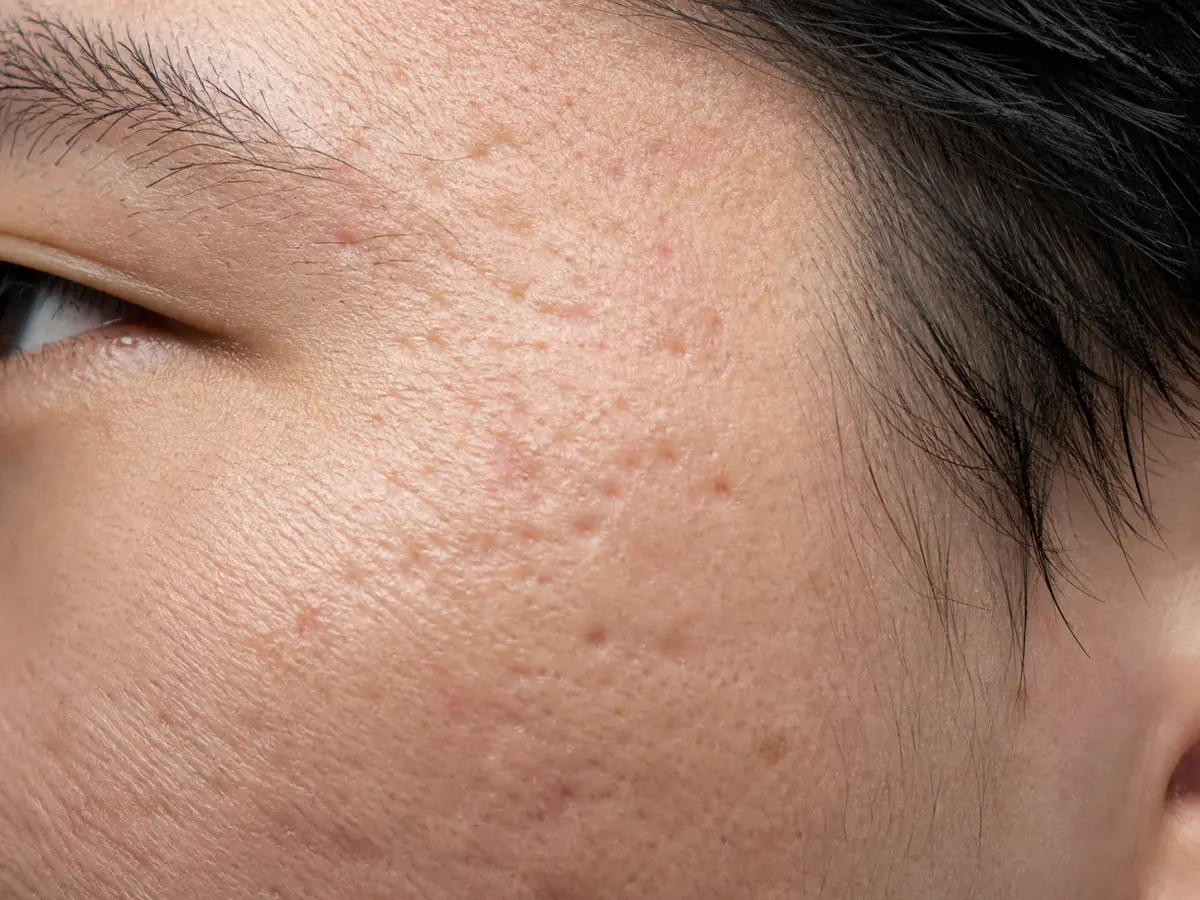
Since indentations with different widths, borders, and depths can be mixed in one area, we distinguish between flat marks and structural scars.
Try organizing your information this way before your appointment
In photos taken every 7 days under the same lighting, new comedones·papule·It is easier to determine the treatment sequence by separately counting pustules, nodules, and remaining redness, brown spots, or indentations. This record is also used when comparing with guides for pitted acne scars, acne scars, and inflammatory acne.
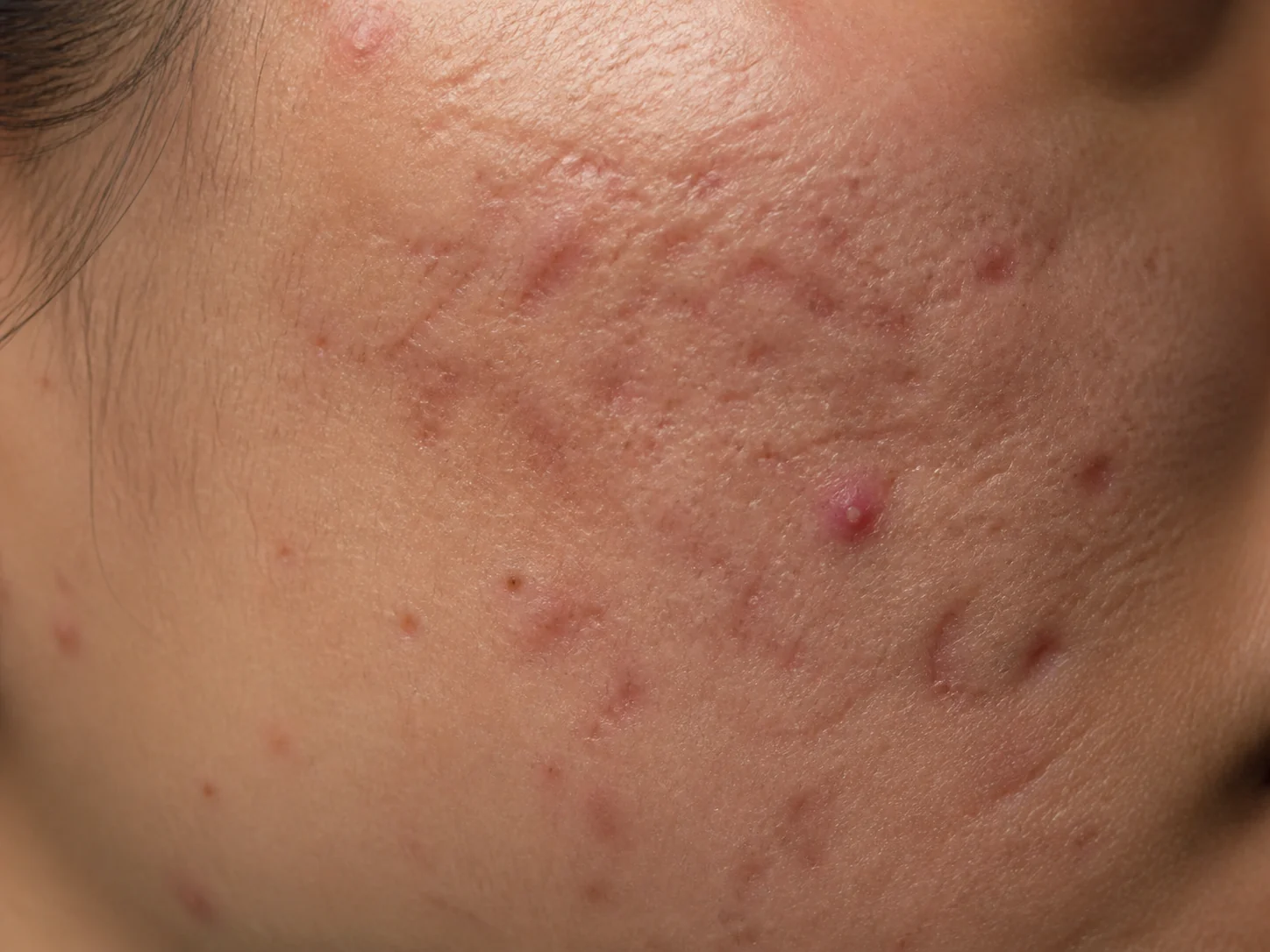
We distinguish between flat marks where only discoloration remains and scars where the skin level has changed, and first determine the sequence to reduce new inflammation.
Record scar types and new inflammation separately, and distinguish between the roles of structural treatment and recurrence management.
View based on my situation
The next steps will vary depending on your current appearance
Rather than picking just one similar part from a photo, look at the depth of the acne, remaining marks, and accompanying discomforts such as itching or stinging.
When it is closer to atrophic acne scars (indentations)
Pitted acne scars are categorized into narrow and deep ice-pick types, boxcar types with relatively angular borders, and wide, gently undulating Rolling-typerolling types, which may be mixed in one area. Even if red or brown, if the surface is flat, it may be post-inflammatory hyperpigmentation. We cannot promise that Korean herbal medicine will fill an already pitted dermal structure; we distinguish between the role of reducing recurrent inflammation and recovery conditions that create new scars, and the actual scar procedures.
reduce active inflammation to lower the speed at which new indentations increase, and help ensure that structural scar treatment is performed on stabilized skin.When it is closer to an acne scar
Acne scar symptoms are divided into atrophic scars, where the skin is pitted downward, and hypertrophic or keloid scars, which protrude firmly. pitted scarsmay be a mix of narrow and deep ice-pick types, boxcar types with relatively distinct borders, and wide, wave-like rolling types. On the other hand, red or brown changes that remain flat after acne are Post-inflammatory erythemamay be erythema or hyperpigmentation and must be distinguished from scars where the structure has changed. If new acne continues to appear, or if there is pus, heat, rapid swelling, acne that looks like a scar grows rapidly, or bleeding and ulcers occur, a dermatology consultation is the priority.
First, reduce the trend of increasing new inflammation and scars, and stabilize the skin's redness, dryness, and recovery conditions so that a separate scar treatment plan can be established.When it is closer to inflammatory acne (cystic/pustular)
Purulent acne Sebuma complex process where a lot of sebum is produced and dead skin cells porecause inflammation to deepen where pores are blocked. Cystic acne, which feels like large, painful lumps under the skin, or deep nodules are prone to leaving scars, so it is better to determine the treatment direction early. Hormonal changes during puberty or around menstruation, certain medications, and repeated friction may overlap to worsen the condition, but it cannot be attributed to a single food or a lack of washing.
Lower the rate at which new deep nodules and pustules form, and reduce the duration that redness, pain, and marks persist after inflammation.Please record only this much before your appointment
- Photos taken from a side angle and from the front
- Weekly number of new nodules and pustules
- Current scar procedure and dermatology medication history
- Those with a mix of narrow, deep holes and wide pitting on the temples and cheeks
- Those who have surface shadows remaining after red marks have faded
- Those who continue to develop deep inflammation even while managing scars
Frequently Asked Questions
Common questions after reading this guide
What types of pitted acne scars are there?
There are ice-pick scars (narrow and deep), boxcar scars (relatively distinct borders), and rolling scars (wide and gentle), and these types may be mixed.
Are red marks also considered pitted scars?
If the surface is flat, it may be post-inflammatory erythema. Evaluate the color and the elevation separately.
I keep getting acne; can I start with scar procedures first?
Since new inflammation can create more scars, active acne is often stabilized first.
Does herbal medicine fill in pitted scars?
We do not promise direct restoration. Consultations are aimed at reducing the conditions that lead to recurring deep inflammation and delayed recovery.
Evidence and Update Information
This content was organized by Korean medicine doctor Choi Yeon-seung based on the materials below and was updated on 2026-08-26.
- American Academy of Dermatology: Acne scars
- DermNet: Acne scarring
- Penn Medicine: Acne scarring and pockmarksEvaluation of scars and pigment changes