Acne and Diet
Should I quit milk, dairy products, and whey protein because of acne?
While there are studies reporting a link between milk and acne, it is difficult to conclude it as the definitive cause, and studies on whey protein show conflicting results. Rather than cutting out everything, we distinguish between cases where it is worth checking for your specific skin and cases where the treatment should be changed first.
Drinking milk does not cause acne for everyone, nor can yogurt, cheese, and whey protein be grouped under the same evidence. Rather than unconditional prohibition, one must look at the current types and amounts consumed, the timing of recurring acne, and the overall diet and treatment together.
| Food/Drink | Current Evidence | Practical Judgment |
|---|---|---|
| Milk | Associated with acne in some observational studies | Verify only when consumed frequently in large amounts and the timing of worsening overlaps |
| Yogurt, Cheese | Association is not as clear as it is with milk | Do not forbid all dairy products all at once |
| Whey Protein | Conflicting results between case/observational studies and randomized trials | Observe the timing of acne alongside changes in exercise and supplements |
| High-glycemic meals | Associated with acne reduction in some studies | Adjust the overall rhythm of meals rather than focusing on a single food |
While a link between milk and acne has been reported, it is not the cause for everyone
There are observational studies showing that acne was more common in groups that drank a lot of milk, and the American Academy of Dermatology introduces these results in their patient guides. However, an observational study means that milk consumption and acne appeared together; it is not a study that confirms a causal relationship where milk alone caused the acne.
Acne is Sebumand pore Acne occurs due to a combination of various conditions such as clogging, inflammation, hormonal changes, and the products or medications being used. If deep inflammation continues even though you rarely drink milk, it is more appropriate to first review the treatment for active acne rather than further restricting your diet.
Milk, yogurt, cheese, and whey protein are not grouped together as one
Observational results related to milk cannot be applied directly to yogurt and cheese. The American Academy of Dermatology guides also explain that evidence showing yogurt or cheese increases acne has not been confirmed. Even if they share the name 'dairy products,' their composition and consumption methods differ, so this does not immediately lead to the conclusion that all of them should be cut out.
The same applies to whey protein. While there are studies looking at the correlation with cases where acne worsened after taking supplements, a 6-month randomized trial in 2024 involving male acne patients showed that the group taking whey protein did not experience a worse number or severity of acne compared to the control group. Current evidence is not one-sided enough to recommend discontinuation for all users.
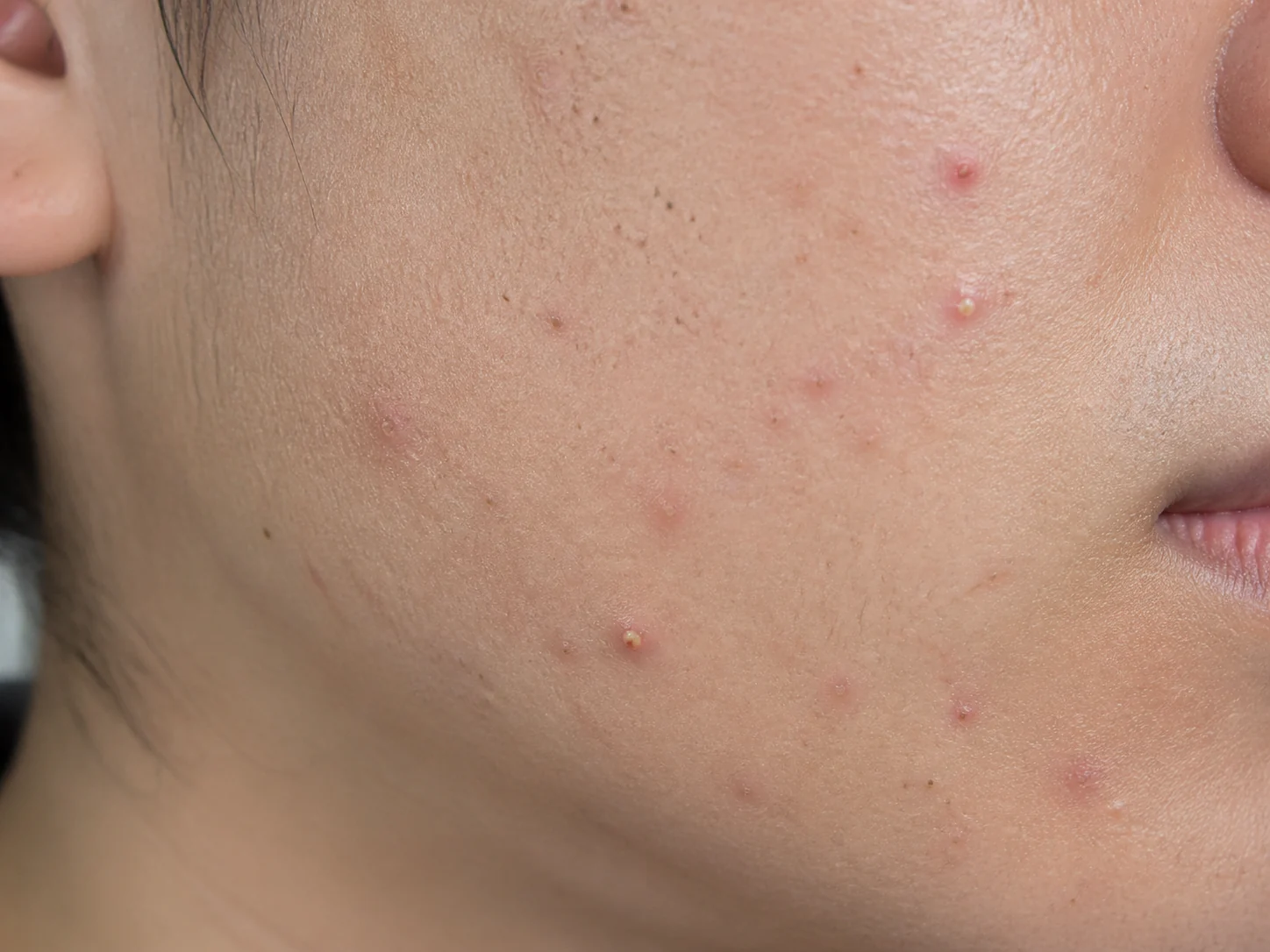
Since comedones, papules, and pustules can appear together on one face, we examine the deepest acne and the rate at which new ones form together.
Trying to cut them out is worthwhile when consumption is frequent and the timing aligns with skin changes
If inflammation on the face, chest, and back increased noticeably after drinking several glasses of milk a day or adding daily whey protein when starting exercise, you can try adjusting one thing at a time. If you change exercise intensity, sleep, skincare, and other supplements all at once, it is difficult to know what affected the skin.
Conversely, if acne continues to increase despite only drinking milk occasionally, or if deep inflammation and scarring progress even after cutting out dairy for a long time, there is no reason to expand dietary restrictions. Dietary experiments should be a means to quickly and clearly confirm if there is an actual connection, not a device to delay treatment.
Skin cannot be viewed in isolation from protein and calcium
If food intake and protein decrease significantly while cutting out milk and protein supplements, exercise recovery, satiety, and overall nutritional balance will be affected. If you restrict multiple food groups without deciding on substitute foods, fatigue, binge eating, and irregular meals may become more prominent than skin changes.
If whey protein is suspected, fill the required amount with other protein sources such as eggs, tofu, fish, or meat; if reducing milk, supplement calcium and protein from other foods. It is also important to distinguish between reactions, rather than grouping allergies or digestive issues with acne for the same reason.
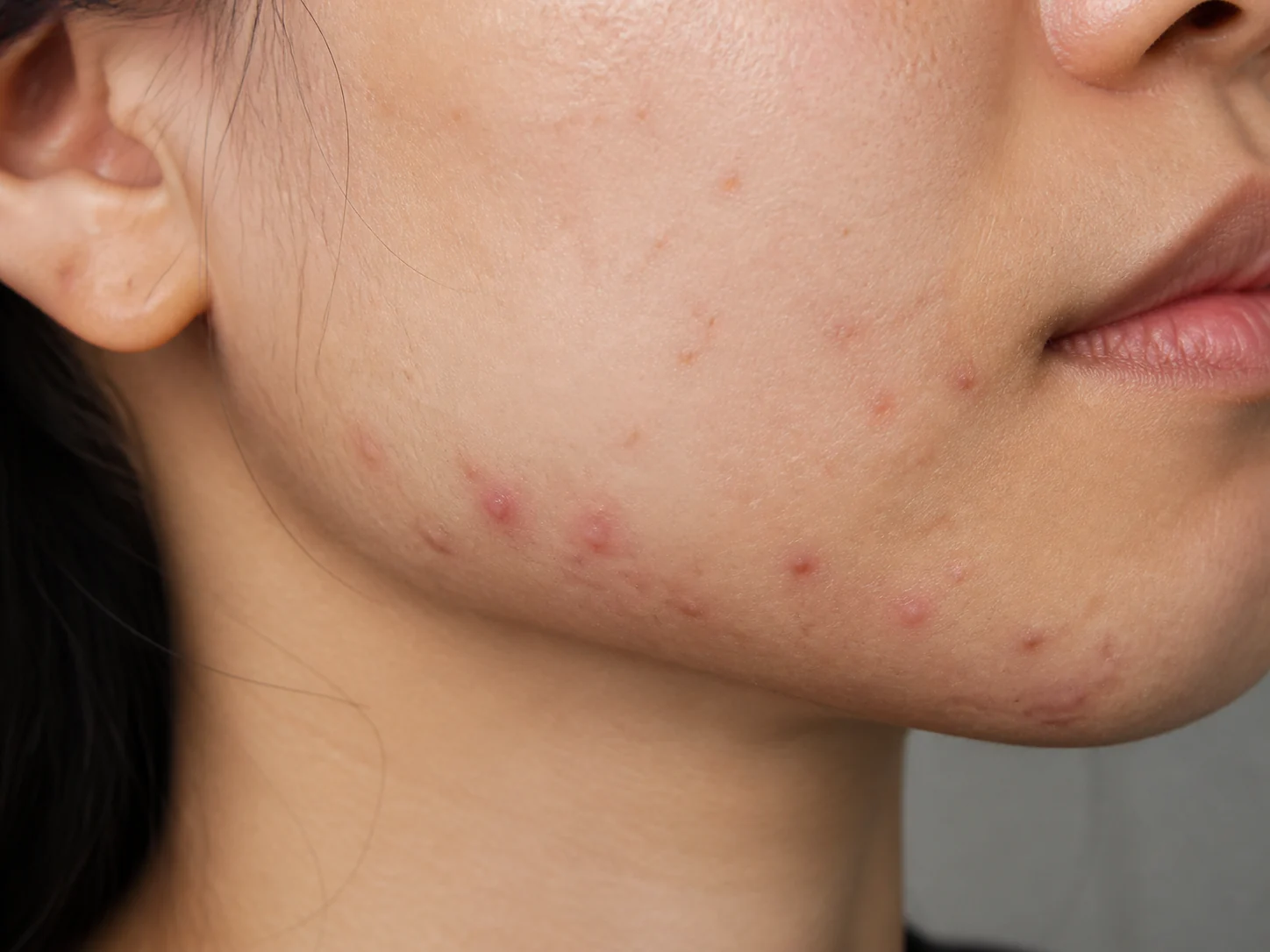
Before assuming it is a hormonal issue based solely on the jawline location, check if the dates align with changes in menstruation, skincare products, medication, or friction.
Korean medicine treatment addresses the bodily conditions where acne recurs, rather than just a list of forbidden foods
Baekrokdam does not indiscriminately ask acne patients to cut out milk, flour, and spicy foods all at once. We suggest narrowing dietary adjustments only for those who actually experience recurring facial heat, sebum, and digestive discomfort after specific foods, and we place the speed and depth of new inflammation at the center of Korean herbal medicine treatment.
Prescriptions vary depending on whether red, suppurating acne and oiliness are prominent, whether the skin is too dry and stinging to tolerate treatment products, and whether menstruation, sleep, and digestion fluctuate along with inflammation. We do not explain acne through diet alone, but place skin treatment, Korean herbal medicine and acupuncture treatment, and a sustainable diet within the same plan.
Improvement is determined by the occurrence of new inflammation, not by the number of forbidden foods.
If you have adjusted your intake of milk or whey protein, look for new comedonesred inflammation and deep, painful lesions nodulesrather than whether the skin looks clearer for a single day. Since the color of marks fades slowly, the presence of existing marks alone does not mean the dietary adjustment has failed.
If the rate of new inflammation remains the same even after changing your diet, do not unnecessarily forbid original foods; instead, shift the focus of treatment to the recurring conditions of the skin and body. Conversely, if worsening recurs with a similar time lag whenever you consume them again, you can continue making choices tailored to your individual needs within a range that does not compromise nutrition.
Milk, dairy products, and whey protein are not grouped under the same evidence. Narrow down the time relationship between one frequently consumed item and acne; if new inflammation persists, reprioritize skin treatment and Korean herbal medicine or acupuncture treatment rather than a restrictive diet.
Evidence and Update Information
Dr. Choi Yeon-seung, a Korean medicine doctor, organized this based on the materials below and updated the content on 2026-08-31.
- American Academy of Dermatology: Can the right diet get rid of acne?Patient guidance and research summary regarding low-glycemic diets and milk, yogurt, and cheese
- Whey protein and male acne: A double-blind randomized controlled trialA randomized trial comparing the number and severity of facial and body acne between a whey protein intake group and a non-intake group over 6 months
- The effect of whey protein supplements on acne: case-control studyAn observational study examining the association between whey protein and male acne. Used alongside the randomized trial to determine differences in evidence